Video Interview: Dr. Andrew Lewis Discusses CMC Challenges for GLP-1 and Oral Peptides with PharmTech Europe

Articles & Publications , Dr. Andrew Lewis , GLP-1 Therapeutics , Oral Peptides

Video Interview: Dr. Andrew Lewis Discusses CMC Challenges for GLP-1 and Oral Peptides with PharmTech Europe

PharmTech.com and Pharmaceutical Technology Europe logos

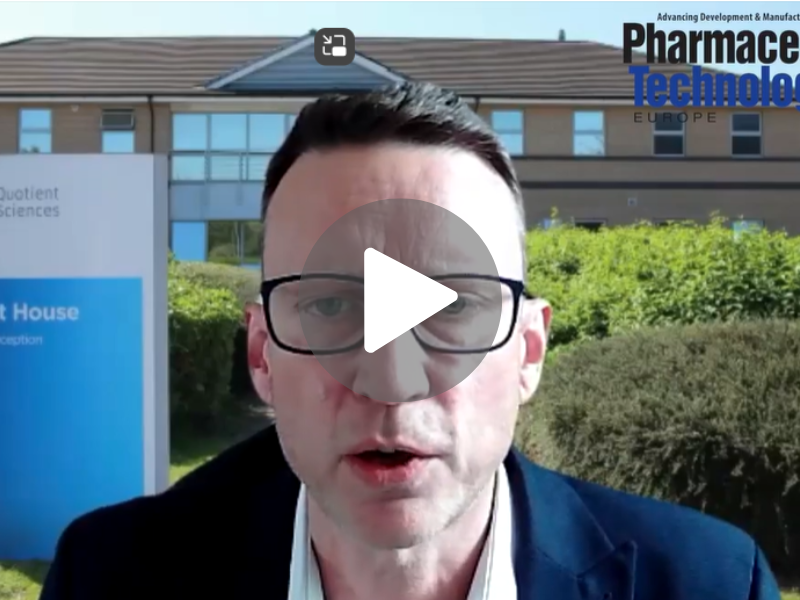
In this video interview with PharmTech Europe, Dr. Andrew Lewis, Chief Scientific Officer at Quotient Sciences, discussed the CMC challenges with GLP-1 and oral peptides during his attendance at CPHI Milan.   

Watch the recent video with PharmTech Europe and Andy Lewis
Watch a recent video with PharmTech Europe and Andy Lewis.

Dr. Lewis talked about the chemistry, manufacturing, and control (CMC) challenges encountered during the development of glucagon-like peptide 1 (GLP-1) and oral peptides. 

Watch the full video and read the article on PharmTech Europe.


A Single Dose Study to Assess the Mass Balance Recovery, Absorption, Metabolism, and Excretion of [14C]-Acoziborole in Healthy Male Subjects After Oral Dosing

Scientific Posters , Honolulu Acoziborole Clinical and Mass Balance , Human ADME

A Single Dose Study to Assess the Mass Balance Recovery, Absorption, Metabolism, and Excretion of [14C]-Acoziborole in Healthy Male Subjects After Oral Dosing

8 October 2024
Overview

Acoziborole (Figure 1), an oxaborole-6 carboxamide, is being developed as an oral single dose treatment for Human African trypanosomiasis (also called "sleeping sickness"). As part of the overall development programme, the mass balance, pharmacokinetics, metabolism and excretion of acoziborole were studied in an open-label, phase 1 study. This poster will describe the mass balance and clinical safety assessments from the human ADME study. 

Download
Date
8 October 2024

Investigation of the Matabolite Profile of Acoziborole in Plasma Urine and Fecal Homogenate Samples Using UPLC-MS Fractionation Followed by AMS Analysis

Scientific Posters , Honolulu Acoziborole Metabolism , Human ADME

Investigation of the Matabolite Profile of Acoziborole in Plasma Urine and Fecal Homogenate Samples Using UPLC-MS Fractionation Followed by AMS Analysis

8 October 2024
Overview

Acoziborole, an oxaborole-6 carboxamide, is being developed as an oral single dose treatment for Human African Trypanosomiasis. This poster will describe the metabolite characterization investigations following the human ADME studying a microdose of [14C]-Acoziborole. 

Download
Date
8 October 2024

Mass Balance Recovery, Absorption, Metabolism, and Excretion of [14C]Acoziborole in Healthy Male Subjects after Single Microtracer Oral Dosing I – Preparation of GMP [14C]Acoziborole Drug Substance

Scientific Posters , Honolulu Acoziborole Radiosynthesis , Human ADME

Mass Balance Recovery, Absorption, Metabolism, and Excretion of [14C]Acoziborole in Healthy Male Subjects after Single Microtracer Oral Dosing I – Preparation of GMP [14C]Acoziborole Drug Substance

8 October 2024
Overview

Acoziborole, an oxaborole-6 carboxamide, is being developed as an oral single dose treatment for Human African trypanosomiasis (also called "sleeping sickness"). As part of the overall development programme, the mass balance, pharmacokinetics, metabolism and excretion of acoziborole were studied in an open-label, clinical phase 1 study in six healthy male subjects. This poster describes the radiolabelling and purification of [14C]acoziborole as a GMP radiolabelled drug substance to support the human metabolism investigation. 


This is part of a series of 3 posters presented at ISSX 2024: 

Investigation of the Matabolite Profile of Acoziborole in Plasma Urine and Fecal Homogenate Samples Using UPLC-MS Fractionation Followed by AMS Analysis | Quotient Sciences

A Single Dose Study to Assess the Mass Balance Recovery, Absorption, Metabolism, and Excretion of [14C]-Acoziborole in Healthy Male Subjects After Oral Dosing | Quotient Sciences

Download
Date
8 October 2024

How Quotient Sciences Is Using AI To Innovate and Meet The Growing Demand For Personalized Medicine

Articles & Publications , Thierry Van Nieuwenhove

How Quotient Sciences Is Using AI To Innovate and Meet The Growing Demand For Personalized Medicine

pharmaceuticalmanufacturer

In this article by Pharmaceutical Manufacturer, Thierry Van Nieuwenhove, CEO of Quotient Sciences, discusses how the company is innovating to meet the growing demand for personalized medicine through AI, partnerships and meeting sustainability goals.

Thierry talks through what strategies Quotient Sciences is implementing to address supply chain challenges in a post-pandemic world and what roles do digital transformation and AI play in improving efficiency in your manufacturing processes.

Continue reading the full article on Pharmaceutical Manufacturer.


Outsourcing Pharma Discusses FDA Guidelines for ADME Programs, Growth Plans with Thierry Van Nieuwenhove Ahead of CPHI Worldwide 2024

Articles & Publications , Thierry Van Nieuwenhove

Outsourcing Pharma Discusses FDA Guidelines for ADME Programs, Growth Plans with Thierry Van Nieuwenhove Ahead of CPHI Worldwide 2024

Hexagons on blue gradient background with Quotient Sciences logo

In this article by Outsourcing Pharma,  Quotient Sciences CEO Thierry Van Nieuwenhove shared insights on how the company is adapting to new FDA regulations.

Thierry also discusses how the company is expanding its Translational Pharmaceutics® platforms into new therapeutic areas like mRNA.

Continue reading the full article on Outsourcing Pharma.

Preclinical Technology Screening Info Sheet

Info Sheets , Drug Product , Preclinical , Solubility Enhancement

Preclinical Technology Screening Info Sheet

2 October 2024
Overview

Tackling the preclinical exposure challenge: Explore Quotient Sciences' preclinical services in drug development.

Drug solubility and bioavailability challenges are omnipresent in the pharmaceutical industry today, with over 80% of new drugs classified as poorly soluble relative to human dose requirements. Even before entering clinical evaluation stages, new therapeutics must overcome higher solubility hurdles required for concomitant non-GLP PK and initial dose range finding (DRF) studies where a linear dose-exposure relationship is required to justify further development effort and financial expenditure.

Download
Download Now
Date
2 October 2024

Unlocking the Potential of GLP-1 Agonists: Q&A with Dr. Andrew Lewis and Dr. Stuart Mair

Peptides , Dr. Andrew Lewis , Dr. Stuart Mair , GLP-1 Therapeutics

Unlocking the Potential of GLP-1 Agonists: Q&A with Dr. Andrew Lewis and Dr. Stuart Mair

Summary: Dr. Andrew Lewis and Dr. Stuart Mair discuss the expanding therapeutic applications of GLP-1 agonists, initially designed for Type 2 diabetes but now also effective in obesity management. They emphasize the importance of in vivo studies over preclinical models for evaluating permeation enhancers in oral peptide delivery, noting that animal models often poorly predict human outcomes. The discussion also highlights the new potential of GLP-1 agonists in reducing risks of cardiovascular events, while addressing concerns about sarcopenic obesity and the need for combination therapies to preserve muscle mass during weight loss.

Glucagon-like peptide-1 (GLP-1) agonists are a class of medications originally developed to treat Type 2 diabetes but have also proven to be highly effective in managing obesity. 

As research progresses, the industry sees that GLP-1s can offer benefits for patients beyond blood sugar control and weight loss. Dr. Andrew Lewis and Dr. Stuart Mair comment on the latest developments in GLP-1s as a follow-up to our recent webinar

For more insight, sign up for news from Quotient Sciences.

How is the potential impact of the permeability enhancers on co-administered medications with low permeability evaluated during drug development? 

Dr. Mair: Investigating the impact of formulations containing permeation enhancers on co-administered medications would require an in vivo Phase I clinical pharmacology drug-drug interaction (DDI) study in healthy subjects.  

In this case, the co-administered medications would be administered alone and following a washout (WO) period exceeding a minimum of 5 half-lives. This would be done in combination with the investigational medicine product (IMP) with permeability enhancers. With this type of study, the PK profiles/areas under the curve (AUCs) of the co-administered medications given alone and with the permeability enhancers would be compared statistically to assess the potential impact.

For example, DDI studies performed by Novo Nordisk supported the approval of Rybelsus and used SNAC as the permeation enhancer. The FDA pharmacology review submitted for this product evaluated the combination of semaglutide and SNAC with selection criteria for drugs to be assessed, including those containing narrow therapeutic indexes and with limited permeability and incomplete absorption. (1) 

Quotient Sciences has designed and conducted many similar drug-drug interaction studies at our clinics in Miami and Nottingham to support numerous NDAs and MAAs for our clients.

Which preclinical animal model best translates well to human in-vivo clinical studies when developing oral peptide drug delivery?  

Dr. Lewis: We have compared preclinical bioavailability across several species to that achieved in human subjects in our studies, which shows preclinical models are not a great predictor of performance in humans but that the dog is maybe the closest. 

In our experience, the best-performing formulation in humans differs from that in preclinical models. This is likely due to the well-documented differences in physiology between species, but there is still a lot to be understood in the biopharmaceutics of orally delivered peptides. 

Preclinical pharmacokinetic studies are helpful to establish proof of principle that orally delivered peptides can be absorbed systemically, and formulations should then be rapidly advanced into the clinic to be optimized in human subjects.  

What in-vitro testing methodologies have you applied to evaluate the best permeation enhancers for oral peptide delivery?  

Dr. Lewis: There is a poor correlation between in vitro performance testing of permeation enhancers and clinical performance. We strongly believe these are best evaluated in vivo and advanced into the clinic to be assessed and optimized in human subjects.  

Apart from permeation enhancers, have you worked on other oral delivery technologies?   

Dr. Lewis: We have mainly used permeation enhancers to improve oral peptide bioavailability. To evaluate the optimum site of absorption, in the past we used Enterion and Intellicap capsules and gamma scintigraphy. We also have experience in other oral device technologies, although not for oral peptide delivery.  

We have a full range of oral drug delivery technologies for small molecular weight drugs, including solubility improvement with amorphous or lipid systems, delayed/controlled and sustained release systems, multiparticulates, and gastroretentive formulations.

New concerns are being raised about the efficacy of semaglutide on knee osteoarthritis symptoms. A discussion has emerged about the risk of sarcopenic obesity, which is more harmful for joint tissues and pain than non-sarcopenic obesity, that can develop when patients stop treatment. What do you think about this risk?

Dr. Mair: This sarcopenic weight loss is a known adverse effect associated with GLP-1s, and current investigation is being done on co-administering medicines designed to treat muscle atrophy alongside GLP-1 agonists. 

For example, Regeneron is testing drugs that block myostatin and activin, proteins that inhibit muscle growth in the body. Taken with semaglutide, this combination could boost the quality of weight loss while preserving lean muscle. BioAge is also testing a drug, azelaprag, that can be taken alongside Eli Lilly’s tirzepatide. 

Azelaprag mimics apelin, a hormone secreted after exercise that acts on skeletal muscle, the heart, and the central nervous system to regulate metabolism and promote muscle regeneration. In preclinical studies conducted with obese mice, the combination led to more significant weight loss than tirzepatide alone, preserving lean body tissue.

Can you comment on the benefits that are being seen linked to reduced chance of chronic kidney disease (CKD) and other conditions? 

Dr. Mair: We are seeing some positive news in these areas. This year, research from Novo Nordisk showed that semaglutide may help protect kidney function and reduce complications such as chronic kidney disease (CKD) and end-stage renal disease, two known comorbidities of obesity. (2) 

Additionally, GLP-1 receptor agonists are showing that they can help reduce major cardiovascular events, such as heart attack and stroke. Organizations, including the American Diabetes Association, have recommended that physicians use GLP-1s in patients diagnosed with type 2 diabetes and concurrent cardiovascular disease for the benefits that they are providing. (3) Ultimately, these are positive steps showing the advantages of GLP1s in lowering patient mortality risk.  

Want to learn more about GLP-1 drug development? Sign up for news from Quotient Sciences.

Interview with Dr. Andy Lewis: On GLP-1 Agonists and Overcoming CMC Challenges of Oral Peptide Drug Development

Peptides , Dr. Andrew Lewis , GLP-1 Therapeutics

Interview with Dr. Andy Lewis: On GLP-1 Agonists and Overcoming CMC Challenges of Oral Peptide Drug Development

GLP-1 Agonists and Overcoming CMC Challenges of Oral Peptide Drug Development 

In this interview with Dr. Andrew Lewis, Quotient Sciences’ Chief Scientific Officer, we explore the advancements in orally delivered GLP-1 agonists. We discuss the latest developments and how Quotient Sciences' expertise and innovative approach are overcoming the challenges of oral peptide drug development.

What makes GLP-1 a promising drug target in treating Type 2 diabetes and obesity?  

GLP-1 (glucagon-like peptide-1) and GIP (gastric inhibitory peptide) are key incretin hormones involved in regulating glucose metabolism. Both are produced in the gastrointestinal tract in response to food intake, specifically glucose and fats.

GLP-1 enhances insulin secretion from the pancreas, but only in response to elevated blood glucose levels. That’s important because it reduces the risk of hypoglycemia. GLP-1 also decreases the production of glucagon from the pancreas, slows gastric emptying, and it has a direct effect on the brainstem to reduce appetite.  

GIP has got overlapping and slightly contradictory effects as it promotes the production of glucagon, which can counteract its glucose-lowering effects.  

In people with Type 2 diabetes, the body’s response to incretin hormones is impaired. However, the GLP-1 pathway remains relatively intact, allowing it to still stimulate insulin production. For GIP, there is a more significant impairment, meaning it’s not as effective. This makes GLP-1 a more attractive target for treatment and has led to the development of several GLP-1 receptor agonists for managing Type 2 diabetes, obesity, and potentially other conditions.   

There is increased interest in the oral delivery of GLP-1s and other peptides, but this comes with challenges. Why?

Incretin analogs, like GLP-1 agonists, have traditionally been difficult to deliver orally. As a result, these medications are most often given by injection, with Rybelsus® (a NovoNordisk product) being a recent exception designed for oral use. Oral delivery is generally preferred by patients, especially those who are less familiar or comfortable with injections.  

Peptides such as GLP-1 agonists have challenging routes to get to the point they’re absorbed. The GI tract functions to digest these into short polypeptides and their constituent amino acids for absorption. Even if the peptides get to the epithelium, they tend to be poorly permeable, so it’s a real challenge developing oral formulations of GLP-1 agonists. This results in very low and variable bioavailability, often less than 1%.

Various technologies have been developed to overcome this, with permeation enhancers being the most advanced and validated. For example, SNAC is currently the permeation enhancer used in Rybelsus to promote semaglutide absorption, while Mycapssa® (oral octreotide, marketed by Chiesi USA, Inc.) employs the Transient Permeation Enhancer (TPE) technology, which utilizes the medium-chain fatty acid (MCFA) sodium caprylate (C8) to augment the absorption of the somatostatin analog octreotide.

At Quotient Sciences, we’ve worked on over 14 oral peptide programs over the last decade  and evaluated 10 different permeation enhancers. There are some common challenges that we’ve seen from a manufacturing and analytics perspective.

In terms of manufacturing challenges, permeation enhancers tend to be required in relatively large amounts in the tablet. These are often waxy materials with poor flow and frequently poorly compressible. As a result, the tablet formulation and manufacturing process requires careful design to develop a robust drug product. From an analytics perspective, many of the standard QC tests for oral dosage forms require optimization for use with peptides taking into account the potential for peptides to aggregate in different buffer systems, and may require additional work to develop suitable methods.

Given the manufacturing challenges with orally delivered peptides, how does Quotient Sciences handle the transition from preclinical to clinical development? 

We’ve pioneered an integrated approach that combines drug product manufacturing with clinical testing in healthy volunteers, which allows us to be incredibly adaptive in our trial designs - our Translational Pharmaceutics® platform.
By tightly integrating manufacturing and clinical testing, we can manufacture a drug product, dose it to healthy volunteers, perform bioanalysis and pharmacokinetic analysis, and use the emerging clinical data to inform our next steps. For example, following evaluation of the pharmacokinetic data, we can adjust the formulation to be dosed in the next dosing period to target the optimum drug exposure.

One extension to this is where we define a formulation design space and obtain regulatory approval to dose any formulation within that space. Typically, once a critical-to-performance formulation variable has been identified e.g. levels of a functional excipient such as a permeation enhancer, demonstration batches are manufactured at the extremes of the design space and batch analysis and stability data generated to bracket the design space. This provides maximum flexibility to explore how changes to the formulation impact performance in humans, all enabled by on-demand manufacturing within the clinical study. 

We’ve applied the Translational Pharmaceutics® platform, with and without a design space concept, across hundreds of modified release programs in both the USA and the UK under the FDA and MHRA respectively. In oral peptides programs, we’ve performed numerous studies where we’ve looked at the dose of the peptide, the levels of a permeation enhancer, the ratio of peptide:permeation enhancer and even combinations of permeation enhancers. 

Our unique capability has given us a privileged insight into the state of the art in oral peptide delivery having worked on so many programs with different peptides and permeation enhancers, and we have built up unique expertise in understanding the biopharmaceutics of oral peptide drug products.

What are the most exciting innovations on the horizon for oral peptide delivery in the next few years? 

The success of Rybelsus® (a NovoNordisk product) has really pushed the field forward. In the coming years, we expect to see GLP-1s applied in more therapeutic areas and are already starting to hear about the potential benefits in a range of indications such as cardiovascular disease where oral formulations may be more competitive. 

With this in mind alternative technologies for oral peptide delivery aimed at improving bioavailability in particular are an active area of research. This includes different methods to enhance permeability, such as exploiting active uptake mechanisms, ionic liquids, and ingestible devices. Additionally, solving issues related to food effects and the impact of water intake on absorption would be a big step forward. These developments promise to make oral peptide therapies more effective and convenient for patients.

Finally, I would expect to see artificial intelligence (AI) benefit oral peptide delivery in the years to come. The FDA reported that in 2021, it saw more than 100 drug and biologic application submissions containing elements of AI or machine learning (ML) used as part of the development process.  These technologies have the potential to provide powerful insights into oral peptide biopharmaceutics that could enable the development of more products for the benefit of patients with a wide variety of diseases.

For a deeper dive into the latest advancements in orally delivered GLP-1 agonists and potential future innovations, check out our webinar featuring Dr. Andrew Lewis and Dr. Stuart Mair. Watch here.


References:

  • Antza, C., Nirantharakumar, K., Doundoulakis, I., Tahrani, A. A., & Toulis, K. A. (2019). The development of an oral GLP-1 receptor agonist for managing type 2 diabetes: evidence to date. Drug design, development and therapy, 13, 2985–2996.
  • Brayden, D. J., & Maher, S. (2021). Transient Permeation Enhancer® (TPE®) technology for oral delivery of octreotide: a technological evaluation. Expert Opinion on Drug Delivery, 18(10), 1501–1512.
  • Artificial Intelligence and Machine Learning (AI/ML) for Drug Development | FDA

Daniel Schaufelberger, PhD - Pharmaceutical Executive

Dr. Daniel Schaufelberger

Daniel Schaufelberger, PhD

Pharmaceutical Executive

Guest Expert
About

Daniel Schaufelberger, PhD is a pharmaceutical executive with over 30 years of experience in pharmaceutical development and drug delivery, including pediatric products. Daniel retired from Janssen R&D LLC (Johnson & Johnson) as Sr. Scientific Director, where he co-chaired the J&J internal Pediatric Formulation Network. He is currently the Head of the Pediatric Center of Excellence at NGT BioPharma Consulting LLC. He is a CMC consultant for NIH/NIAID/DAIDS and for WHO’s Global Accelerator for Paediatric Formulation Development (GAP-f). 

Daniel holds a degree in pharmacy (ETH Zurich) and a doctorate from the University of Lausanne. He is a member of the Pediatric Working Group of the International Consortium (IQ) for Quality in Pharmaceutical Development and has been appointed formulation expert for the pan-European "Conect4Children" initiative. Daniel is a founding member of the society of “Paediatric Medicines and Health Initiative”, based in Mumbai, India. In 2020, he joined Johns Hopkins University, School of Medicine, All Children’s Hospital in St. Petersburg, FL as adjunct assistant Professor. Daniel is a speaker and moderator at domestic and international conferences with a focus and passion for “developing better medicines for children."

Quotient Sciences were delighted to have Daniel as a guest speaker at our 2025 Garnet Valley, PA open house event. To request a tour of our facility or get information about our capabilities in pediatric drug development or drug product manufacturing from our Philadelphia sites, please contact us.

Subscribe to