Quotient Sciences: Molecule to Cure. Fast. Rebranding in the peak of the COVID-19 pandemic

Scientific Innovation , Translational Pharmaceutics

Quotient Sciences: Molecule to Cure. Fast. Rebranding in the peak of the COVID-19 pandemic

Translational Pharmaceutics Now With Drug Substance - Quotient Sciences

In March 2021, we reached the twelve-month anniversary of when the world declared the COVID-19 pandemic. Who would have imagined the year that we were about to experience?

At the beginning of March 2020 when COVID began to spiral, events started to unfold quickly at Quotient Sciences. Almost overnight, we had to transition half of our workforce into remote working and many of our colleagues needed to self-isolate for extended periods as the virus struck. Operational schedules were in a high state of flux as our customers also managed the consequences of the pandemic on their businesses.

On a personal front, Friday 13th March was the first day that I experienced COVID symptoms, being quickly followed by most of the leadership team also succumbing to infection. We needed an all-hands-on-deck approach to manage the business through the turbulence.      

Our immediate focus was to ensure stability and to maintain, as best we could, project delivery for our customers. I was inspired by the commitment and dedication that was displayed by my Quotient colleagues and this was recognised by some excellent feedback from customers and key stakeholders.

As we entered into the summer of 2020, we had to decide whether to “stick or twist” on two important projects that were underway. We had initiated a rebranding project earlier in the year and were about to begin a project to acquire the UK business, Arcinova in Alnwick. We went back and forth in our deliberations, but it became clear that everyone was aligned. We wanted to emerge from the pandemic in a stronger position than we entered, and both projects were essential components of our growth strategy. 

We decided to “go for it”.

The “Soul of Quotient” – underpinning our “Molecule to Cure, Fast” rebrand

During my fifteen years at Quotient, I have always had an itch that our branding did not quite capture the passion and excitement that exists within the business. Most of our leaders (including myself) are scientists at heart and communicating emotions and feelings if they cannot be underpinned by data and logic does not come naturally.  We needed help.

The head of healthcare, Silvia Oteri, at Permira (our private equity partner) recommended that we meet Peter Economides, a brand strategist with broad and deep experience across multiple industries including healthcare. Our very first meeting with Peter was inspiring and gave me confidence that this branding project was going to be different from previous attempts.

Peter encouraged us to harness the “Quotientness” of Quotient Sciences. Putting into words our passion for building a differentiated business that helps to accelerate the development of new drugs for patients in need and makes a difference to humanity as a whole. Our commitment to being “science-rich”, striving to deliver excellence in customer service, and to continually looking to innovate our customer proposition. A business that recognizes the importance of its employees and supports their growth, so that each individual can achieve their fullest potential – with a strong competitive drive to win for our customers, investors, but most of all for the patients that will use the medicines we have helped to develop. To me, this is the soul of Quotient Sciences.

Our brand also had to be future-proofed, to provide the business with a platform for growth, enabling us to spread our wings and grow, and to propel the business to its full potential.  

Our Manifesto

A central component of our rebrand is our Manifesto. This reflects our purpose, our focus, who we are, and what we do.

Where science and agility integrate and combine. Cutting through silos across a range of drug development capabilities. Saving precious time and money in getting drugs to patients. Everything we do for our customers is driven by an unswerving belief that ideas need to become solutions, molecules need to become cures, fast. Because humanity needs solutions, fast.

I am thrilled with this Manifesto. It captures exactly what Quotient Sciences stands for. It is our true North to guide my colleagues and me, as we develop the business. Our mission is to accelerate the development of new drugs for patients, by breaking down silos to deliver integrated programs, which we deliver to our customers with excellence.

If we do right by our customers, and right by our colleagues, I have always believed that we will succeed.

The Future

As I write this article, the COVID-19 vaccination programs are well underway. We appear to have weathered the worst of this pandemic and as we approach some form of normality, we are emerging with our rebrand in place and the Arcinova acquisition complete. Twelve months ago, I would have “snapped your hand off” if I had been offered this position back then. Our focus now is all on “getting back to business”. Delivering for our customers and helping to progress new medicines for patients. I couldn’t ask for more.

Smarter modified-release formulations for proof-of-concept clinical trials with Translational Pharmaceutics®

Translational Pharmaceutics , Modified Release , Formulation Development , Solubility Enhancement

Smarter modified-release formulations for proof-of-concept clinical trials with Translational Pharmaceutics®

Modified Release Formulations at Quotient Sciences

Summary: Dr. Asma Patel shares strategies for accelerating modified-release oral formulation development, focusing on overcoming challenges in achieving target release profiles and bioavailability. She highlights how Translational Pharmaceutics® can be used for modified-release drugs to streamline decision-making, minimize risk, and shorten development timelines. 

Oral modified release formulations enable control over the rate and location of a drug’s release in the gastrointestinal (GI) tract to achieve specific therapeutic benefits in comparison to immediate release formulations. 

Benefits of modified-release formulations include maintenance of drug plasma levels over a prolonged period to reduce dosing frequency, attenuation of drug peak-to-trough ratios to lower peak-related adverse events (AEs) and improve efficacy, and drug delivery to a particular anatomical site for the treatment of local gastrointestinal (GI) disease. 

Drug delivery can be optimized to balance therapeutic needs, by managing AE profiles and reducing dosing frequency, both of which can contribute to improved patient compliance. There are also commercial benefits for modified-release formulations that are prevalent as part of product lifecycle management (LCM). Modest reformulation of an already approved drug from an immediate-release formulation to modified-release format allows both line and patent extension opportunities and continued market exclusivity.

A variety of modified-release technologies are available, eliciting a wide range of control on drug release and drug delivery. Careful selection of appropriate excipients and delivery technologies are key to the design of modified-release formulations fulfilling specific performance requirements, from gastro-retention formulation to a sustained release formulation, as shown in the table below.

While the development of modified-release drugs has historically been a part of late-stage development or LCM strategies, there are increasing examples of where modified-release has been utilized in the development of new chemical entities (NCEs). In all cases, a clear definition of the Target Product Profile (TPP) is important to outline the desired characteristics of the drug product required to deliver the desired in vivo performance. The TPP is based on the drug product requirements including the intended clinical use, dosage strength(s), drug release characteristics, stability, and other product quality criteria.

Many modified-release technologies can be used to control the rate and time of drug release to achieve a particular TPP. A developer is therefore faced with the need to select the strategy that will provide optimal results in the most efficient and cost-effective manner.

Modified release formatObjectiveFormulation technology
Gastro-retention
  • Keep the formulation in the stomach for an extended period to maximize the duration of absorption or therapeutic activity.
Swellable tablets (monolithic, bilayer, trilayer)
Gastric bypass
  • Prevent the release of the drug in the stomach and/or upper gastrointestinal tract.
  • Overcome first-pass metabolism or gastric irritation.
Enteric-coated tablets or capsules
Sustained or extended release
  • Extend the in vivo release profile of the drug or enable once-daily dosing.
Matrix tablets, coated tablets, or multiparticulates
Targeted or controlled delivery
  • Release the drug at or near the intended site of absorption or action.
  • Have either immediate or extended-release characteristics.
  • Deliver time, pH or microbially-triggered release.
Tablets, capsules or multiparticulates
Biphasic release
  • Eliminate the need for repeat dosing.
  • Provide rapid therapeutic effect from an immediate release layer and extended dosing via a sustained release layer.
Bilayer tablets or multiparticulates
Pulsatile release
  • Release the drug as a pulse after a predetermined lag time — designed according to the body’s circadian rhythm.
  • Provide release mechanism beneficial for drugs where time-dependent dosing is required or those that undergo first-pass metabolism.
Bilayer tablets or multiparticulates

How is Translational Pharmaceutics® used for modified-release drugs?

Selection of a specific modified-release platform and optimization of the quantitative levels of critical-to-performance excipients in that formulation can be challenging based on surrogate nonclinical, in vitro, or in silico data, and the recognized lack of predictability of these models to performance in humans. Traditional development also means the time and cost of taking multiple options into a clinical PK study can be prohibitive.

The Translational Pharmaceutics® platform is unique to Quotient Sciences, offering integrated development programs with in-study protocol flexibility to enable real-time optimization of key formulation variables based upon arising clinical data. It enables modified-release formulation technology platform(s) to be assessed in the identification of the best technology to achieve the desired TPP.

There are numerous potential formulation strategies available for modified-release dosage forms. Selecting a specific platform and the quantitative levels of critical-to-performance excipients in that formulation can be challenging based on surrogate nonclinical, in vitro, or in silico data. 

How is a design space used with Translational Pharmaceutics® to optimize modified-release formulations?

In-study protocol flexibility using Translational Pharmaceutics® can enable the optimization of key variables based on actual clinical data and/or the assessment of multiple technology platforms to achieve the desired TPP. Offering potential benefits in terms of PK variability and bimodal release combination flexibility, could be compared to a matrix modified-release tablet, which could be easier to commercialize if performance was sufficient.

Formulation adjustments within a mapped design space included in the regulatory submission are permissible. Design space methods bracketing several formulation parameters (e.g., drug content, functional excipient content, drug:polymer ratio, surface area volume ratio, and coating composition/thickness) can be used to allow any composition within defined ranges to be selected, made, and dosed.

The design space concept can be applied to any formulation, drug product, or dosage form. The goal in modified-release formulations is to address all the adjustable, critical-to-performance parameters that can influence release rate and PK profile.

Case Study: Development of an optimized modifed-release tablet formulation for initial proof-of-concept trials using Translational Pharmaceutics®

SLx-2101, a novel PDE-5 inhibitor1 was being developed by Surface Logix as an antihypertensive agent. A Phase II pilot clinical study using an IR tablet determined it was necessary to develop a once-daily modified-release formulation to reduce Cmax-related AEs and ensure the 24-hour PK profile remained within the therapeutic window.

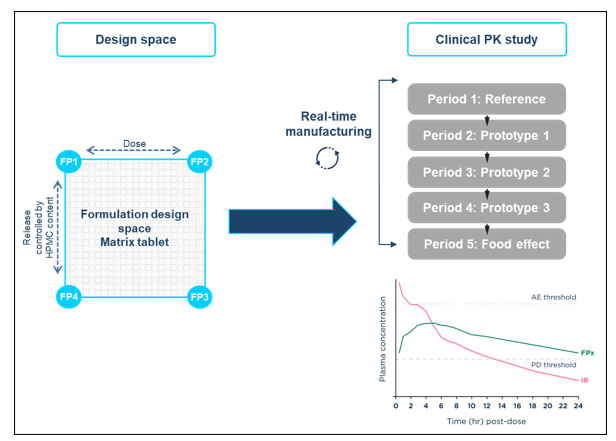
Using formulation design space concepts, a strategy built upon ICH Q8 Development Pharmaceutics, and Quality-by-Design principles, a HPMC-based matrix modified-release tablet formulation was developed for assessment in an adaptive relative bioavailability Phase I study to optimize the modified-release tablet based on human clinical data. 

A two-dimensional formulation design space was established covering dose strengths between 10-20 mg and sustained drug release durations between approximately 12 and 20 hours.

The relationship between key formulation variables and formulation performance was investigated. Representative formulations at the extremes and the mid-points of the design space were manufactured and characterized to demonstrate that the performance of the formulation can be controlled by varying the levels of drug loading and HPMC in the formulation.

The SLx-2101 modified-release tablet formulation within the formulation design space was manufactured in real-time and evaluated in a flexible clinical study, avoiding the restriction of only dosing pre-defined formulation compositions. The formulation selection was driven by clinical data from the previous dosing period and the optimal modified-release formulation was identified in 6.5 months.
Summary

Selection of a modified-release platform can be challenging, given the lack of predictive models for human outcomes. The use of formulation design spaces, integrated manufacturing, clinical testing, and flexible clinical protocols can enable the assessment of modified-release platforms to de-risk development, identify the best technology to achieve the desired TPP and thereby maximize the probability of success and reduce development time, getting treatments to patients faster.

References

1.            DiMasi J and Wilkinson M. The Financial Benefits of Faster Development Times: Integrated Formulation Development, Real-Time Manufacturing, and Clinical Testing. TIRS, June 2020.

2.            USFDA. Conference on Harmonization (ICH) and FDA Guidance for Industry, Q8 (R2) Pharmaceutical Development 2009. https://www.fda.gov/media/71535/download. Accessed May 30, 2019.

3.            McDermott J, Scholes P. Formulation design space: a proven approach to maximize flexibility and outcomes within early clinical development. Therapeutic Delivery. 2015;6(11):1269-1278. doi.org/10.4155/tde.15.76.

4.            Lin, W, et al. Development of a Formulation Design Space for SLx-2101 Modified Release Tablets to Enable a Flexible Phase I Pharmacokinetic Study (Controlled Release Society Annual Meeting 2010).
Integrated Development Strategies - Part 1: Leveraging clinical data to accelerate from first-in-human (FIH) to proof of concept (POC)

Translational Pharmaceutics , First-in-Human , John McDermott

Integrated Development Strategies - Part 1: Leveraging clinical data to accelerate from first-in-human (FIH) to proof of concept (POC)

In pharmaceutical research and development today, record numbers of molecules are entering clinical development, yet molecule attrition is increasing, especially in Phase II where efficacy is first assessed.

Key opinion leaders within the industry recommend that clinical investigations to find out whether a molecule is efficacious take place as early as possible. Techniques such as incorporating biomarkers and conducting combined Phase Ia/Ib studies can help to address this. However, these changes in study design do not address the underlying productivity limitations in the way industry supports early clinical development.

Pharmaceutical research and development organizations (small to mid-size biotech companies) are structured into functional silos, broadly reflecting the structure of legacy large pharmaceutical companies, with drug substance and drug product teams separate to clinical development teams. This structure is also reflected in outsourcing organizations and has resulted in the formation of separate contract development and manufacturing organizations (CDMOs) and contract research organizations (CROs).

To conduct an early development program, teams need to develop formulations, either manufacture a drug product or establish pharmacy compounding methods and provide material to a separate clinical site for dosing. Where a manufactured drug product is applied, it must be available in sufficient dose strengths, be manufactured at sufficient scale, and have sufficient stability to complete the clinical trial before the product expires, ideally without resupplies. This adds considerable development time and cost to an early development program.

The implications are even more significant where a candidate molecule may have sub-optimal physicochemical or biopharmaceutic properties. The global pharmaceutical industry today has a pipeline of molecules that are inherently difficult to formulate, with approximately 70–80% of new chemical entities (NCE's) considered poorly soluble and requiring formulation technology to improve the chances of success.

Integrated development strategies for first-in-human clinical testing

While innovation can occur under this siloed structure, productivity challenges remain unless an integrated development approach is used. Quotient Sciences can address this with fully integrated drug substance, drug product, and clinical testing services, all within one organization, with our Translational Pharmaceutics® platform for integrated drug development.

With Translational Pharmaceutics®, drug product is manufactured within days of clinical dosing, minimizing the amount of drug product stability data required (on average 7–14 days) to achieve authorization to run the clinical study. Batch sizes are limited to the amount required to support the immediate clinical need, so the large overages required to support conventional supply chains are removed. This is all achieved under the oversight of a single, multi-disciplinary project manager.

Translational Pharmaceutics® allows the adoption of an adaptive chemistry, manufacturing, and controls (CMC) strategy and an adaptive clinical protocol to maximize the potential for success in Phase I trials. Clinical data from one study period or cohort determines the formulation composition manufactured and dosed in the next.

Within a typical FIH clinical program, where single and multiple ascending doses are administered, the required treatments are achieved using multiples of unit doses manufactured by an external CDMO. In contrast, Translational Pharmaceutics® allows the adaption of the drug product in real-time to deliver a tailored product to meet clinical requirements, minimizing the need to take large quantities of tablets or capsules. This drug product adaption typically comprises a modification in dose during Phase I ascending-dose trials, but it can also be used to switch to an alternative drug product formulation that may be more appropriate for patient administration (for example, changing a suspension to a capsule formulation) or could involve moving to an enabled formulation to respond to emerging drug solubility challenges.

Data from Translational Pharmaceutics® programs analyzed by the Tufts Center for the Study of Drug Development (CSDD) concluded that this integration alone has the potential to save over 12 months from the development timeline.

Applying Translational Pharmaceutics® in first-in-human trials

JNJ-38877618, a highly selective c-Met tyrosine kinase inhibitor with significant in-vivo anti-tumor activity, was nominated for advancement to FIH trials, which could be conducted in healthy volunteers due to its favorable pre-clinical profile. A key study goal was to commence dosing of a randomized, double-blind, placebo-controlled, FIH trial as quickly as possible, with a formulation that supported immediate progression to ambulatory clinical trials.

A solution formulation with excellent pre-clinical bioavailability was applied to allow for rapid study start-up. However, that solution formulation was not anticipated to be suitable for longer-term ambulatory trials, so two capsule formulations, based upon a spray-dried dispersion of the drug, were incorporated into the trial. The CMC package for the trial included batch analysis and a 7-day stability dataset from demonstration batches of each product, with an option to extend shelf life as further stability data emerged.

Dosing commenced using the solution formulation given the high confidence in achieving human bioavailability, and once initial human safety, tolerability, and pharmacokinetics had been established, a formulation selection was conducted by evaluating the two capsule formulations against the solution formulation in separate cohorts of subjects at the same dose level. This data allowed for the selection of the optimal unit dose formulation to complete single-ascending-dose and multiple-ascending-dose assessments, which continued to be manufactured in real-time under the Translational Pharmaceutics® platform.

The use of a Translational Pharmaceutics® approach enabled Janssen to advance their FIH program from the start of laboratory work to completion of the clinical study in less than 10 months. Efficient, real-time, adaptive GMP (Good Manufacturing Practice) manufacturing of the drug product allowed rapid study start-up by minimizing drug product stability timeframe requirements. A flexible protocol design and adaptive CMC strategies enabled the selection of the drug product to be applied in Phase II, and the assessment of dosing regimens and food effects within a single protocol, avoiding the need for a separate bioavailability study.

Integrated strategies to support proof-of-concept clinical studies

The strategies described so far have focused on accelerating evaluations in healthy volunteers to demonstrate safety, tolerability, and human drug exposures using Translational Pharmaceutics®. However, further benefits can be achieved by maintaining integration when transitioning to POC studies, using manufacturing experience established during the healthy volunteer phase to supply drug product to patient sites.

In one such example, a sponsor was developing a new chemical entity (NCE) for an orphan disease and applied Translational Pharmaceutics® to deliver the first-in-human trial. As a rare disease, however, patient recruitment rates were unpredictable and required the establishment of multiple potential clinical centres globally. Quotient Sciences continued to support drug product manufacture in real-time as patients were recruited, ensuring seamless drug product supply without the need to transfer the manufacturing process to another partner.

Conclusions

The pharmaceutical industry is constrained by a legacy structure that extends the time to transition a new molecule from candidate selection to first-in-human trials, and through early clinical studies to proof-of-concept clinical trials. 

Quotient Sciences can help shorten timelines to proof-of-concept trials by identifying the right formulation approach for the drug and using Translational Pharmaceutics® to:

  • Minimize the amount of drug product stability data required to get the study running
  • Focus manufacturing activity on drug product needed to dose
  • Remove the need for large-scale drug product manufacturing
  • Support transition to patient-appropriate formulations
  • Provide a seamless transition to supply of drug product for global proof-of-concept studies

Small Molecule Drug Substance Development – Part 1: How do you design a safe and scalable synthetic route for your drug substance?

Drug Substance , Translational Pharmaceutics

Small Molecule Drug Substance Development – Part 1: How do you design a safe and scalable synthetic route for your drug substance?

At the point of candidate selection, a chosen drug substance will typically have been prepared in only small quantities (up to a few grams) to support initial medicinal chemistry activities. The synthetic route used for this initial supply is rarely suitable for producing larger quantities of material for downstream development and will typically need to be modified, or sometimes redesigned entirely, to produce enough material for first-in-human (FIH) clinical trials.

There may be several challenges to address at this point:

  • The existing route may rely on chemistry that is too hazardous to be performed at a large scale, with reagents that are highly toxic, difficult to handle, or even explosive.
  • It may rely on the use of solvents or reagents that generate hazardous waste or are discouraged due to environmental concerns.
  • The starting materials may be expensive or difficult to procure in large quantities.
  • Process impurities may be generated that are difficult to remove from the drug substance, and the existing synthesis might use purification methods (e.g. chromatography) that are impractical at large scale.
  • The quantity of solvent used for a given reaction might result in poor throughput, meaning that many batches would have to be performed.
     

We have a state-of-the-art facility in Alnwick, UK, where we work with our customers to address these challenges with recently increased capacity.

An experienced team of process chemists works alongside colleagues in analytical chemistry and material science to develop safe, scalable, and economical synthetic routes to achieve a suitable drug substance. Each cross-functional project team is overseen by a single project manager, who seamlessly manages the end-to-end process, provides regular status updates, and ensures timely project delivery for our customers. 

We work with clients of all sizes, from small biotech companies to large pharmaceutical companies, tailoring our services to meet their specific project goals.

We engage with our customers from the point of candidate selection and start by performing an initial analysis of the synthetic route.

This exercise allows our process chemists to highlight any potential red flags and identify possible alternatives.

To minimize risks further downstream, we then carry out a period of small-scale process research and development (PR&D) in the laboratory to determine the suitability of the route for scale-up, assess any potential improvements that could be introduced, and generate samples of process intermediates to support analytical method development.

We also generate data on the thermal safety of chemical processes in real-time, which allows us to make informed decisions on route selection at a very early stage in development. With access to differential scanning calorimetry (DSC), heat-flow calorimetry (HF-Cal), and online off-gassing measurements, any safety concerns can be rapidly assessed, and the necessary control measures can be introduced. This not only ensures that our chemical processes are carried out safely when scaling up, but it also reduces the risk of project delays caused by unexpected issues identified later in process development.

At this point, we may begin additional activities, such as salt screening and polymorph assessments of the drug substance, in parallel to support the synthetic route development, and to facilitate an easier transition into the formulation development phase.

The final stage of a synthetic route is typically a crystallization of the drug substance, either as a single component or as a salt. This is arguably the most important step of the entire synthesis as it controls not just the purity profile of the drug substance, but also the crystalline form or polymorph that is obtained. Different polymorphs can have significantly different physicochemical properties, and it is therefore important to make sure that a suitable solid form is identified as early as possible.

Our integrated material science team offers expert advice throughout the drug substance development process.

By performing these activities in parallel with synthetic route development, all within one organization, we can make informed decisions on the most suitable process, and make sure that we get it right on the first try for our customers.

This is part one of our three-part series focused on scaling drug substance.

Continue reading part 2: How do you streamline manufacturing of your drug substance?

Continue reading part 3: How do you successfully bridge into drug product development?

Learn more about our drug substance capabilities

Small Molecule Drug Substance Development - Part 2: How do you streamline manufacturing of your drug substance?

Drug Substance , Translational Pharmaceutics

Small Molecule Drug Substance Development - Part 2: How do you streamline manufacturing of your drug substance?

In the previous blog post in this three-part series, we discussed how to design a safe and scalable synthetic route for your drug substance – Part 1: How do you design a safe and scalable synthetic route for your drug substance?

The next challenge is to develop a safe and efficient manufacturing process that is capable of consistently producing your drug substance at the intended quality on a larger scale. When developing a drug substance manufacturing process, considering the impurities that are produced is as important as the drug substance itself. You need to identify, quantitate, and ultimately control the impurities generated in the manufacturing process, as small differences in impurities can have a significant impact on the toxicological profile of the compound.

At Quotient Sciences, we have dedicated manufacturing suites in our state-of-the-art facility in Alnwick, UK, where an experienced team of process chemists works alongside colleagues in analytical chemistry and material science to support the manufacture of multi-kilogram quantities of Good Manufacturing Practice (GMP)-grade active pharmaceutical ingredient (API). Each cross-functional project team is overseen by a single project manager, who seamlessly manages the end-to-end process, provides regular status updates, and ensures timely project delivery for our customers. 

We work with clients of all sizes, from small biotech companies to large pharmaceutical companies, tailoring our services to meet their specific project goals.

Once a suitable synthetic route has been chosen, we focus on ensuring that the chemistry can be safely and reliably carried out at a large scale, with process parameters (temperature, addition rates, reaction concentration, and stoichiometry) optimized to maximize reaction yield and throughput and ensure that the process is robust and scalable.

At this point, we use analytical chemistry to identify key process impurities. Our state-of-the-art analytical chemistry department has expertise in high-resolution mass spectrometry, solution- and solid-state nuclear magnetic resonance (NMR) spectroscopy, trace metal analysis, and gas and liquid chromatography. Having all these technologies under one roof allows us to gather important process information in real-time. By identifying key process impurities at an early stage, the chemistry team can make rapid modifications to the process to either prevent their formation altogether or develop purification processes to remove them. We also carefully analyze trace metal impurities, where relevant, as the International Council for Harmonisation of Technical Requirements for Pharmaceuticals for Human Use (ICH) guidelines have strict limits for the number of residual metals that can be tolerated in a drug substance. Homogenous transition metal catalysts based on palladium, rhodium, and iridium are commonly used to carry out useful synthetic reactions, so it is important to ensure that adequate purification steps are included in the drug substance synthesis to limit the quantity that remains in the drug substance.

Throughout this stage of development, our process chemists benefit from access to a range of parallel reaction equipment which, combined with in-situ reaction monitoring, allows us to quickly collect large amounts of data-rich experimental information, and make evidence-based decisions to develop the best possible process.

Once the process parameters have been determined, we perform the chemistry at an intermediate scale (typically 5 L) as a demonstration of the process. This confirms whether the developed process will perform as expected when carried out at a larger scale, using glass reaction vessels that mimic the layout of those found in our manufacturing suite. The drug substance that is generated in this demonstration batch is representative of the material that will be produced in the subsequent GMP campaign and can therefore be used to support stability studies of the drug substance as well as toxicology and formulation studies. Having successfully demonstrated the process at this intermediate scale, we will then carry out a GMP manufacture in our dedicated facility to produce the drug substance in the quantities required by our customer.

We have a dedicated team of flow chemists and chemical engineers who are continually assessing synthetic routes for opportunities to leverage our expertise in continuous technology.

The team develops chemical processes in flow which can offer numerous advantages over traditional batch chemistry and in some cases can even allow us to develop reactions that would not be possible to scale up in batch. 

Our recent case study on the optimization of a flow process for a thermal rearrangement underscores the project timeline benefits that can be achieved when judicially incorporating flow processes at an early stage in drug development.

This is part two of our three-part series focused on scaling drug substance.

Continue reading part 1: How do you design a safe and scalable synthetic route for your drug substance?

Continue reading part 3: How do you successfully bridge into drug product development?

Learn more about our drug substance capabilities


Small Molecule Drug Substance Development – Part 3: Once your drug substance has been manufactured, how do you successfully bridge into drug product development?

Drug Substance , Translational Pharmaceutics

Small Molecule Drug Substance Development – Part 3: Once your drug substance has been manufactured, how do you successfully bridge into drug product development?

In the previous blog post in this three-part series, we discussed how to streamline the manufacturing of your drug substance. Read part 2 in the series: How do you streamline manufacturing of your drug substance? 

After streamlining drug substance manufacturing, the next challenge is formulating your drug substance (active pharmaceutical ingredient [API]) with other inactive ingredients (excipients) into a finished dosage form (drug product) for clinical trials.

The interface between drug substance and drug product is a key part of the drug development pathway. Drug substance and drug product development are often carried out by different organizations, which can be inefficient and costly, leading to poor knowledge and material transfer, and delivery delays. The complexity of today’s drug molecules and target product profiles (TPPs), and the timeline pressures that drug developers are faced with, exacerbate these challenges.

At Quotient Sciences, we address these challenges by providing fully integrated drug substance, drug product, and clinical testing services, all within one organization.

This means that we can manage drug substance and drug product development in parallel and develop manufacturing processes that are controllable, robust, and scalable with minimal risk. This ensures that when we develop a drug product and supply it to our customers, there is no need to re-run studies as they move downstream through successive clinical stages. This saves drug developers time and money and ensures significant value to the end product.

For integrated drug substance and drug product projects, our cross-functional project team members bridge the gap between drug substance and drug product, shortening program timelines by sharing knowledge and materials from project initiation and continuing to work side by side for the duration of the project, ensuring that nothing gets missed along the way.

Our highly skilled scientists have decades of experience working in manufacturing at larger scales and know what a process should look like for downstream success. With closely aligned workstreams, our process chemists work alongside analytical and solid-state chemists to ensure rapid development and optimization of the drug substance. Our formulation scientists and solid-state chemists together provide clear and unambiguous data for optimizing the drug substance form, leading to rapid dosage form design and drug product manufacturing.

Each cross-functional project team is overseen by a single project manager, who seamlessly manages the end-to-end process, provides regular status updates, and ensures timely project delivery for our customers. 

We work with clients of all sizes, from small biotech companies to large pharmaceutical companies, tailoring our services to meet their specific project goals.

For small biotech companies, we provide high-quality data packages that have been designed by people who know exactly what large pharmaceutical companies value and expect, leading to a smoother transition and a higher value for the transaction. For large pharmaceutical companies, the ease of material transfer reduces overall risk and shortens the time for the clinic to know whether their formulation is successful to move forward with.

The integration of drug substance and drug product services within one organization has multiple benefits, including ease of material transfer, seamless coordination, and knowledge sharing between drug substance and drug product groups, which enhance the likelihood of clinical success and reduce the overall risk. However, the ultimate benefit is a significant reduction of drug development timelines from candidate selection to clinical development. 

On average, drug development timelines are reduced by 3–6 months by utilizing an integrated approach, which translates into significant R&D cost savings and gets new medicines to patients faster.

This is part three of our three-part series focused on scaling drug substance.

Continue reading part 1: How do you design a safe and scalable synthetic route for your drug substance?

Continue reading part 2: How do you streamline manufacturing of your drug substance?

Learn more about our drug substance capabilities


How an integrated CRDMO can accelerate the development of complex drug programs

Translational Pharmaceutics , Dr. Aruna Railkar , Solubility Enhancement , CRDMO

How an integrated CRDMO can accelerate the development of complex drug programs

Drug development has its challenges, but when it comes to programs that require specialized formulation expertise, such as applying solubility enhancement techniques to improve a poorly soluble API, the challenges in achieving clinical and commercial success are even greater. 

All drug development programs are challenging, given the numerous stages an active lead molecule or new chemical entity (NCE) must transition through to gain regulatory approval and demonstrate its benefits in patients. The challenges in achieving clinical and commercial success are even greater for complex programs requiring specialized formulation expertise, such as solubility enhancement or modified release, and in developing suitable formulations for pediatric patients.

At Quotient Sciences, our scientific teams leverage our integrated capabilities as a contract research, development, and manufacturing organization (CRDMO), along with decades of expertise in drug development, to support our customers through even the most challenging drug programs. 

Using our flagship platform for drug development, Translational Pharmaceutics®, we integrate real-time cGMP manufacturing with clinical testingall done within a single organization and under the guidance of a single program managerto remove conventional siloes in drug development. This approach can aid formulation design with the ability to screen a range of technologies and dosage forms using biorelevant in-vitro screening tools and physiologically based in-silico models to flag developability problems, before quickly transitioning drug candidates into human pharmacokinetic (PK) studies to understand a molecule's full potential for success. 

Below, continue reading case studies that explore how Quotient Sciences' integrated CRDMO services and Translational Pharmaceutics® have been applied to overcome formulation challenges in complex drug programs. You can also learn more about how Translational Pharmaceutics® works in this video.

Formulation development and screening of solubility-enhancing formulations

Poor aqueous solubility, leading to solubility-limited exposure, has been recognized as a major challenge in the development and evaluation of NCEs during early discovery, pre-clinical, and clinical development stages. There are various formulation strategies to improve solubility, with the primary goal of improving oral bioavailability. 

Our approach to solubility enhancement is based on an understanding of molecular properties, using the Developability Classification System (DCS) to choose the most appropriate formulation approach for a molecule. Understanding the drivers of poor exposure to a drug allows formulation efforts to be focused on appropriate techniques that provide meaningful improvements for in-vivo performance. We have the capability to evaluate chemical modifications, such as salt and polymorph screening, and physical modifications, such as particle size reduction, complexation, solubilization using a lipid-based approach, and stabilization using amorphous forms. Solubility enhancement can be addressed at different stages. 

In one client program, a poorly soluble NCE was facing challenges of low oral exposure, non-linear PK, high variability, and a large positive food effect in the first-in-human (FIH) study. These issues were preventing the client from advancing the compound into patient studies. To overcome these challenges, drug products based on three solubility-enhancing formulation platforms were developed: a micronized formulation using particle size reduction of the active pharmaceutical ingredient (API), a self-emulsifying drug delivery system using a lipid-based formulation, and an amorphous formulation using a spray-dried dispersion. These drug products were produced on a small scale for quick clinical assessment in human subjects without the need to conduct larger-scale, cost-prohibitive process development and lengthy stability programs for multiple technologies. 

A two-part study was designed for the drug program:

  • In part 1, Translational Pharmaceutics® enabled the integration of clinical manufacturing and dosing in healthy volunteers using a six-period cross-over design to obtain comparative human PK data from the three enabling formulations. 
  • In part 2, higher doses were administered to establish safety margins for patient studies, and dose linearity was determined based on the area under the curve (AUC). 

Integrating solubility-enhancing formulation development, clinical manufacturing, and FIH testing using Translational Pharmaceutics®, a new lead formulation was identified in about 6 months. The formulation overcame the solubility barriers and allowed the compound to progress to patient studies.

Formulation development and optimization of a modified-release (MR) dosage form to meet the target product profile (TPP)

Numerous formulation strategies are available for designing MR dosage forms. One of the key challenges when developing an MR formulation is to identify the in-vivo release rate and dose required to achieve the TPP. 

While in-vitro dissolution data are generated to describe formulation release, the assumption that this will represent in-vivo performance is unproven until clinical data are available. Often, with MR formulations, a reduction in overall exposure (AUC) is observed when delivering to lower regions in the gastrointestinal (GI) tract, where absorption can be reduced. Contributing factors include reduced fluid volumes (for dissolution and solubilization), and surface area, and differing permeability. Similarly, there are recognized challenges and risks of using pre-clinical models to design MR formulations due to significant inter-species anatomical and physiological differences. 

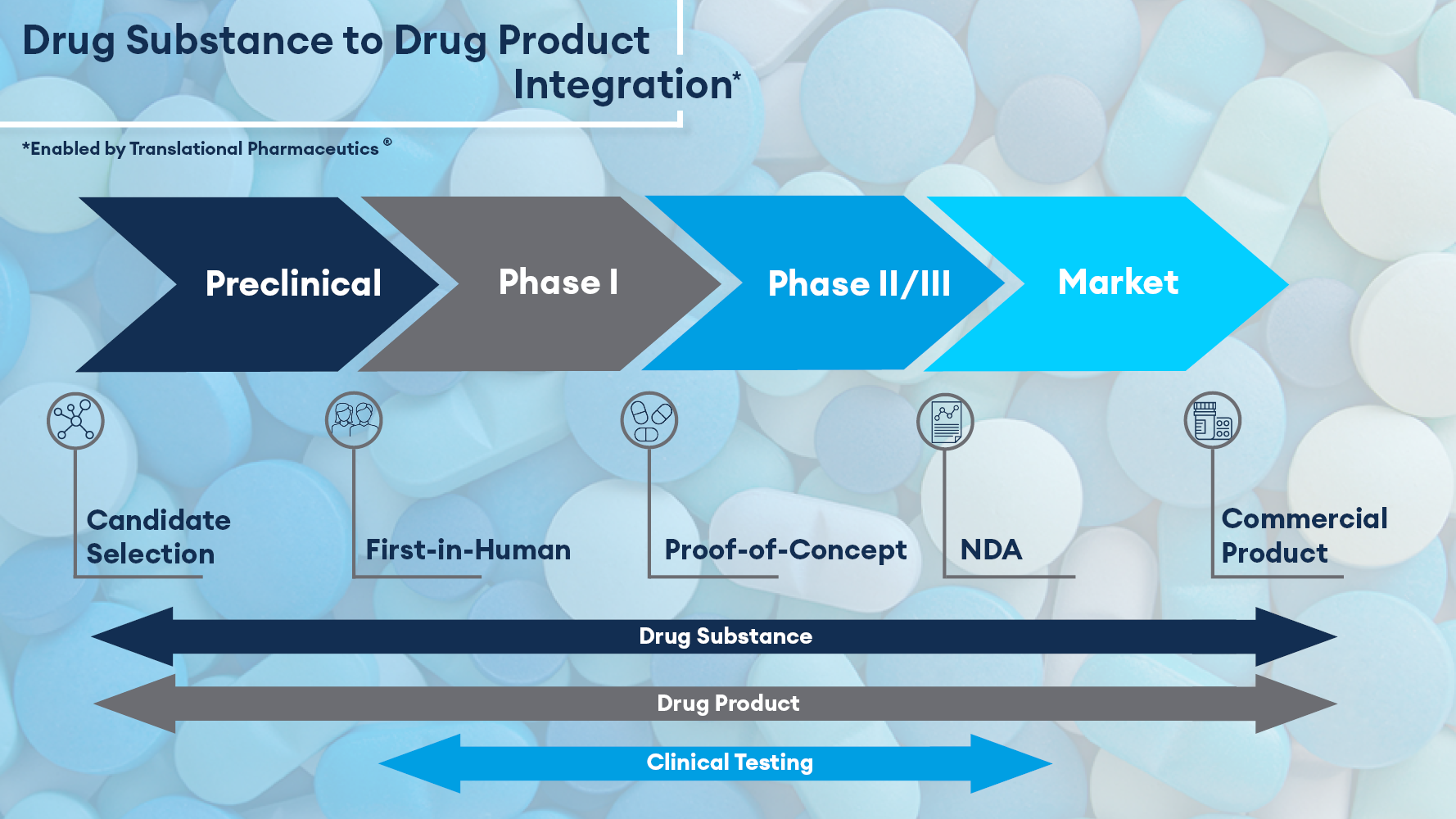
In these cases, Translational Pharmaceutics® is extremely valuable in identifying the optimal platform, dose, and release rate to meet the TPP of specific molecules of interest. 

In this client program, an NCE in development for the treatment of inflammatory diseases was being dosed twice a day (BID) or three times a day (TID) during early trials due to a short half-life and a slower terminal phase. The client wanted to develop a once-a-day (QD) product to increase patient compliance and therapeutic outcomes. The TPP had a lower peak-to-trough ratio compared to the immediate-release (IR) product and coverage of the lowest efficacious concentration over the desired duration. Matrix-based MR dosage forms were proposed to reduce the dosing frequency.

Two studies were designed to achieve these objectives:

  • In the first study, matrix minitablets in capsule or monolithic matrix tablets were developed and evaluated using in-vitro dissolution rates of 80% release over 8 and 12 hours. While a QD PK profile was achieved in the fasted state with the slower in-vitro dissolution rate with both types of matrix-based drug products, the formulation was susceptible to a food effect when administered with a high-fat meal. This resulted in most of the exposure occurring within the first 12 hours of dosing, which is not optimal for QD dosing.
  • In the second study, building on the first, a proprietary technology platform (DiffCORE™) was evaluated from the client with the goal of overcoming the food effect. 

Translational Pharmaceutics® enabled the evaluation of multiple variables in this two-part adaptive clinical study, including formulation modifications, food effect, and dose levels/tablet strengths. Flexibility was maximized by the inclusion of a two-dimensional formulation design space in the regulatory submission, which allowed quantitative changes in release rate and dosing during the clinical study to achieve the desired PK profile. Multiple formulation iterations were tested in the same individuals in both the fed and fasted state within a short timeframe, rapidly identifying the most optimal formulation that enabled QD dosing (2).

Summary

Translational Pharmaceutics® supports drug programs across the full development pathway, with capabilities to:

We are currently the only outsourcing partner able to offer the ability to develop, manufacture, release, and dose drug products within one organization. This maximizes the probability of success and significantly reduces development time and costs for our customers, getting new medicines to patients faster (3).

The Tufts Center for the Study of Drug Development (CSDD) quantified the platform's major benefits, showing significant savings in reaching key milestones as quickly and efficiently as possible. To read their findings, download a copy of the Tufts report assessing Translational Pharmaceutics.

References

1. Zann V, McKenzie L, Crowley K, Sweet-Smith S, Shabir-Ahmed A, Andreas K, Mountfield R, Milton A. A Phase I Study Allowing Clinical Screening of Multiple Solubility-Enhancement Formulation Technologies, and an Assessment of Food, PPI and Dose Linearity Assessment with the Selected Formulation of BOS172767, in Healthy Volunteers. Poster presented at AAPS meeting, November 2019.

2. Tompson D, Whitaker M, Pan R, Johnson G, Fuller T, Zann V, McKenzie L, Abbott-Banner K, Hawkins S, Powell M. Development of a Once‑Daily Modified‑Release Formulation for the Short Half‑Life RIPK1 Inhibitor GSK2982772 using DiffCORE™ Technology. Pharm. Res. 2022;39(4).doi.org/10.1007/s11095-021-03124-7.

3. DiMasi J and Wilkinson M. The Financial Benefits of Faster Development Times: Integrated Formulation Development, Real-Time Manufacturing, and Clinical Testing. TIRS, June 2020.

Does partnering with a fully integrated services provider really improve your molecule’s chances of clinical and commercial success?

Translational Pharmaceutics , Dr. Peter Scholes

Does partnering with a fully integrated services provider really improve your molecule’s chances of clinical and commercial success?

Selecting the right outsourcing partner for your drug development program is an extremely complex process. Within the pharmaceutical industry today, drug developers are increasingly outsourcing pre-clinical development, clinical research, and drug product manufacturing to external contract service providers (CDMOs and CROs). While this can provide benefits, such as the ability to leverage external expertise and technologies, it can be challenging for the drug developer to manage multiple vendors, projects can be slow to start, disconnects can lead to delayed timelines, and it can be extremely costly. This points to a need for a simplified outsourcing model.

How does an integrated services model accelerate drug development?

Traditionally, the pharmaceutical industry has been structured around functional silos. In a conventional outsourcing approach, a sponsor has to split their drug development program between one or more CDMOs and a separate CRO. This places the project management burden on the sponsor, creates gaps in the development timeline, and limits knowledge and material sharing. Ultimately, this restricts productivity, slows down the drug development process, and is costly for the sponsor.

At Quotient Sciences, we have the unique ability to integrate drug substance, drug product, and clinical testing activities all under one organization and a single program manager. This unique platform is called Translational Pharmaceutics®, and it breaks down traditional industry silos to accelerate molecules through development. This streamlined approach seamlessly supports our customers’ programs across the entire drug development pathway, from candidate selection through to commercialization.

How does Quotient Sciences’ unique Translational Pharmaceutics platform work?

Translational Pharmaceutics employs rapid ‘make-test’ cycles, where drug products are manufactured, released, and dosed in a clinical study in days rather than months, shortening the time to decision-making human data. Emerging clinical results inform formulation composition selections in real-time, maximizing the potential for success by avoiding the risk of relying on up-front, non-predictive surrogate tools.

We have also integrated drug substance activities into our platform, further streamlining early development activities. Precious active pharmaceutical ingredient (API) material can be conserved and critical path activities can be minimized when supplying materials for Good Laboratory Practice (GLP) toxicology and first-in-human (FIH) clinical studies.

Our expertise in understanding the scientific dependencies between drug substance properties, formulation design, and clinical outcomes therefore enables us to enhance development efficiency. By closely aligning drug substance, drug product manufacturing, and clinical testing workflows, this encourages close relationships between multidisciplinary experts and creates a more agile approach to pharmaceutical development. The addition of drug substance into our integrated platform enables us to shorten the time from candidate development to FIH, accelerate molecules from FIH to proof of concept (POC), select and optimize clinical formulations, and accelerate products to commercial manufacturing.

What sets Quotient Sciences apart from other contract service providers?

Many contract service providers claim that they provide fully integrated solutions, but in reality, that is not the case. Quotient Sciences is currently the only outsourcing partner able to offer sponsors the ability to manufacture, release, and dose under one organization.

Translational Pharmaceutics has a long-standing history and proven track record of delivering integrated programs in the US and the UK. The unique platform is approved by the UK Medicines and Healthcare products Regulatory Agency (MHRA) and the US Food and Drug Administration (FDA), and it has been used by pharmaceutical and biotechnology companies on over 500 drug programs. We also have over 200 scientific publications on the topic in the public domain.

Why does proven, in-house expertise really matter? 

As an organization, Quotient Sciences has over 30 years of experience in drug substance, drug product development, and clinical testing. This year, we celebrate 15 years of Translational Pharmaceutics and the design and delivery of integrated programs based on the unique needs of our customers’ molecules. Our highly skilled scientists and cross-functional teams work closely together and share knowledge and materials for the duration of a project.

Each cross-functional project team is overseen by a single program manager, who seamlessly manages the end-to-end process, provides regular status updates, and ensures timely project delivery for our customers. We work with clients of all sizes, from small biotechnology companies to large pharmaceutical companies, tailoring our services to meet their specific project goals.

What are the different applications of Translational Pharmaceutics?

Translational Pharmaceutics has been used by customers across the whole of the development life cycle, to develop new chemical entities and manage the life cycle of existing commercial products.

Translational Pharmaceutics can assist at each development phase, including:

  • closely aligning workflows around drug substance synthesis, formulation development, drug product manufacturing, and clinical testing to shorten the time from candidate development to FIH
  • accelerating molecules from FIH to POC in patients
  • selecting and optimizing clinical formulations based on human data
  • accelerating products to commercial manufacturing and launch.

While the majority of studies have been performed for oral molecules, the platform has been used for all routes of delivery, including:

  • parenteral (intravenous, subcutaneous, and intramuscular)
  • inhaled (pulmonary and nasal)
  • topical
  • ocular.

For complex molecules, key technologies for oral delivery that can been applied include:

  • solubility and bioavailability enhancement (for example, via particle size reduction, amorphous dispersions, and lipidic systems)
  • modified-release formulations (for example, matrix tablets, coated tablets/multiparticulates for sustained/delayed release, and gastroretentive technologies)
  • taste-masking strategies for pediatric dosage forms.

What are the overall time and cost-saving benefits of Translational Pharmaceutics?

In 2020, Quotient Sciences commissioned the Tufts Center for the Study of Drug Development (CSDD) to conduct a study comparing completed Translational Pharmaceutics programs to benchmarked industry drug development timelines. The study concluded that for programs utilizing Translational Pharmaceutics, on average, development timelines were reduced by over 12 months, delivering financial gains of more than $200 million per approved new drug through a combination of reduced R&D costs and earlier access to commercial sales.

Drug Development Innovation: 3D printing of pharmaceutical dosage forms – has the time come?

Scientific Innovation , Modified Release , Translational Pharmaceutics

Drug Development Innovation: 3D printing of pharmaceutical dosage forms – has the time come?

Modified Release Formulations at Quotient Sciences

We work in a dynamic and innovative industry, which is constantly seeking new ways to do things better in order to accelerate the availability of new medicines for patients. However, the approach towards Good Manufacturing Practice (GMP) manufacturing of pharmaceutical dosage forms for clinical and commercial use has largely remained unchanged over several decades, with a focus on batch processing at large scale, often requiring complex equipment trains. For oral dosage forms, this has proved highly successful in the development and delivery of dozens of blockbuster drugs to address huge clinical and patient needs.

However, in recent years, we have started to see a shift in the types of new therapeutics reaching the marketplace. More than half of new US Food and Drug Administration (FDA) drug approvals since 2018 have been for rare diseases, which are defined as affecting less than 200,000 people in the US or no more than one in 2,000 of the general EU population. This development has challenged our industry’s historical manufacturing paradigm. Batch sizes of hundreds of kilograms or millions of dosage units will no longer be required or needed. Instead, there will need to be a greater emphasis on small-scale, flexible manufacturing to address this demand, where product supply is fully tuned to the size and shape of these emerging patient populations.

Separately, we are also seeing drivers for personalization of new medicines. Bespoke, patient-centric dosage forms will become increasingly important to ensure optimal therapeutic outcomes, whether for tailored milligram/kilogram dosing, customization based on diagnostic or pharmacogenomic screening into stratified populations, or tuning of product composition or format to ensure acceptability in pediatric and geriatric age groups.

At Quotient Sciences, we have successfully pioneered the use of real-time, adaptive GMP manufacturing within a clinical study through our integrated Translational Pharmaceutics® platform. This unique approach enables us to respond quickly and flexibly to manufacture and supply bespoke products for healthy volunteers and patients based on study needs. What will be the next evolution…or revolution?

Additive manufacturing (also known as 3D printing) is now commonplace in many industries. However, for pharmaceuticals, it is still nascent and arguably balancing on the cusp of translation from academic research into industry practice. We do have regulatory validation with SPRITAM®, the FDA-approved commercial product launched by Aprecia in 2015, but what will the future impact of 3D printing be, given the changing dynamics in clinical research discussed above?

Undoubtedly, opportunities will exist within first-in-human (FIH) studies, when the use of an immediate-release (IR) oral solid dosage form is desired or required. Having the ability to select a unit dose strength with unique precision and manufacture a handful of tablets would drive significant efficiencies in time, cost, and active pharmaceutical ingredient (API) consumption during the single- and multiple-dose escalation study.

We see another key opportunity in the development of modified-release (MR) tablets. The ability for rapid prototyping and clinical assessments of fast- and slow-releasing formulations would allow expedited assessments of regional bioavailability in humans. This would make it possible to determine MR potential without necessarily investing in the development of conventional dosage forms, technologies, and processes. Simplicity is further enhanced by the unique ability for geometrically controlled drug release from a single formulation composition. For a new molecule with half-life risks flagged from in-vitro drug metabolism and pharmacokinetics (DMPK) studies, this assessment could be readily factored into the FIH study as an optional part if initial human data dictates.

A major impact will also be realized in patient trials for special populations, such as pediatrics, where bespoke dosage strengths may be required based on a child’s body weight or surface area, or where a personalized medicine may be required for palatability and acceptability to ensure patient compliance and desired therapeutic outcomes. Tailoring the product to the patient may also be needed in rare and ultra-rare disease populations, where recruitment for patient trials will be slow, unpredictable, and extended over many sites and geographies. 3D printing could ensure a sponsor gets the right product to the right place at the right time, either through a centralized manufacturing hub or remote printing operations.

Of course, challenges will exist, which will need to be circumvented. Key will be ensuring vertical integration of 3D printing operations, so prototypes used in early trials can be taken seamlessly into later-stage and commercial manufacturing. As another benefit, 3D printing should facilitate this in terms of scalability of the equipment, avoiding the need to manage product and process changes.

Through academic collaborations and projects with industry partners, Quotient Sciences is actively developing capabilities for the 3D printing of oral solid dosage forms and exploring their potential to further enhance agility for our customers within healthy volunteer and patient trials. As an organization with a culture focused on science and innovation, we are very excited to see how developments will progress in this space.

Scientific Poster Spotlight: Modified-release formulation development strategies

Modified Release , Formulation Development , Translational Pharmaceutics , Drug Product

Scientific Poster Spotlight: Modified-release formulation development strategies

Modified Release Formulations at Quotient Sciences

These Quotient Sciences scientific posters highlight strategies to streamline the development of modified-release formulations.

Modified-release formulations play a vital role in improving patient compliance and therapeutic outcomes for oral drug products. However, identifying the optimal formulation technology and delivery rate to achieve the desired in-vivo release profile can be challenging.                                     

Traditional modified-release development programs follow a rigid, linear process that relies on pre-clinical models to predict performance in humans. This can be risky, given the poor correlation of bioavailability between pre-clinical species and humans. As a result, repeated cycles of pre-clinical and clinical testing are required to arrive at a sufficient formulation, which can be costly and time-consuming. This points to a need for a streamlined approach.

We have over 30 years of expertise in developing and manufacturing modified-release drug products. 

Integrated drug development activities with Translational Pharmaceutics® to support modified-release formulations

Using our Translational Pharmaceutics® platform allows us to integrate drug product development and clinical testing activities to streamline the development of modified-release drugs. As part of regulatory submissions, we obtain approval to investigate a range of formulation compositions bound within a formulation design space

This means that any formulation within the formulation design space can be rapidly made and tested to determine in-vivo performance of that product via its pharmacokinetic (PK) profile. Clinical data from one dosing period determines the formulation composition that is made and tested next, enabling efficient identification of the optimal formulation in an accelerated timeframe. 

Presented at past scientific conferences and events, including AAPS PharmSci 360, these posters highlight how using a formulation design space as part of a Translational Pharmaceutics® program and choosing flexible study protocols, among other factors, help reduce development risks while maximizing the probability of clinical success for modified-release formulations.

With a strong emphasis on science and innovation, Quotient Sciences continues to research new and improved ways to streamline the development of MR programs. Continue reading for a summary of some of our modified-release programs, presented as conference posters, or contact us to discuss how we can support your next modified-release program.


"Pharmaceutical and clinical performance comparisons of modified-release multiparticulates and matrix tablet formulations"

Originally presented at the American Association of Pharmaceutical Scientists (AAPS) PharmSci 360 conference in October 2021. Quotient Sciences' Authors: Asma Patel, Wu Lin, Aruna Railkar, Peter Scholes.

The purpose of this study was to review practical experiences of head-to-head pharmaceutical and clinical comparisons of two commonly used modified-release formulation technologies for sustained drug release, multiparticulates, and matrix tablets, to identify an optimal modified-release formulation.

In most of the eight integrated clinical programs that were analyzed, the in-vivo performance of both technologies was similar, but a higher food effect was observed for matrix tablets in some cases. In all eight of the programs, matrix tablets were selected over multiparticulates, which suggested that the overall benefits of matrix tablets, including development and commercialization being simpler and cheaper, outweighed any slightly greater clinical benefits of multiparticulates.

This poster highlights how a formulation design space, integrated manufacturing and clinical testing, and flexible study protocols enable parallel assessment of multiple modified-release platforms. This helps efficiently identify the best technology to achieve the desired target product profile (TPP), and ultimately maximize the probability of success.

Download Scientific Poster

"Development of modified-release matrix tablet formulation using solid lipid Compritol® 888 for a poorly water-soluble drug"

Originally presented at the AAPS PharmSci 360 conference in October 2021. Quotient Sciences' Authors: Dolly Jacob, Wu Lin, Kieran Crowley, Alaa Hosny, Charlotte Clay, Katie Clarke, Peter Scholes.

Solid lipid excipients offer a promising strategy in the development of modified-release formulations for poorly water-soluble drugs. In this study, an modified-release tablet was required to reduce Cmax-related side effects observed with the immediate-release formulation of a poorly water-soluble drug. The purpose of the study was to evaluate the use of Compritol 888, a synthetic solid lipid excipient that can be used as an insoluble matrix for sustained drug release, to achieve the required modified-release formulation profile.

The impact on the drug release rate of adjusting the following variables in the matrix modified-release tablet was assessed: the level of Compritol 888, the drug loading, the use of lactose as a soluble filler, and the use of the surfactant sodium dodecyl sulphate (SLS) as a wetting agent. 

It was found that by adjusting the level of Compritol 888, a wide range of drug release rates could be achieved. The drug release rate was also affected by the drug loading, with a faster drug release rate observed with lower drug loading. The soluble filler promoted tablet erosion and smoothed out the overall drug release profile, whereas the surfactant did not affect the drug release rate.

Download Scientific Poster

"Using formulation design spaces and clinical data to optimize the development of modified-release dosage forms"

Originally presented at the Controlled Release Society (CRS) conference in July 2021. Quotient Sciences' Authors: Aruna Railkar, Asma Patel, Peter Scholes

This poster highlights how the use of a formulation design space, along with integrated drug development strategies and flexible study protocols, enables efficient evaluation of critical-to-performance variables in modified-release formulations.

The purpose of this study was to conduct a review and meta-analysis of 50 integrated modified-release formulation development, including assessing the following features: active pharmaceutical ingredient properties, formulation technologies, critical-to-performance parameters, formulation design space variables, in-vitro characterization methods, and clinical design flexibility.

It was found that at least 10 different modified-release technologies were used across the 50 programs, with diversity in physicochemical, biopharmaceutic, and drug metabolism and pharmacokinetic (DMPK) API properties influencing which technology was most suitable for achieving the target PK/product profile. 

For 12 of the programs, more than one technology platform was evaluated in a single clinical protocol to identify an optimal formulation. In total, more than eight different formulation attributes had clinical flexibility maximized by incorporation into a formulation design space, with individual programs concurrently evaluating up to three different formulation design space variables.

Download Scientific Poster

Subscribe to Translational Pharmaceutics