How to adjust drug product dosage forms for late stage clinical trials

Formulation Development , Early Development , Translational Pharmaceutics

How to adjust drug product dosage forms for late stage clinical trials

As a new molecule progresses through drug development, the way it is formulated as the drug product or dosage form will change for it to successfully achieve key clinical milestones. 

In early development, the first-in-human (FIH) clinical trial is often a single-center study and typically involves dosing a small number of healthy subjects over a short duration of days or weeks. In this study, the drug is administered in increasing doses and as such, a “fit-for-phase” drug product with high dose flexibility is often used, such as a simple solution, suspension, or powder-in-capsule. 

This type of drug product can usually be prepared on-site, at a small scale, and with limited stability studies and analytical release testing. Simple pharmacy preparations may be sufficient for FIH clinical studies, but when moving beyond Phase I into later stages of clinical development, these products are unsuitable for both patient convenience and scalability to meet larger batch size requirements for Phase II trials.

Scaling drug product for Phase II-III clinical trials

Subsequent Phase II-III clinical trials involve a larger number of patients and often take place at multiple clinical sites, across states and countries, over a longer period. To support these trials, the development team will need to bridge to an optimized drug product, such as a solid oral dosage form like a tablet, to ensure patient compliance and suitability for shipping globally. 

Product batch sizes manufactured to support Phase II and Phase III trials need to increase. Later, if the molecule is successful in late phase clinical studies, drug product batches can be scaled to commercial supply.  

Requirements for different drug product formats at each stage of development can result in delays and budget overruns, if not managed well. CMC delays can be prevented by careful planning, earlier technology considerations in the formulation design process, and considering integrated CRDMO drug development activities to remove time and cost of managing multiple CRO and CDMO providers.

Bringing new molecules to market as quickly as possible

To improve R&D productivity and bring new molecules to market as quickly as possible, drug companies are actively seeking new ways of streamlining drug development using alternative outsourcing models. Using the Translational Pharmaceutics®  platform, a novel approach for integrated drug development, Quotient Sciences coordinate drug product manufacturing requirements with a clinical development plan, making and testing formulations in a streamlined way to gain time and cost efficiencies.

Druggability Technologies (DRGT; now part of Tavanta Therapeutics) was a specialty pharmaceutical company dedicated to the development and commercialization of high-value proprietary drugs to deliver measurable improvement in clinical utility. Translational Pharmaceutics® was used to advance the development of DRGT-46, a fast-acting formulation of celecoxib. 

Earlier access to clinical data helped DRGT drive formulation selection in real-time, allowing the company to efficiently bridge from a Phase I drug product, up to a dosage form suitable for patients as they were entering late-stage clinical trials.

Continue reading to learn more about how Translational Pharmaceutics® was applied to DRGT-46, or contact us today if you have any questions about how our integrated CRDMO solutions can help advance your next drug program.

Development of modified release drug products: Science-led & data-driven strategies using Translational Pharmaceutics®

Dr. Vanessa Zann , Translational Pharmaceutics , Modified Release , Formulation Development

Development of modified release drug products: Science-led & data-driven strategies using Translational Pharmaceutics®

Modified Release Formulations at Quotient Sciences

Summary: Dr. Vanessa Zann explores strategies for modified-release formulation development, highlighting technologies such as controlled-release, multiparticulate systems, and osmotic delivery. She explains how Translational Pharmaceutics® integrates formulation design with real-time clinical PK data to overcome prediction challenges and reduce development risk. This adaptive approach ensures optimized drug performance and efficient progression from early development to commercialization.

Modified release dosage forms are increasingly used to enhance oral drug product performance. 

For decades, modified-release drug products formed part of a line-extension category and were launched in a strategic way to offer a better product relative to commercial immediate-release products, thereby extending the life of the brand. 

Today, pharma and biotech companies are increasingly considering modified-release technologies earlier in the development process of a new chemical entity (NCE) to obtain greater differentiation against other products in development or on the market. All stakeholders including investors, patients, doctors, and payors welcome this trend, especially where clearer therapeutic benefits are shown.

What benefits do modified-release formulations offer?

Many drug product improvements can be achieved using modified-release technology. Some examples include:

  • Improved patient compliance: modified-release technology can allow for simpler, once- or twice-daily dosing
  • Enhanced pharmacokinetic (PK) profile: modified-release dosage forms can be suited to the therapeutic window or to the patient’s needs, such as adjusting drug blood levels between daytime and nighttime
  • Reduced side effects: a modified PK profile can lower the Cmax of the drug or its metabolites while still maintaining therapeutic plasma levels

The benefits of modified-release products are significant but can come with technical challenges that prevent or complicate their development. When evaluating a modified-release product opportunity, we often start with two fundamental questions:

  • What is an appropriate modified-release technology to achieve the therapeutic goal of the drug?
  • What is the right development plan to efficiently demonstrate proof-of-concept for the modified-release product?

Modified-release formulation approaches range in complexity, and the formulation selection needs to be based on the properties of the drug substance and the target drug release profile. R&D programs can encounter large delays and cost overruns when the wrong modified-release technology and development plan are selected.

Our experience in the development of modified-release products spans numerous modified-release technology platforms: controlled release, gastro-retentive, delayed release, pulsatile, and biphasic release.

What is an appropriate modified-release technology to achieve the therapeutic goal of the drug?

A variety of modified-release formulation technologies are available to be manufactured using common tableting, encapsulation, and coating processes (either pan or fluid bed coating). The specific modified-release behavior is also determined by the functional excipients used. 

A common approach is to use hydrophilic polymers in a tablet that form a gel matrix in in-vivo that controls drug release out of the matrix. Polymer coatings are also applied either on tablets or multi-particulates, for example using beads, with functionality that may be pH-dependent. An erodible coat, or a coat that controls drug diffusion through a semi-permeable coat or orifice, may also be used. Both the excipients and the final products used are generally non-proprietary. 

Among the more complex modified-release technologies are osmotic tablets, using the approaches described and sometimes also including a small orifice that contributed to release-rate control, and gastro-retentive formulations that apply a range of swelling, floating, or adhesion methods to delay gastric-emptying of the dosage form.

What is the right development plan to efficiently demonstrate proof-of-concept for the modified-release product?

A traditional approach to screen and selecting formulation prototypes begins with in vitro testing and animal models, and then a lead prototype or prototypes are selected for clinical testing. This approach and overconfidence in non-clinical to clinical predictions can be flawed when developing oral modified-release formulations because the behavior of the modified-release formulation is highly dependent on human physiology and this dependence occurs over a longer duration of drug release.

Across modified-release drug programs, we often see that clinical performance of modified-release products differ considerably from in vitro or animal test predictions. This often provides a surprise for the drug development team but confirms why non-clinical tests should not be the backbone of a modified-release product development program. 

Using Translational Pharmaceutics® allows us to make formulation adjustments in response to human PK data during the clinical study to accelerate development timelines. Using a science-driven approach, we are able to help clients derisk drug development. For more insight about this topic, watch our webinar on-demand: Non-Clinical vs Clinical: Risks & Considerations When Developing Modified Release Dosage Forms.

Balancing time, cost and development risk when choosing the appropriate dosage form for your first-in-human Phase I trials

Formulation Development , Healthy Volunteer Trials , First-in-Human , Human ADME

Balancing time, cost and development risk when choosing the appropriate dosage form for your first-in-human Phase I trials

Formulation Development Services at Quotient Sciences

Amidst escalating development costs, increased molecule attrition, and reduced R&D productivity the general philosophy in the last decade for first-in-human (FIH) studies has been to “go simple” and use rudimentary fit-for-purpose/phase formulations. 

A major benefit of this strategy is to minimize the upfront CMC investment, which (in theory) will reduce the time and cost of generating initial clinical data to characterize safety, tolerability, pharmacokinetics, and pharmacodynamics. As such, many FIH drug products are therefore simple formats, such as solutions, suspensions, powder-in-bottle, or powder-in-capsule, which require minimal development investments and can be prepared in a compounding pharmacy or basic manufacturing or dispensing processes. 

There are, however, some risks, which challenge the validity of a simple fit-for-purpose/phase philosophy in the context of today’s drug development priorities. First, most new chemical entities (NCEs) today present significant biopharmaceutics challenges, such as poor solubility, which greatly affect drug delivery success 1.  Formulation technologies and GMP manufacturing operations are frequently needed to develop enhanced dosage forms for optimal delivery and bioavailability of the drug in the clinical study.  Secondly, the major value inflection point in early development is not the speed at which you achieve FIH, but rather the time it takes to get to proof-of-concept (POC) in a patient population. Simple FIH formulations will typically not “have the legs” to be utilized in early patient studies – where a suitable solid oral dosage form is required. This presents a number of hurdles for the development team to manage; extra time, increased cost, and the technical risks associated with product development.

In other words the current development model is self-contradicting – by “kicking the formulation can down the road” the time, cost, and flexibility benefits of the FIH trial are countered by the delays and risks in achieving an accelerated POC milestone.

A new approach is therefore needed – how can we achieve accelerated timelines while still managing CMC investments and mitigating development risk?  We believe the answer lies in retaining a relentless focus on good science and program integration, which includes:

  • Understanding the biopharmaceutics properties and risks of NCEs
  • Using the Developability Classification System (DCS) to inform formulation strategy and technology selection2
  • Leveraging in silico and biorelevant in vitro characterization methodologies to simulate and predict the clinical performance of molecules and formulations
  • Retaining simplicity for FIH drug products, using pharmacy compounding or basic manufacturing processes, but using enabled GMP intermediates if needed (e.g. spray-dried dispersions (SDDs), micronized drugs) to ensure adequate bioavailability
  • Look to evaluate different formulation technologies and dosage forms within the FIH study or in parallel to select a lead system to move forward
  • Exiting the FIH study having already developed a clinically proven solid oral drug product for patient trials
  • Seamlessly start Phase II trials on time with an immediate supply of clinical trial material

This new model is not conceptual. Quotient Sciences has been designing and performing these programs for pharma and biotech customers for over a decade with integrated pharmacy compounding, GMP manufacturing, and clinical pharmacology operations.

A Tufts CSDD research paper has described how Quotient Sciences' Translational Pharmaceutics® platform has been used to significantly accelerate FIH-POC programs. This approach can save on average 15 months of development time for POC, equating to reduced R&D costs of $135m and an overall financial gain for molecules reaching the market of over $250m.

In today’s world, proven early drug development strategies are now available to reach both the FIH and POC milestones quickly and cost-effectively. It doesn’t have to be one or the other.


References:

1. Kalepu S, Nekkanti V “Insoluble drug delivery strategies: review of recent advances and business prospects”. Acta Pharm Sin B. 2015;5(5):442–453

2. Butler JM, Dressman JB “The developability classification system: application of biopharmaceutics concepts to formulation development.”  J Pharm Sci 2010 Dec;99(12):4940-54

The challenges and opportunities of Pediatric Dosage Form Development: Part 1 - Program Design and Formulation Development

Pediatrics , Formulation Development , Nazim Kanji

The challenges and opportunities of Pediatric Dosage Form Development: Part 1 - Program Design and Formulation Development

Pediatric Formulation & Product Development at Quotient Sciences

The number of licensed pediatric drug treatments on the market for children continues to remain substantially less than those for adults. Over the last 15-20 years, global regulatory bodies have placed a greater priority on the development of age-appropriate pediatric dosage forms to improve and protect children’s healtha,b,c

A combination of unmet patient needs, regulatory incentives, and potential penalties has now driven a significant upturn in industrial research to develop new pediatric medicines.

There are many important factors to keep in mind when developing a pediatric dosage form and the requirements can differ greatly from drug products designed for adult used,e. Development scientists must consider the route of administration, the safety profile, overall taste and palatability, the child’s age, weight, physiological condition, and the overall treatment plan. All of these key points must be balanced appropriately to successfully develop an acceptable pediatric product that achieves clinical, regulatory, and commercial success. Arguably, however, the greatest industry challenge remains a lack of clarity and guidance on how these development objectives can be successfully met.

In Part 1 of this two-part blog piece, Quotient’s Executive Director of Pediatric Services, Nazim Kanji, will cover key considerations in pediatric program design and formulation development strategies that sponsors should take into account if they want to successfully bridge from initial concept into later stages of development and through to commercialization.

Program design and target product profile (TPP)

The initial stage is to understand the TPP for the intended pediatric population(s) and the associated challenges and risks. The following factors should be considered:

  • Drug-related factors such as dose, solubility, particle size, taste, and palatability
  • Formulation-related factors including stability/shelf-life requirements, preservative systems, pH, and excipient selection for the target age group
  • Patient-related factors such as age range, delivery route, administration methods, co-administration with foodstuffs, and container closure systems
  • Clinical and regulatory factors including dose extrapolation from adult clinical data, posology, and target pharmacokinetic (PK) profile
     

Formulation development

The next stage is to conduct formulation studies to develop dosage forms in line with the TPP. Liquid dosage forms (solutions or suspensions) can offer flexibility in dosing across the target age groups from neonates through to adolescents by adjusting the volume delivered. A liquid dosage form can be manufactured as a ready-to-use, bulk formulation or as a powder for reconstitution with a shorter in-use shelf life.

Mini tablets also offer dose flexibility and are suitable across a wide age range. As interest in mini tablets has grown, their acceptability in younger patients, including neonates, has been demonstrated when co-administered with soft foods or a beveragef.

Other common formats for pediatric patients include powder-based systems such as granules and multiparticulates, often co-administered with food, and portable dose formats such as chewable tablets and orodispersible tablets/mini tablets which can be administered without water.

Excipients used in pediatric formulations must be carefully selected and quantities justified as some excipients may cause adverse effects in children due to differing physiology to adults. For example, the preservative benzoic acid and its sodium salt may increase neonatal jaundice. The aim of the formulation scientist should be to minimize the quantity and levels of such components in a pediatric formulation.

To mask any adverse taste properties that could impact patient palatability and compliance, the formulator may have to consider alternative taste-masking strategies such as flavor or sweetener combinations, complexation or barrier coatings.

Understanding the risks and challenges that your molecule poses in the initial stage of program design plays a key role in developing a formulation that meets the needs of your pediatric patients and global regulatory agencies and that will ensure downstream success. 

In Part 2, Nazim Kanji will discuss the challenges and opportunities that sponsors face when dealing with clinical taste/acceptability assessments, clinical supply chains for patient trials, and commercial-scale manufacturing.

Click here to read Part 2: Taste/PK Assessments, Clinical Supplies and Commercial Manufacturing

For more information, take a look at our pediatrics capabilities or contact us.


References

a. Best Pharmaceuticals for Children Act; 2002

b. Pediatric Research Equity Act; 2003

c. Regulation (EC) No 1901/2006 on medicinal products for paediatric use (“Paediatric Regulation”); 2007

d. European Medicines Agency (EMA) CHMP. Reflection Paper: Formulations of choice for the paediatric population. EMEA/CHMP/PEG/194810/2005; 2006

e. European Medicines Agency (EMA) CHMP. Guideline on pharmaceutical development of medicines for paediatric use. EMA/CHMP/QWP/805880/2012 Rev. 2; 2014

f. Klingmann V, Acceptability of mini-tablets in young children: results from three prospective cross-over studies. AAPS PharmSciTech 2017; 18(2): 263-266

The challenges and opportunities of Pediatric Dosage Form Development - Part 2: Taste/PK Assessments, Clinical Supplies and Commercial Manufacturing

Pediatrics , Formulation Development , Translational Pharmaceutics , Nazim Kanji

The challenges and opportunities of Pediatric Dosage Form Development - Part 2: Taste/PK Assessments, Clinical Supplies and Commercial Manufacturing

Pediatric Formulation & Product Development at Quotient Sciences

In Part 1 of our two-part blog piece on the 'The challenges and opportunities of Pediatric Dosage Form Development', Nazim Kanji, Executive Director of Pediatric Services at Quotient Sciences, covered key considerations in pediatric program design and formulation development strategies that sponsors should take into account if they want to successfully bridge from initial concept into later stages of development and through to commercialization.

Adult taste/PK study

After formulation development, the next stage is typically a clinical assessment of the proposed pediatric formulations in adult volunteer panels to evaluate and optimize the taste and/or PK attributes, before dosing the formulations in pivotal pediatric patient studies.

Over the last decade, Quotient Sciences has developed a novel platform called Translational Pharmaceutics® that integrates GMP manufacturing and clinical testing. Drug products are made and dosed quickly in a matter of days, with flexible CMC submissions and adaptive clinical protocols allowing formulation compositions to be optimized based on emerging clinical data. 

Translational Pharmaceutics is therefore an extremely efficient means of characterizing and optimizing the clinical performance of new prototype formulations.

This platform has been successfully applied to the assessment of pediatric formulations.

For example, in the selection of flavor/sweetener systems to overcome aversive drug properties, and to understand the PK performance of new age-appropriate medicines and thereby inform dose selection in the pediatric population.

Clinical supplies for pediatric patient trials

Once the pediatric formulation has been optimized, the drug product will then be taken into patient studies to assess efficacy in the target disease population. This can present the development team with new challenges, putting a strain on traditional product manufacturing and supply logistics, particularly if dealing with rare and orphan disease states. 

Typical challenges include:

  • Sporadic, challenging, and slow patient recruitment
  • Multiple sites and countries to recruit the required number of subjects
  • Patient weight variability requiring dose flexibility (mg/kg or body surface area)
  • Formulation stability may be limited
  • Small batch size requirements

The historical practice of large product batch sizes with relatively long shelf lives and long cycle times to get products manufactured, released, labeled, packaged, and shipped is therefore unlikely to fit the supply requirements of typical pediatric clinical studies. Implicit in this is also a lack of ability to customize the drug product around unique, individual patient needs.

Challenges can be successfully addressed by using a real-time manufacturing and supply model that enables drug products to be tuned to individual patient needs and the design of the clinical trial.

Customized products can be manufactured, released, and shipped for global patient studies within 1-3 weeks of subject eligibility and formulation requirements being confirmed, to get the right product to the right patient at the right time.

Commercial manufacture of pediatric products

Finally, there will be a need to identify a long-term commercial partner with the capability to manufacture liquid or solid dosage forms and supply to global markets, for what may be relatively low-volume commercial products. 

Given that in-house Large Pharma and the CMO service sector have traditionally focused on high-volume and low-variation drug products, there is an emerging industry need for smaller-scale, batch manufacturing.

The development of pediatric medicines is an industry requirement to ensure safe and efficacious treatments are available for children of all age groups.

Many factors need to be considered for the successful development of pediatric products for which Quotient Sciences has unique expertise and provides an end-to-end integrated solution across the design, development, and supply continuum.

 For more information, visit pediatrics capabilities, or contact us.


The benefits of an integrated compounding & GMP manufacturing strategy: A Q&A with our experts

Formulation Development , Miami , Pharmacy Compounding , Clinical Pharmacology

The benefits of an integrated compounding & GMP manufacturing strategy: A Q&A with our experts

The ability to move quickly and cost-effectively from candidate selection to first-in-human clinical trials is a theme that comes up often from clients. One way which we strive to do this is through services offered from our compounding pharmacy in Miami, FL.  

The compounding pharmacy is part of our clinical pharmacology services in Miami, FL, where we conduct Phase I trials with healthy volunteers.  

In this article, learn about the capabilities of our Miami, FL on-site compounding pharmacy, and ideal uses for pharmacy compounding to accelerate FIH to POC trials.

What are the advantages of choosing pharmacy compounding for FIH trials?

Quotient Sciences simplifies the drug development supply chain, acting as a single partner with integrated project team and services. We can help through all stages of development.  

At our Miami site, fit-for-purpose pharmacy preparation can be used to quickly start FIH trials. In this approach, a FIH trial using a simple and cost-effective dosage form, such as powder- in-capsule or bottle (also called PIC or PIB, or drug in capsule/bottle), solution or suspension, has the benefit of improving timelines to the clinic while still providing maximum dose flexibility to achieve Phase I objectives of obtaining PK and safety data.  

Emerging clinical data within the FIH study itself can be used to inform formulation technologies (such as solubility enhancement) enabling selection of a technology and/or drug product to move forward with. This means that simultaneously, we can develop and manufacture solid oral drug product, like a tablet, for Phase 2 patient trials within the same program. This allows for POC patient trials to begin with immediate GMP clinical trial material supply.  

The ability to manufacture and dose multiple formulation types in real-time, coupled with the ability to use smaller batch sizes and abbreviated data packages, ensures that we can carefully manage CMC investments and minimize API usage.  

Are there certain programs that benefit from choosing pharmacy compounding?

We have used compounding for a range of drug candidates including small molecules, peptides, fusion proteins, and monoclonal antibodies. These have been across oral and intravenous dosage forms, and for a range of therapeutic areas.  

As discussed, compounding delivers significant benefits for accelerating to FIH programs and when transitioning from FIH to POC. A simple drug in capsule or drug in bottle for reconstitution at bedside is the quickest route to clinic with compounding and dosing occurring within 24 hours.  

Compounding is beneficial on any early clinical program where there is a desire to get data rapidly and keep dose flexibility throughout the trial. In addition to FIH single and multiple ascending dose (SAD/MAD) studies, pharmacy compounding has used in other study types, including:

  • Absolute Bioavailability and Relative Bioavailability studies
  • Drug Drug Interaction (DDI) studies
  • TQT studies
  • Food Effect and PK studies
  • Studies in special populations (e.g. Elderly)
  • Device trials
  • Formulation screening studies

Sterile compounding with sterilization by aseptic filtration is another quick route to clinic as proof of concept especially for chronic indications such as HIV infections, CNS indications, oncology, viral infections, certain rare diseases, and metabolic conditions.  

Another advantage of pharmacy compounding is its adaptability in dose-finding studies for combination therapies, where precise modulation of each active pharmaceutical ingredient (API) is essential. This approach is well suited to drug delivery systems requiring an initial burst release followed by sustained drug exposure. By systematically varying the proportions of immediate-release and modified-release components, the optimal formulation for therapeutic efficacy can be efficiently identified.  

In molecules with limited stability, compounding allows for early assessment of their potential for further development.

For small molecules that have solubility and bioavailability challenges, we help clients select the right formulation technology for their poorly soluble molecules. We apply a data-driven process based on the physicochemical and biopharmaceutic properties of the API with a full range of solubility enhancement technologies including lipidic systems, micronization, spray drying, and hot melt extrusion.

Finally, the best formulation, with accompanying formulation technology, can be selected and a new solid oral dosage form manufactured, ready for packaging and shipment for patient trials.

When was the compounding pharmacy at Quotient Sciences – Miami last renovated?  

In 2020, we upgraded the Miami compounding pharmacy to add more IP storage space, including refrigerated storage space at 2 to 8°C and freezer storage at -20°C.  

Clean rooms in the facility were built to ISO Class 7 air quality standards with ISO Class 5 Primary Engineering Controls (PEC), which include laminar airflow workbenches (LAFWs) and biological safety cabinets (BSCs), allowing us to handle potent APIs and Hazardous investigational products  

The laboratory space also expanded to support our new pharmacy and provide efficient processing of higher volumes of biological samples.  

What dosage forms can be handled at Quotient Sciences – Miami?

Within the pharmacy and clinic, we can handle a variety of dosage forms including active pharmaceutical ingredients (APIs) or processed intermediates in oral solutions, suspensions, powder-in-capsule (PIC) or powder-in-bottle (PIB), and sterile preparations for parenteral delivery.  

More about Quotient Sciences – Miami pharmacy compounding and clinical pharmacology  

Learn more about our pharmacy compounding capabilities in our info sheet and see a preview of the Miami pharmacy in this video. 

What are dry powder inhalers? Reviewing common drug product formulation challenges for DPI products

Inhalation , Formulation Development , Martin Wing-King

What are dry powder inhalers? Reviewing common drug product formulation challenges for DPI products

inhaler sitting on a desk

The global dry powder inhaler (DPI) market continues to rapidly grow

DPIs are the preferred dosage form for respiratory diseases because the maximum drug load is delivered directly to the lungs, minimizing unwanted systemic effects that can occur with oral or parenteral delivery. Despite the increasing need for respiratory drugs, there is still a high barrier to entry for new products due to the challenges with dry powder inhaler development.

Respiratory diseases like asthma, COPD, and others are driving demand for better engineered dry powder inhaler products. In this blog, Martin Wing-King discusses development challenges and pitfalls involved in the development of dry powder inhaler products. He will cover aspects from drug substance to formulation development, and device design.

What is a dry powder inhaler (DPI)?

A dry powder inhaler consists of a powder, either engineered or API, on a carrier particle that is delivered using a device. The device is actuated and inhaled in order to produce a jet or burst of powder that is typically delivered to the lungs as the target delivery site. There are many factors to consider when developing a DPI.

The shape of the drug particle affects DPI performance

It is imperative to have a clear understanding of the drug substance’s physiochemical characteristics, including:

  • Crystallinity
  • Particle size
  • Morphology
  • Hygroscopicity
  • Chemical purity
  • Residual solvents

Particle engineering plays a key role when developing a DPI. The shape, size, and the uniformity of the particles determine how they behave once aerosolized and dispersed within the lung. 

Important considerations include:

  • Can the drug substance be micronized to a suitable particle size for inhalation?
  • Can an engineered particle be developed via spray drying to avoid the need for a carrier particle?
Selecting the right carrier particles for your API 

Carrier particles are used to improve the flowability of the API to the target delivery site, they increase dispersion of drug particles during emission and they also dilute the drug in order to improve accurate dose delivery. (1) The most common carrier used in DPI products is lactose, however, you must determine which particle size distribution (PSD) and morphology is best suited for the drug substance. Also, an additional excipient could be used to improve stability and/or performance. 

Selecting the delivery device type and container closure

Unlike oral and parenteral dosage forms, DPIs involve a complex interaction between the delivery mechanism and the patient which can present many challenges, so you must consider:

  • What kind of device is being used? Passive or active? How patient-friendly?
  • Are reservoir, capsule, or blister strips used? 
  • Does the formulation or device need a specific container closure to protect it from moisture?

A DPI container closure system consists of the device constituent part and any protective secondary packaging. Current designs of DPI products include pre-metered and device-metered DPIs, either of which can be driven by a patient’s inspiration alone (passive) or with power assistance of some type (active) for the production of drug particles intended for inhalation. (2)   

Important things to keep in mind when selecting your DPI’s container closure system are understanding the patient demographic for your DPI, and the type of manufactured drug product and product expiation.

Process development needs to be well understood in order to develop a robust product

Considerations should be made on how easily the developed process can be scaled up. The first stage is typical of powder blend development. The typical variables here are the type of blender (low shear or high shear), sequence of addition, blend speed, time, and evaluation of environmental conditions such as temperature and humidity. 

Once a robust blend is developed, then the next stage would be the filling of the powder into the device or capsule/blister for actuation.  There is a range of different filling techniques (auger screw, dosator, tamping, vacuum drum, etc) available for filling of the powders, selecting the most appropriate mode of filling and associated equipment is also important to ensure that the powder performs as expected after actuation.

There are pros and cons with each of the available filling techniques, so these need to be carefully evaluated to get suitable product performance with also an eye on scale-up in the future. Understanding the risks and challenges involved with developing a robust DPI product lays the foundation for the best chances of success.

References

1. Influence of physical properties of carrier on the performance of dry powder inhalers

Tingting Peng, Shiqi Lin, Boyi Niu, Xinyi Wang, Ying Huang, Xuejuan Zhang, Ge Li, Xin Pan, Chuanbin Wu

Acta Pharm Sin B. 2016 Jul; 6(4): 308–318. Published online 2016 May 4.

https://www.ncbi.nlm.nih.gov/pmc/articles/PMC4951591/

2. Metered Dose Inhaler (MDI) and Dry Powder Inhaler (DPI) Products - Quality Considerations Guidance for Industry
U.S. Department of Health and Human Services Food and Drug Administration Center for Drug Evaluation and Research (CDER) April 2018 Pharmaceutical Quality/CMC Revision 1

https://www.fda.gov/media/70851/download

What is a drug development consultant? Exploring the role of an integrated CRDMO provider

Drug Development Consulting , Formulation Development

What is a drug development consultant? Exploring the role of an integrated CRDMO provider

As the drive to outsource across the entire drug development pathway gains momentum, big pharma, smaller/mid-size biopharma, and virtual organizations alike are all looking for ways to progress assets and develop medicines quicker and with reduced cost. 

Traditional silos are still very prevalent between each key subset of pharmaceutical development. Drug substance manufacturing, formulation development, clinical testing, and commercial manufacturing often stand apart as separate services and disciplines, usually procured through different vendors. 

The effort to outsource across multiple vendors, managing complex logistics and supply chains, can make such savings in time and costs difficult to perceive and even harder to quantify. Quotient Sciences has paved the way for effective relationships with our customers and their consultants in many ways. All of these reflect our commitment to meeting customer needs by focusing on the molecule and sound science to guide development strategy. 

Outside of our customer relationships, we actively engage with a large network of consultants globally. Consultant relationships are critical to help us understand market trends and customer needs through the eyes of an incredibly diverse, deeply knowledgeable group of industry experts. Our team of internal drug development consultants fosters these relationships, which creates a strong platform of mutual respect and shared scientific expertise.

What to look for when evaluating a CRDMO

We have always found it incredibly rewarding to collaborate with a range of customers and get exposure to a broad range of compounds and dosage forms. We have often thought about how we would select a development and manufacturing provider. If we all of a sudden found ourselves in our customers' shoes, what would we look for?

First, we would look for an organization that didn’t see itself as just a vendor. We would want to see that they cared about the project, with an appropriate sense of urgency, and that they really understood all objectives and key milestones. We would also expect them to have a good depth of scientific expertise.  

If we were a small biotech company planning to sell an asset and exit at the Proof-Of-Concept (POC) stage, or maybe a big pharma business with a wealth of in-house expertise that plans to take this all the way – does our development partner understand my compound and my goals? We would want a partner that is collaborative and prepared to ‘sit round the table’ brainstorming and sharing expertise on the best project plan – best both in terms of robust science and timeline. 

We want to see that the organization is nimble and has the autonomy to react to resources and capability needs and has a sense of proactive creativity. We would also want to connect with those who will actually deliver our program and ask if they are they as committed and strong scientifically as those who won our business?

We believe that our attributes answer those questions and underpin the ability to design and deliver complex integrated programs of work globally. They allow us to provide a differentiated level of scientific service to our customers.

Proactive communication, project management, and scientific acumen sets Quotient Sciences apart as a CRDMO

Proactive communication and a strong scientific problem-solving ability are critical, two things that stand out for us, along with our project management. When you pair strong scientific thinking and great communication skills with the unique and proven ability to integrate drug product development with clinical dosing/testing, it is a unique combination that our teams can offer.

Our clients are developing valuable assets to bring potentially life-saving medicines to patients. They should feel that this value and burden is understood and shared by those organizations supporting their development process.

Focusing on fundamentals, and really understanding the molecule that we are working with, from a physical and chemical perspective, means that our approach to working with customers is data-driven and scientifically robust. We allow science and customer needs to drive our approach and remain agnostic to the technologies used, pre-emptively addressing potential issues and trying to save our customers both time and money.

Quotient Sciences has a global team of scientific experts, with a key objective to ensure that we fully understand and support the wide range of molecules, customers, and customer needs that we encounter. Contact us today to learn more about how we can assist your next program.

What is the role of biopharmaceutics in early drug development?

Dr. Vanessa Zann , Biopharmaceutics , Early Development , Drug Product Optimization , Formulation Development

What is the role of biopharmaceutics in early drug development?

Many of today's compounds present sub-optimal pharmacokinetic (PK) data (either predicted from in-vitro and pre-clinical data or measured in the clinic), such as poor exposure (leading to high doses), large variability, short half-life requiring more than once-a-day dosing, or Cmax-related adverse events (AEs). 

Poor exposure and/or large variability can often be addressed and improved upon with enabled formulations to enhance solubility, such as an amorphous spray-dried dispersion (SDD) formulation or lipid formulations. 

For compounds with large peak-to-trough ratios, more than once-a-day dosing, or Cmax-related AEs, a modified-release (MR) formulation could often be used to successfully alter the input rate and hence modify the shape of the profile to deliver the required PK exposure profile.

We help biotech and pharma customers in the development and optimization of drug products. Biopharmaceutics allows us to understand the solubility, dissolution, and permeability of a compound to identify an optimal formulation strategy.

Our chemists and formulation scientists review the properties of new drug candidates and “work their magic” to develop formulations that improve the exposure profile of the compound.

To embark on formulation optimization, be it solubility enhancement or MR development, it is key that we understand the biopharmaceutic properties of the compound to guide the formulation strategy and technology selection. Essentially, biopharmaceutics underpins the formulation strategy.

What is biopharmaceutics? 

Biopharmaceutics is a relatively new scientific discipline that examines the interrelationship of the physicochemical properties of the drug, the dosage form in which the drug is given, and the route of administration on the rate and extent of systemic drug absorption (Applied Biopharmaceutics and Pharmacokinetics, Shargel, Wu-Pong and Yu, 5th Edition).

How does bioavailability play a role in biopharmaceutics?

As formulators, we want to deliver the right amount of drug at the right time with the correct concentration within the body to exert a therapeutic effect. We need to understand the systemic exposure of the drug, and for an orally administered formulation, that means understanding the process of absorption and then teasing apart the rate-limiting steps in the process.

Biopharmaceutics allows you to understand the solubility, dissolution, and permeability of a compound, and from this, we can then assess the potential fraction absorbed (Fabs). Now fraction absorbed and bioavailability are often confused and used interchangeably. Fraction absorbed is directly related to the solubility, dissolution, and permeability of a compound and is the amount of drug that enters the intestinal enterocyte in our gastrointestinal tract (FDA definition), whereas bioavailability (F) is the amount of drug in the systemic circulation able to have a therapeutic effect. F is directly related to the amount of drug absorbed (Fabs) and the amount surviving first-pass metabolism. Therefore, absorption is the input mechanism and clearance (metabolism) is the output mechanism. 

As formulators, we are often able to directly impact the amount of drug absorbed through formulation optimization and improve exposure. However, the chances of improving the exposure profile of a drug that is highly cleared by formulation modification are limited.

How can biopharmaceutics help drug developers overcome challenges with their small molecules?

Understanding the biopharmaceutic properties of your compound can help you identify a formulation strategy that overcomes the challenges the compound faces or can assess the potential for the specific compound to meet the target product profile (TPP). The sooner challenging and unfixable compounds are identified and killed off in development, the less R&D expenditure will be incurred, allowing you to focus on compounds that have the legs to make it to market.

For example, if drug X has a low Fabs of 10% and F is 8%, then there is the option to increase Fabs through formulation optimization. However, if drug Y has a high Fabs (90%) but low F (e.g. 10%), even if we are able to increase absorption by another 10% (Fabs = 100%), it is unlikely to improve the exposure (F) greatly, as for drug Y clearance (metabolism) is limiting exposure. The only instances in which formulators can help in this scenario is to increase exposure (Fabs) through formulation just enough to potentially saturate the clearance mechanism. Alternatively, if the compound is subject to gut CYP3A4 metabolism, we could deliver to a lower region of the gastrointestinal tract where CYP3A4 expression is reduced, thus hoping to bypass the gut metabolism if that is the rate-limiting process for exposure. However, often in this situation, it is back to, discovery and the drawing board to revisit the compound chemistry.

What is the Biopharmaceutics Classification System (BCS)?

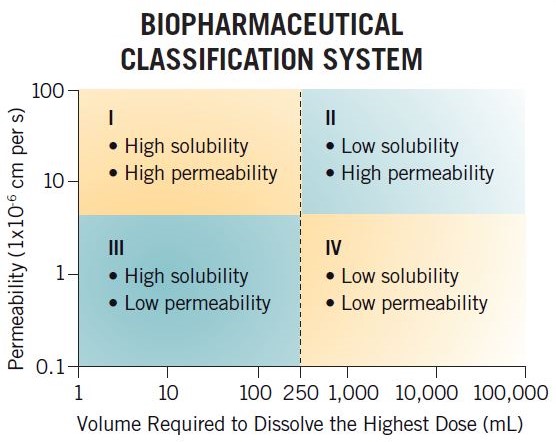
The BCS is a regulatory tool that is used to justify clinical biowaivers for certain types of compounds (BCS Class I and III) based on dissolution data, allowing sponsors to justify not performing clinical bioequivalence studies when changing a formulation. The framework classifies compounds based on their permeability and solubility (buffer solubility) properties into four categories (BCS I, II, III, and IV), and this system has been used by the industry for many years to assess in-vivo performance.

For example, a BCS Class I compound with high solubility and high permeability is likely to be a good development candidate due to having high fraction absorption. However, a BCS Class IV compound is not thought of in such good light, having low permeability and low solubility and hence thought to have poor exposure. In reality, a BCS Class IV compound could have Fabs of 80% and high solubility at pH 6.5 and therefore have good Fabs and no formulation development issues.

The BCS classification criteria are strict and hence often misinform clients of their compound's formulation/development challenges. More recently, a classification system based on developability potential has been developed by Dressman and Butler, the Developability Classification System (DCS). This classifies compounds into four categories similar to the BCS but uses simulated intestinal media for the solubility assessment and also takes into consideration the compensatory nature of permeability, allowing a solubility-limited absorbable dose to be determined, which in turn allows for DCS II compounds to be divided into DCS IIa and DCS IIb compounds. DCS IIa compounds are dissolution limited and hence formulation strategies to improve exposure would focus on particle size reduction such as nanomillling and micronization, whereas DCS IIb compounds are solubility limited and hence solubility-enhancement strategies such as SDDs and lipids may be used to improve exposure.

BCS

How can the DCS be used to drive formulation strategies?

Quotient Sciences uses the DCS to help drive formulation strategies for our clients. We can either take existing customer data and assign a DCS classification or measure solubility and calculate a predicted human effective permeability (Peff) using GastroPlus® ADMET predictor, which is done by the modeling and simulation group based on the compound structure.

A recent example of this was for a compound at the candidate selection stage. Quotient Sciences supported a standalone DCS classification and formulation development package. Permeability was high and solubility at 24 hours in intestinal buffer was less than the expected therapeutic dose, so solubility was classified as “low”. However, solubility at 3 hours was found to be >10-fold higher and hence it was classified as a DCS IIa compound. So, if dissolution is rapid, absorption will be good and sophisticated solubility-enhancement strategies are not required. Quotient Sciences then developed a simple capsule formulation with particle size reduction (micronization) and wetting agents to support the first-in-human (FIH) clinical study.


In summary, biopharmaceutics underpins the formulation strategies used at Quotient Sciences, ensuring a science-based and data-driven approach to formulation optimization. This reduces the risk of drugs failing due to poor formulation and increases the chances of clinical success.

For more information about Quotient Sciences’ biopharmaceutics capabilities, contact us.

Smarter modified-release formulations for proof-of-concept clinical trials with Translational Pharmaceutics®

Translational Pharmaceutics , Modified Release , Formulation Development , Solubility Enhancement

Smarter modified-release formulations for proof-of-concept clinical trials with Translational Pharmaceutics®

Modified Release Formulations at Quotient Sciences

Summary: Dr. Asma Patel shares strategies for accelerating modified-release oral formulation development, focusing on overcoming challenges in achieving target release profiles and bioavailability. She highlights how Translational Pharmaceutics® can be used for modified-release drugs to streamline decision-making, minimize risk, and shorten development timelines. 

Oral modified release formulations enable control over the rate and location of a drug’s release in the gastrointestinal (GI) tract to achieve specific therapeutic benefits in comparison to immediate release formulations. 

Benefits of modified-release formulations include maintenance of drug plasma levels over a prolonged period to reduce dosing frequency, attenuation of drug peak-to-trough ratios to lower peak-related adverse events (AEs) and improve efficacy, and drug delivery to a particular anatomical site for the treatment of local gastrointestinal (GI) disease. 

Drug delivery can be optimized to balance therapeutic needs, by managing AE profiles and reducing dosing frequency, both of which can contribute to improved patient compliance. There are also commercial benefits for modified-release formulations that are prevalent as part of product lifecycle management (LCM). Modest reformulation of an already approved drug from an immediate-release formulation to modified-release format allows both line and patent extension opportunities and continued market exclusivity.

A variety of modified-release technologies are available, eliciting a wide range of control on drug release and drug delivery. Careful selection of appropriate excipients and delivery technologies are key to the design of modified-release formulations fulfilling specific performance requirements, from gastro-retention formulation to a sustained release formulation, as shown in the table below.

While the development of modified-release drugs has historically been a part of late-stage development or LCM strategies, there are increasing examples of where modified-release has been utilized in the development of new chemical entities (NCEs). In all cases, a clear definition of the Target Product Profile (TPP) is important to outline the desired characteristics of the drug product required to deliver the desired in vivo performance. The TPP is based on the drug product requirements including the intended clinical use, dosage strength(s), drug release characteristics, stability, and other product quality criteria.

Many modified-release technologies can be used to control the rate and time of drug release to achieve a particular TPP. A developer is therefore faced with the need to select the strategy that will provide optimal results in the most efficient and cost-effective manner.

Modified release formatObjectiveFormulation technology
Gastro-retention
  • Keep the formulation in the stomach for an extended period to maximize the duration of absorption or therapeutic activity.
Swellable tablets (monolithic, bilayer, trilayer)
Gastric bypass
  • Prevent the release of the drug in the stomach and/or upper gastrointestinal tract.
  • Overcome first-pass metabolism or gastric irritation.
Enteric-coated tablets or capsules
Sustained or extended release
  • Extend the in vivo release profile of the drug or enable once-daily dosing.
Matrix tablets, coated tablets, or multiparticulates
Targeted or controlled delivery
  • Release the drug at or near the intended site of absorption or action.
  • Have either immediate or extended-release characteristics.
  • Deliver time, pH or microbially-triggered release.
Tablets, capsules or multiparticulates
Biphasic release
  • Eliminate the need for repeat dosing.
  • Provide rapid therapeutic effect from an immediate release layer and extended dosing via a sustained release layer.
Bilayer tablets or multiparticulates
Pulsatile release
  • Release the drug as a pulse after a predetermined lag time — designed according to the body’s circadian rhythm.
  • Provide release mechanism beneficial for drugs where time-dependent dosing is required or those that undergo first-pass metabolism.
Bilayer tablets or multiparticulates

How is Translational Pharmaceutics® used for modified-release drugs?

Selection of a specific modified-release platform and optimization of the quantitative levels of critical-to-performance excipients in that formulation can be challenging based on surrogate nonclinical, in vitro, or in silico data, and the recognized lack of predictability of these models to performance in humans. Traditional development also means the time and cost of taking multiple options into a clinical PK study can be prohibitive.

The Translational Pharmaceutics® platform is unique to Quotient Sciences, offering integrated development programs with in-study protocol flexibility to enable real-time optimization of key formulation variables based upon arising clinical data. It enables modified-release formulation technology platform(s) to be assessed in the identification of the best technology to achieve the desired TPP.

There are numerous potential formulation strategies available for modified-release dosage forms. Selecting a specific platform and the quantitative levels of critical-to-performance excipients in that formulation can be challenging based on surrogate nonclinical, in vitro, or in silico data. 

How is a design space used with Translational Pharmaceutics® to optimize modified-release formulations?

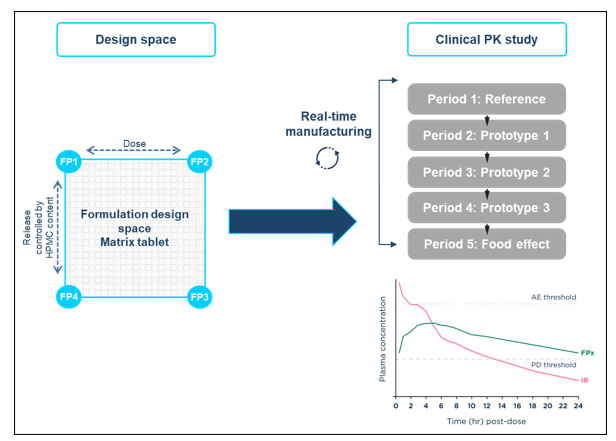
In-study protocol flexibility using Translational Pharmaceutics® can enable the optimization of key variables based on actual clinical data and/or the assessment of multiple technology platforms to achieve the desired TPP. Offering potential benefits in terms of PK variability and bimodal release combination flexibility, could be compared to a matrix modified-release tablet, which could be easier to commercialize if performance was sufficient.

Formulation adjustments within a mapped design space included in the regulatory submission are permissible. Design space methods bracketing several formulation parameters (e.g., drug content, functional excipient content, drug:polymer ratio, surface area volume ratio, and coating composition/thickness) can be used to allow any composition within defined ranges to be selected, made, and dosed.

The design space concept can be applied to any formulation, drug product, or dosage form. The goal in modified-release formulations is to address all the adjustable, critical-to-performance parameters that can influence release rate and PK profile.

Case Study: Development of an optimized modifed-release tablet formulation for initial proof-of-concept trials using Translational Pharmaceutics®

SLx-2101, a novel PDE-5 inhibitor1 was being developed by Surface Logix as an antihypertensive agent. A Phase II pilot clinical study using an IR tablet determined it was necessary to develop a once-daily modified-release formulation to reduce Cmax-related AEs and ensure the 24-hour PK profile remained within the therapeutic window.

Using formulation design space concepts, a strategy built upon ICH Q8 Development Pharmaceutics, and Quality-by-Design principles, a HPMC-based matrix modified-release tablet formulation was developed for assessment in an adaptive relative bioavailability Phase I study to optimize the modified-release tablet based on human clinical data. 

A two-dimensional formulation design space was established covering dose strengths between 10-20 mg and sustained drug release durations between approximately 12 and 20 hours.

The relationship between key formulation variables and formulation performance was investigated. Representative formulations at the extremes and the mid-points of the design space were manufactured and characterized to demonstrate that the performance of the formulation can be controlled by varying the levels of drug loading and HPMC in the formulation.

The SLx-2101 modified-release tablet formulation within the formulation design space was manufactured in real-time and evaluated in a flexible clinical study, avoiding the restriction of only dosing pre-defined formulation compositions. The formulation selection was driven by clinical data from the previous dosing period and the optimal modified-release formulation was identified in 6.5 months.

Summary

Selection of a modified-release platform can be challenging, given the lack of predictive models for human outcomes. The use of formulation design spaces, integrated manufacturing, clinical testing, and flexible clinical protocols can enable the assessment of modified-release platforms to de-risk development, identify the best technology to achieve the desired TPP and thereby maximize the probability of success and reduce development time, getting treatments to patients faster.

References

1.            DiMasi J and Wilkinson M. The Financial Benefits of Faster Development Times: Integrated Formulation Development, Real-Time Manufacturing, and Clinical Testing. TIRS, June 2020.

2.            USFDA. Conference on Harmonization (ICH) and FDA Guidance for Industry, Q8 (R2) Pharmaceutical Development 2009. https://www.fda.gov/media/71535/download. Accessed May 30, 2019.

3.            McDermott J, Scholes P. Formulation design space: a proven approach to maximize flexibility and outcomes within early clinical development. Therapeutic Delivery. 2015;6(11):1269-1278. doi.org/10.4155/tde.15.76.

4.            Lin, W, et al. Development of a Formulation Design Space for SLx-2101 Modified Release Tablets to Enable a Flexible Phase I Pharmacokinetic Study (Controlled Release Society Annual Meeting 2010).

Subscribe to Formulation Development