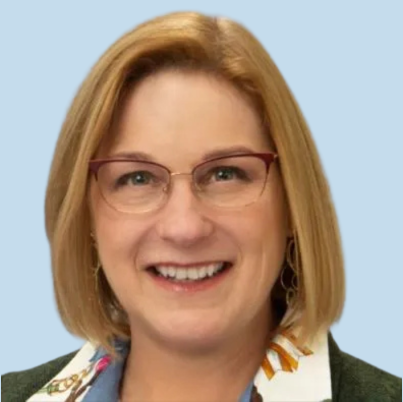
Marlene Leuenberger - VP & General Manager, Quotient Sciences - Philadelphia

Marlene Leuenberger

Marlene Leuenberger

VP & General Manager, Quotient Sciences - Philadelphia

Facility Leader
About

Marlene Leuenberger is an established operations leader with over three decades of experience in the pharmaceuticals and consumer health industries with companies including Procter & Gamble, Wyeth Pharmaceuticals, and Novartis Consumer Health. 

Prior to joining Quotient Sciences, Marlene was Vice President of Operations and Site Head at Jubilant Cadista Pharmaceuticals in Salisbury, Maryland and General Manager at Catalent in Somerset, NJ. 

She holds a Bachelor of Science in chemical engineering from Clarkson University.

Quotient Sciences Announces New Facility Leadership in Philadelphia, PA

News & Announcements , Philadelphia, PA , Marlene Leuenberger

Quotient Sciences Announces New Facility Leadership in Philadelphia, PA

PHILADELPHIA, PA; June 5, 2024 – Quotient Sciences, the drug development and manufacturing accelerator, has announced changes to its operational leadership team for its Philadelphia, Pa. facilities. Marlene Leuenberger has joined as Vice President and General Manager of Quotient Sciences’ Philadelphia facilities. 

Ms. Leuenberger is an established operations leader with over three decades of experience in the pharmaceuticals and consumer health industries with companies including Procter & Gamble, Wyeth Pharmaceuticals, and Novartis Consumer Health. Prior to joining Quotient Sciences, Marlene was Vice President of Operations and Site Head at Jubilant Cadista Pharmaceuticals in Salisbury, Maryland and General Manager at Catalent in Somerset, NJ. She holds a Bachelor of Science in chemical engineering from Clarkson University.

Together, Quotient Sciences’ facilities in Garnet Valley and Boothwyn, located just outside of Philadelphia, support small-molecule oral solid dose (OSD) formulation development and drug product manufacturing, with capabilities to support small batches for Phase I/II trials through late-phase manufacturing and commercial drug product supply.

“Our team in Philadelphia is pivotal to how we support our customers in delivering drug programs every day.” said Paul Ryan, Chief Operating Officer - Drug Substance & Drug Product at Quotient Sciences. “I’m looking forward to working with Marlene on a renewed commitment to operational excellence at our Philadelphia sites, as we continue to grow Quotient Sciences as a global leader and preferred CDMO/CRO partner for integrated drug development.” 
 

Colleague Stories: Alejandra Ugalde

Careers , Miami , Clinical Pharmacology

Colleague Stories: Alejandra Ugalde

Alejandra Ugalde is the Screening Manager at our Miami, FL facility.

Alejandra supports volunteer screening and volunteer recruitment for our Phase I clinical trials. In this interview, she shares a day in the life of her role. 

What I enjoy most about my role is the people, including working with patients or volunteers, our screening team, and our whole Miami team. I really enjoy the patient care aspect of my nursing education and the ability to apply that here at Quotient Sciences.

-    Alejandra Ugalde

What does a screening Manager do at Quotient Sciences?

As a Screening Manager, I oversee all screening activities and volunteer recruitment on a day-to-day basis, providing guidance and support to the screening team. Our main priority is to ensure that all ongoing or new clinical trials are enrolled in full and deadlines are met on time.

What does your typical day look like?

A typical day within the screening department means that we can process around 10 to 30 volunteers a day. We are the first faces that the volunteers get to see when they come to Quotient Sciences - Miami, so we try to make their experience memorable and make sure that any issues or queries get resolved. We are also responsible for reviewing the informed consent for any trial that they’re here to participate in, conducting a thorough medical history and physical exam, and coinciding with the protocol restrictions for these screening procedures (like vital signs, ECG, and specimen collection for laboratory processing.)

How has your career progressed since joining Quotient Sciences?

At Quotient Sciences, we believe in fostering career growth. I have had the opportunity to expand my skills and responsibilities significantly since joining the company. I would say that my interpersonal skills have been sharpened, and my leadership skills have improved. I also didn’t come to Quotient Sciences with managerial experience, but I have been very hands-on and have learned on the go about what it takes to lead a successful team. My team has been so patient and understanding; I’m very thankful for all their support, especially as we’ve navigated a high influx of trials to meet enrolment deadlines and expectations of our sponsors.

What experience did you have before Quotient Sciences?

Prior to working as a Screening Manager, I worked at Quotient Sciences a few years back as a data entry coordinator. My main responsibilities were data entry and cleansing, and resolving any queries arising from the EDC or our eSource system, which we use for volunteer management and operations in Miami. I left this role and enrolled at Florida International University where I completed my Bachelor of Science in Nursing. My nursing background helped me return to Quotient Sciences in my role supporting the various aspects of volunteer screening and recruitment for our Phase I clinical trials.

What learning or qualifications have you gained since being here?

To be a Screening Manager, the qualifications were either having a registered nurse’s license or a Bachelor of Science in nursing with at least two years of clinical research experience. Since I have been with Quotient Sciences, I am grateful that the company supported my continuing education and training, and I have been able to acquire my Advanced Cardiac Life Support Certification (ACLS). Also, I have been able to apply leadership skills like conflict resolution and mentorship to ensure that the team always feels supported, motivated, or guided through any issues we encounter.

What do you enjoy most about your role?

What I enjoy most about my role is the people, including working with patients or volunteers, our screening team, and our whole Miami team. I really enjoy the patient care aspect of my nursing education and the ability to apply that here at Quotient Sciences in a lot of different ways, from conducting a medical history and assisting technicians with vitals and ECG, to doing volunteer check-in with our registration coordinators and assisting our volunteer recruiters.

What aspects do you find most challenging?

The team is comprised of many different roles including research technicians, volunteer recruiters, and front desk coordinators. Not every day is going to be easy, but we all support each other and get through our challenges. One of the more difficult aspects of being a Screening Manager is delivering bad news. That usually means telling a volunteer when they are ineligible for a trial, which can be for several reasons, such as the person may not be healthy enough to participate at this time, or trials may be moved or canceled. I’m responsible for making sure that volunteers are informed when there are changes, to let them know that they may be eligible in the future and that we can stay in touch.

What advice would you give to someone applying for a role in your team?

Be prepared for a fast-paced environment—this really lives up to our manifesto at Quotient Science, “Molecule to cure. Fast.” We all need to be mindful of working efficiently while upholding the utmost quality throughout all of our clinical trials.

What do you like most about working at Quotient Sciences?

There is always an opportunity to learn, whether directly from a colleague or from learning what a department as a whole does and the impact that it has on the company, like project management, clinical, medical, database programming, data sciences—the list goes on. It’s really nice to see that we can all get together and understand each other’s roles, and how each person and function impacts a clinical trial’s success. 
Highlights from CPHI North America 2024: Round-up by Life Sciences Knowledge Hub

News & Announcements

Highlights from CPHI North America 2024: Round-up by Life Sciences Knowledge Hub

Hexagons on blue gradient background

The article reflects on various interviews held during CPHI North America in Philadelphia. The event took place at the Philadelphia Convention Center from May 7th to 9th, 2024. 

Unlike its overseas counterparts, CPHI NA operates on a smaller scale, creating a less hectic environment. Attendees engage in longer, nuanced conversations without the stress of constant meetings.

One notable interview was with Tim Quinn, Vice-President and General Manager Pharmaceuticals at Actylis. Actylis is a supplier and manufacturer of raw materials and performance ingredients. Quinn emphasized the company’s efforts to diversify its materials offerings by acquiring seven companies over the past four years. Actylis aims to provide any component that goes into an API product quickly, recognizing the importance of process speed.

To read more, check out the full article here on the Life Sciences Knowledge Hub website.

Highlights from Post-CPHI: Innovative Developments and Technologies in CDMO Space

Articles & Publications , Thierry Van Nieuwenhove

Highlights from Post-CPHI: Innovative Developments and Technologies in CDMO Space

Small Molecule Development & Manufacturting at Quotient Sciences

In this article by Manufacturing Chemist, Annabel Kartal-Allen and Thierry Van Nieuwenhove discuss the impact of next-generation oral dosage therapeutics, AI and the Quotient Sciences drug development platform on the pharmaceutical industry.

Thierry Van Nieuwenhove highlighted the surge in interest for oral dosage forms in treating obesity, noting the potential of GLP1 analogues and other incretin hormones to offer more therapeutic options. 

He also speaks about the transformative role of AI in drug discovery and how AI’s predictive capabilities could further expedite drug development, granting patients quicker access to necessary medications.

At the forefront of innovation, Quotient Sciences continues its strategic partnership with Charles River Laboratories, aiming to expedite the drug development process from candidate selection to IND application.

To read more, check out the full article here on the Manufacturing Chemist website.


Alexis Meroney - Associate Director, Business Development

Alexis Meroney

Alexis Meroney

Associate Director, Business Development

Business Development
About

Alexis Meroney drives growth and innovation in the drug development and manufacturing sector, leveraging more than five years of business experience to identify and pursue new opportunities and build long-term relationships with clients and partners. 

Alexis has a proven track record of delivering well-qualified sales leads, managing complex projects, and communicating effectively with diverse stakeholders. She holds a degree from Stockton University.

Rare Diseases: Collaboration in Orphan, Rare and Pediatric Drug Development by Nazim Kanji and Huw Jones

Articles & Publications , Nazim Kanji , Huw Jones

Rare Diseases: Collaboration in Orphan, Rare and Pediatric Drug Development by Nazim Kanji and Huw Jones

Child with her mother and a healthcare provider in a clinical setting

In this Pharmafile Magazine article Nazim Kanji and Huw Jones explore the orphan drug development and the benefit of CRO/CDMO collaboration, specifically in terms of pediatric rare diseases.

The development of therapeutics for the treatment of rare diseases can present several challenges to drug developers. The number of rare diseases that impact children make it clear why there is a demand for more pediatric medications that are appropriately designed and optimized for young patients.

Nazim Kanji and Huw Jones discuss benefits of CRO/CDMO collaboration and address the unique challenges of developing treatments for orphan, rare, and pediatric diseases. These partnerships help in creating patient-centric dosage forms, speeding up clinical trials, and customizing manufacturing to meet patient needs. Regulatory incentives in the US and EU support these efforts, ensuring timely and effective treatments for conditions that predominantly affect children.

To read more, check out the full article here on the Magazine Pharmafile website.


Quotient Sciences and Ensysce Biosciences Continue Collaboration on PF614-MPAR-102

News & Announcements

Quotient Sciences and Ensysce Biosciences Continue Collaboration on PF614-MPAR-102

Ensysce Biosciences and Quotient Sciences logos

Ensysce Biosciences, Inc. (NASDAQ:ENSC), a clinical stage pharmaceutical company developing innovative solutions for pain relief that reduce the potential for opioid abuse and overdose, recently announced the renewal of its collaboration with Quotient Sciences to undertake the study PF614-MPAR-102 to examine and evaluate the full commercial dose range of the PF614-MPAR drug product.

The Phase 1b study, PF614-MPAR-102, will evaluate opioid release following administration of PF614-MPAR at ascending doses. Quotient Sciences' Translational Pharmaceutics® platform for drug development will be again used to manufacture and test the PF614-MPAR drug product, providing expedited clinical study progress.

Read the announcement on Ensysce's website

Read the Ensysce Biosciences case study

John McDermott - VP, Scientific Consulting

John McDermott - Quotient Sciences

John McDermott

VP, Scientific Consulting

Subject Expert
About

John McDermott leads Quotient Sciences' global drug development consulting, research fellows, modeling & simulation, and client services teams. He provides scientific expertise that helps Quotient Sciences' commercial and operational teams maximize growth and ensure client programs' success. 

John has over 25 years of experience in pharmaceutical sciences with prior roles at companies including Rhone Poulenc Rorer and Covance (later acquired by LabCorp). He joined Pharmaceutical Profiles in 2001, which, following a series of M&A and organic growth, was rebranded as Quotient Sciences in 2017.

John has been central to the development of Quotient Sciences Translational Pharmaceutics®, the Company's flagship drug development platform. This platform integrates formulation development, on-demand GMP drug product manufacturing, and healthy volunteer clinical testing to deliver time and cost efficiencies in small molecule and oral peptide drug programs and applications.

John has significant experience in scintigraphy imaging studies for oral and inhaled dosage forms, including the development and validation of radiolabeling methods. 

He holds a Bachelor of Science degree in Chemistry, with a focus on Analytical Chemistry, from the University of Hull. 

Pharmaceutical Outsourcing Roundtable: Pediatric Dosage Forms with Nazim Kanji

Articles & Publications , Nazim Kanji

Pharmaceutical Outsourcing Roundtable: Pediatric Dosage Forms with Nazim Kanji

Pediatric Formulation & Product Development at Quotient Sciences

In this piece with Pharmaceutical Outsourcing, Nazim Kanji, Executive Director of Pediatric Services, speaks on current trends in the pediatric dosage form market and offers insight on how these influence product development strategies.

Nazim discusses his experience working with sponsor companies, highlighting the growing interest in developing a wide and full range of liquid and solid dose formats, noting a common preference for a single formulation that can be flexibly dosed to a wide age range of children and in dosage forms such as solutions, suspensions, powder for reconstitution, minitablets, and sprinkles. He also addresses key factors in determining product development strategy.

Nazim discusses the major challenges faced by pharmaceutical companies in developing pediatric dosage forms, particularly concerning safety, efficacy, and palatability. He touches on important factors to consider in initial stages and after formulation development in order to develop an acceptable pediatric product that achieves clinical, regulatory, and commercial success.

He also speaks on the issue of dose accuracy and variability in pediatric formulations, considering the diverse age groups and physiological differences among children. Nazim says, "Dosing is generally done in bands that are based on age, weight, or body surface area, with oral liquid formulations and minitablets among the most popular choices for their acceptability and efficacy in younger patients. Modeling and simulation can also be used to aid dose extrapolation from adult data and predict the in-vivo performance of a dosage form in children."

To read more, check out the full article here on the Pharmaceutical Outsourcing website.

Subscribe to