An introduction to Quotient Sciences - Alnwick, through the eyes of Gareth Jenkins

Alnwick , Drug Substance , Dr. Gareth Jenkins

An introduction to Quotient Sciences - Alnwick, through the eyes of Gareth Jenkins

Exterior photo of Quotient Sciences' Alnwick, UK facility

In February 2021, Quotient Sciences acquired the contract development and manufacturing organization (CDMO) Arcinova, based in the northeast England. In this spotlight, we talked to Gareth Jenkins to find out more about his background and get an introduction to the expertise at the Alnwick site.

For more detail about Arcinova's services from Alnwick, UK, continue reading on arcinova.com.

What brought you to join Arcinova? 

With over 25 years in the pharmaceutical industry, my journey began with a PhD in organic chemistry from Imperial College London, followed by roles in start-ups where I gained hands-on experience in GMP manufacturing, drug substance scale-up, and business development. I later worked in drug discovery and medicinal chemistry outsourcing, helping launch one of the first GPCR-targeted screening libraries. 

After leading a not-for-profit consultancy focused on process knowledge management, I was introduced to the Alnwick site—now Arcinova—during a technical due diligence project. That visit eventually led me to join the team and help expand its drug substance capabilities.

What services does Arcinova offer?

Radiolabeling

With over 40 years of experience and more than 500 molecules labeled, the Alnwick site is a leader in radiolabeling. Our team provides expert guidance on optimal ¹⁴C label placement, balancing metabolic stability with synthetic feasibility, and has expanded GMP capacity to meet growing demand.

Bioanalysis

At Alnwick, we have invested significantly in state-of-the-art mass spectrometry as our main analytical detector, as this equipment has incredible sensitivity and specificity. Our bioanalysis team has developed 400+ assays for pre-clinical and clinical studies, leveraging advanced mass spectrometry for exceptional sensitivity. Recent work includes elemental assays for treatments like Wilson’s disease and high-resolution mass spectrometry has also helped our clients understand the pharmacokinetics of mixtures of isoforms of insulin.

Drug substance

Part of the Arcinova strategy was to establish drug substance process research and development (PR&D) and kilo-scale GMP manufacturing, combining with the site’s existing expertise in molecule characterization, formulation development, and bioanalysis to help clients get molecules to patients faster.

Flow technology

As we’ve grown, we’ve recruited some very talented colleagues with experience in the most recent developments in science and technology. Through our FlowInova™ initiative, supported by UK government funding, we’ve adopted data-driven process modeling to optimize scale-up using batch or continuous flow. This approach, combined with deep analytical capabilities, ensures seamless integration across drug substance, formulation, and bioanalysis.

What does the introduction of the state-of-the-art Alnwick facility offer Quotient Sciences customers?

This is the exciting bit. Together, there are so many opportunities for science and agility to integrate and combine. As a drug development and manufacturing accelerator, we can cut right across the artificial silos that pervade the pharmaceutical industry.

Learn more about the services offered by Arcinova on arcinova.com.

Image
cobranded

What Is 505(b)(2)? Choosing a partner to accelerate the development of 505(b)(2) drug products

505(b)(2) , Regulatory , Dr. Aruna Railkar

What Is 505(b)(2)? Choosing a partner to accelerate the development of 505(b)(2) drug products

What is a 505b2 Drug Product?

The 505(b)(2) drug development pathway has steadily become more appealing to drug developers as development times and FDA approval are both accelerated compared to the 10-15 years for a traditional new chemical entity (NCE).

The FDA defines a 505(b)(2) application as “an NDA that contains full reports of investigations of safety and effectiveness, where at least some of the information required for approval comes from studies not conducted by or for the applicant, and for which the applicant has not obtained a right of reference or use, including, for example, the Agency’s finding of safety and/or effectiveness for a listed drug or published literature.”1 

Drug development companies are therefore able to leverage existing regulatory data on an already approved NCE and supplement the package with new information relevant to their new product, typically with additional CMC and clinical data. 

What are benefits of the 505(b)(2) Drug Development Pathway?

From a patient perspective, the benefits of the 505(b)(2) pathway are multiple; improved formulations can lead to increased compliance and enhanced clinical outcomes, new routes of administration can offer greater convenience, and new therapeutic indications can address unmet clinical needs.  

For an innovator company, this repurposing of existing drugs can help manage the value of an NCE through its life cycle, with the benefit of reduced development time, cost, and risk. For a virtual or small drug delivery company, this approach enables innovative ideas to improve upon marketed products or dosage forms resulting in new products that provide benefits to patients. 

In the high-stakes world of pharmaceutical drug development, reduced time and costs are a very attractive offering, however, 505(b)(2) programs can present some unique development challenges, particularly from a CMC perspective that do require careful consideration. 

Understanding how to quickly identify the best formulation to move forward with, whether it is scalable for commercialization, and what key clinical studies are needed to generate the necessary pharmacokinetic, safety & efficacy data, are all factors that play a role in getting regulatory approval. 

To achieve a successful project outcome, one of the first and most critical steps is selecting the right development partner. Mid-sized to large pharmaceutical companies may be looking for a partner who can become an extension of their existing R&D capabilities. Virtual or small biotechs are likely to be seeking a partner that can provide expertise, resources, and capacity in multiple areas of drug development and specifically has experience in working with 505(b)(2) programs.

Choosing a CDMO for 505(b)(2) Drug Development

Quotient Sciences has significant experience developing 505(b)(2) drug programs, and we help our customers turn their innovative ideas into successful products. With state-of-the-art facilities in the UK and US and a global team of drug product and clinical experts, we have the expertise to develop, characterize, manufacture, and evaluate new drug products from the early stages of drug development to commercial launch.

We also offer our customers the ability to accelerate the development of their 505(b)(2) programs by leveraging Translational Pharmaceutics to integrate formulation development, real-time adaptive manufacturing, and clinical testing. A single project manager leads each program. Drug products can be manufactured, released, and dosed in days or weeks rather than months, thus shortening the time for clinical data. The fast availability of human data not only optimizes the formulation but also multiplies the likelihood of success.

A publication by the Tufts Center for the Study of Drug Development compared timelines from traditional multi-vendor outsourcing used in industry to Translational Pharmaceutics. The study concluded that Translational Pharmaceutics saved at least 12 months of development time, amounting to multi-million dollar financial benefits in the form of reduced R&D costs and earlier revenues from product sales.

For more information on our 505(b)(2) drug development capabilities, contact us.


References

1. https://www.fda.gov/drugs/cder-small-business-industry-assistance-sbia/abbreviated-approval-pathways-drug-product-505b2-or-anda-september-19-2019-issue

2. US FDA, CDER, Draft guidance for industry applications covered by section 505(b)2). https://www.fda.gov/ downloads/Drugs/Guidances/ ucm079345.pdf. Published October 1999.

3. US FDA, CDER. Determining whether to submit an ANDA or a 505(b)2)application. https://www.fda.gov/regulatory-information/search-fdaguidance-documents/determining-whether-submit-anda-or-505b2-application. Published May 2019.

4. Freije, I; Lamouche, S; Tanguay M; Therapeutic Innovation & Regulatory Science, 1-11, 2019 DOI: 10.1177/2168479018811889 tirs.sagepub.com

An integrated “make-test” approach for peptide development

Peptides , Dr. Andrew Lewis

An integrated “make-test” approach for peptide development

Dr. Andrew Lewis

Therapeutic peptides have been attractive drug candidates for several decades due to their specificity, potency, and low toxicity. The challenges to their delivery at therapeutic levels to the site of action have been well documented, relating in most part to their stability in different physiological locations and pharmacokinetics. 

Oral peptides rise in popularity among drug developers has led to new strategies that enable optimized peptide development and delivery to produce more competitive drug products.1 Among the first was the development of sustained-release formulations, utilizing the biodegradable polymers PLGA and PLA (microparticles and implants), and later self-assembling peptide formulations. These formulations reduced the injection frequency to once monthly and longer, albeit through large gauge needles that are painful to inject. Such formulations were, and still are, blockbuster products, particularly in oncology where the fear of injection pain is far outweighed by the benefits of the treatment. The fact that many of these sustained-release formulations are still generating several hundred to a billion dollars in revenue many years after their patent expiry (e.g. Zoladex, Decapeptyl, Somatuline Autogel) demonstrates the importance of peptides as therapeutics – enabling access to challenging targets via alternative pharmacophores – but also offer the benefit of using novel drug delivery strategies.

A recent review of marketed peptide products showed that almost all routes of delivery have been successfully employed for peptides, however, the majority are injected, and alternative routes - such as oral, nasal, and topical are typically used for local rather than systemic delivery. A significant barrier to the systemic delivery of peptides is that their biopharmaceutics is not well understood - whether that be the absorption and distribution processes following injection or delivery via alternative routes – and the impact of changes to the formulation on performance is difficult to predict. A recent industry-sponsored session at the Controlled Release Society (CRS) annual meeting was dedicated to this topic for the injectable route as a “Grand Challenge” but this could no doubt be expanded to oral, nasal, and inhaled delivery of proteins and peptides, and there is a considerable amount of work to still be done in this area.

This is perhaps no better demonstrated than the recent discoveries made through the development of Rybelsus (oral semaglutide), a product by Novo Nordisk. Prior to its development, the target for orally delivered peptides had been widely accepted to be the small intestine.2,3 However, exquisite clinical evaluation, some of which was performed at Quotient Sciences, together with supportive preclinical studies demonstrated it to be absorbed from the stomach. This not only went against the prevailing dogma, but together with the approval for Mycapssa (oral octreotide) by Chiasma have demonstrated that systemic delivery of orally administered peptides to therapeutics levels is possible, and the use of absorption enhancer technologies is acceptable to the FDA, EMA and PmDA.

Translational Pharmaceutics®: A novel approach for peptide delivery

As noted, the biopharmaceutics of delivered peptides are poorly understood and the critical performance formulation and delivery system variables can be uncertain (whether for systemic delivery, local delivery, or delivery route switch.) While data in preclinical models can be useful, they may not be translatable to human subjects. 

To bridge the gap, we have worked with on numerous peptide formulations and delivery systems with clients. These programs have covered a range of delivery routes to optimize the product and have been informed by clinical data obtained from Phase I trials conducted in healthy volunteers. Not only does this provide a more relevant evaluation of performance, but it can also provide a unique insight into the biopharmaceutics of their product in humans, such was the case with Rybelsus.

Given the uncertainties, the application of a formulation design space coupled with a flexible clinical trial design and integrated with real-time manufacturing can maximize chances of program success and accelerate identifying an optimum formulation. This development strategy can potentially be applied across a full range of drug delivery routes, formulations, and technologies.

Case study: Undisclosed Oral Peptide for Systemic Delivery

Perhaps the most widely employed oral peptide delivery strategy is the inclusion of a penetration enhancer into the formulation to facilitate absorption across the gastrointestinal epithelia. While preclinical work can establish the principle, for use in humans, the optimal concentration of penetration enhancer and/or ratio with the dose of API is difficult to predict. 

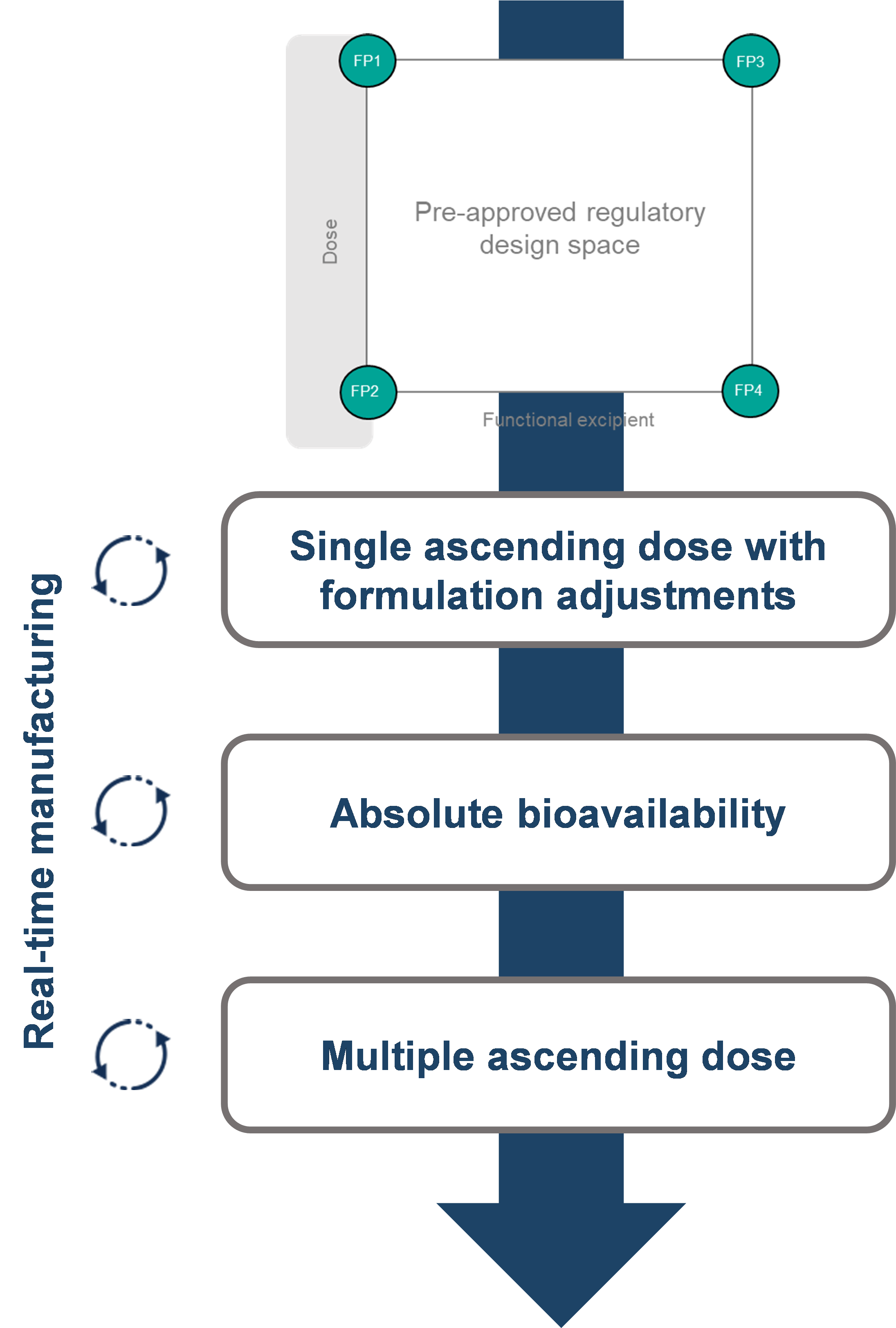
To address these challenges, we performed a first-in-human (FIH) clinical study on an oral peptide formulated with a penetration enhancer, defining a formulation design space within which any formulation could be selected, varying the dose and penetration enhancer content. To enable assessment of the absolute bioavailability, we developed an intravenous formulation. A schematic of the clinical trial design is shown in Figure 2. Real-time manufacturing was employed, based on the formulation that was dosed and the emerging clinical data prior to the next dosing occasion. 

At the end of the study, we had defined the relationship between the functional excipient and oral exposure of the peptide and completed a Single Ascending Dose (SAD) and Multiple Ascending Dose (MAD) evaluations to enable further development.

Figure 1

Figure 1: Clinical Trial Design for an Oral Peptide First-in-Human Study

Case Study: Route Switch from Intravenous to Subcutaneous

Our client had already demonstrated Proof-of-Concept (POC) for their peptide via the intravenous route (IV), however this route of administration was not considered suitable for alternative target indications, where patient self-administration would be required in order to develop a competitive product, and a subcutaneous (SubQ) formulation was therefore desired. 

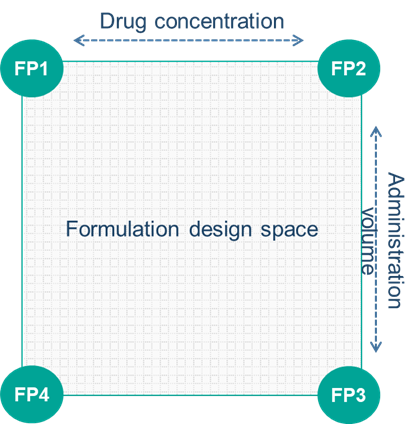
The aim of this program was to develop a formulation that would achieve the desired exposure while minimizing injection site reactions. As noted, the impact of key formulation variables on these can be difficult to predict, and to maximize chances of success we employed a two-dimensional formulation design space enabling flexibility to increase the dose by either concentration or injection volume (Figure 2). 

Formulations to be dosed in healthy volunteers were selected from anywhere within the design space, informed by the pharmacokinetic and tolerability data from the preceding dosing period, and manufactured in real-time within the clinical study. Six formulations were evaluated, eventually resulting in us identifying a formulation that matched the intravenous AUC, providing our client with a product suitable for self-administration and opening up the possibility of using the drug for a wider range of indications.

Figure 2

Figure 2: Formulation Design Space for a Subcutaneous Peptide Formulation to Match Exposure and Minimize Injection Site Reactions

Applying Translational Pharmaceutics® is an effective method for peptide drug development

Peptide therapeutics are attractive drug candidates with the potential to address numerous indications, but their formulation and delivery can be challenging. The utilization of a formulation design space together with an integrated manufacturing and clinical testing strategy, can not only mitigate development risk and accelerate drug development, but also provide powerful insights into the biopharmaceutics of the delivery system following administration.


References

1.       A. L. Lewis and J. Richard, Ther. Deliv. (2015) 6(2), 149–163

2.       Buckley et al., Sci. Transl. Med. 10, eaar7047 (2018)

3.       Lewis, A.L. et al. Drug Deliv. and Transl. Res. (2021). https://doi.org/10.1007/s13346-021-01000-w

What is the role of biopharmaceutics in early drug development?

Dr. Vanessa Zann , Biopharmaceutics , Early Development , Drug Product Optimization , Formulation Development

What is the role of biopharmaceutics in early drug development?

Many of today's compounds present sub-optimal pharmacokinetic (PK) data (either predicted from in-vitro and pre-clinical data or measured in the clinic), such as poor exposure (leading to high doses), large variability, short half-life requiring more than once-a-day dosing, or Cmax-related adverse events (AEs). 

Poor exposure and/or large variability can often be addressed and improved upon with enabled formulations to enhance solubility, such as an amorphous spray-dried dispersion (SDD) formulation or lipid formulations. 

For compounds with large peak-to-trough ratios, more than once-a-day dosing, or Cmax-related AEs, a modified-release (MR) formulation could often be used to successfully alter the input rate and hence modify the shape of the profile to deliver the required PK exposure profile.

We help biotech and pharma customers in the development and optimization of drug products. Biopharmaceutics allows us to understand the solubility, dissolution, and permeability of a compound to identify an optimal formulation strategy.

Our chemists and formulation scientists review the properties of new drug candidates and “work their magic” to develop formulations that improve the exposure profile of the compound.

To embark on formulation optimization, be it solubility enhancement or MR development, it is key that we understand the biopharmaceutic properties of the compound to guide the formulation strategy and technology selection. Essentially, biopharmaceutics underpins the formulation strategy.

What is biopharmaceutics? 

Biopharmaceutics is a relatively new scientific discipline that examines the interrelationship of the physicochemical properties of the drug, the dosage form in which the drug is given, and the route of administration on the rate and extent of systemic drug absorption (Applied Biopharmaceutics and Pharmacokinetics, Shargel, Wu-Pong and Yu, 5th Edition).

How does bioavailability play a role in biopharmaceutics?

As formulators, we want to deliver the right amount of drug at the right time with the correct concentration within the body to exert a therapeutic effect. We need to understand the systemic exposure of the drug, and for an orally administered formulation, that means understanding the process of absorption and then teasing apart the rate-limiting steps in the process.

Biopharmaceutics allows you to understand the solubility, dissolution, and permeability of a compound, and from this, we can then assess the potential fraction absorbed (Fabs). Now fraction absorbed and bioavailability are often confused and used interchangeably. Fraction absorbed is directly related to the solubility, dissolution, and permeability of a compound and is the amount of drug that enters the intestinal enterocyte in our gastrointestinal tract (FDA definition), whereas bioavailability (F) is the amount of drug in the systemic circulation able to have a therapeutic effect. F is directly related to the amount of drug absorbed (Fabs) and the amount surviving first-pass metabolism. Therefore, absorption is the input mechanism and clearance (metabolism) is the output mechanism. 

As formulators, we are often able to directly impact the amount of drug absorbed through formulation optimization and improve exposure. However, the chances of improving the exposure profile of a drug that is highly cleared by formulation modification are limited.

How can biopharmaceutics help drug developers overcome challenges with their small molecules?

Understanding the biopharmaceutic properties of your compound can help you identify a formulation strategy that overcomes the challenges the compound faces or can assess the potential for the specific compound to meet the target product profile (TPP). The sooner challenging and unfixable compounds are identified and killed off in development, the less R&D expenditure will be incurred, allowing you to focus on compounds that have the legs to make it to market.

For example, if drug X has a low Fabs of 10% and F is 8%, then there is the option to increase Fabs through formulation optimization. However, if drug Y has a high Fabs (90%) but low F (e.g. 10%), even if we are able to increase absorption by another 10% (Fabs = 100%), it is unlikely to improve the exposure (F) greatly, as for drug Y clearance (metabolism) is limiting exposure. The only instances in which formulators can help in this scenario is to increase exposure (Fabs) through formulation just enough to potentially saturate the clearance mechanism. Alternatively, if the compound is subject to gut CYP3A4 metabolism, we could deliver to a lower region of the gastrointestinal tract where CYP3A4 expression is reduced, thus hoping to bypass the gut metabolism if that is the rate-limiting process for exposure. However, often in this situation, it is back to, discovery and the drawing board to revisit the compound chemistry.

What is the Biopharmaceutics Classification System (BCS)?

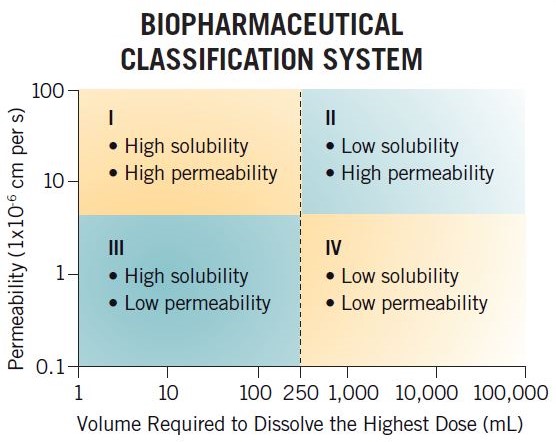
The BCS is a regulatory tool that is used to justify clinical biowaivers for certain types of compounds (BCS Class I and III) based on dissolution data, allowing sponsors to justify not performing clinical bioequivalence studies when changing a formulation. The framework classifies compounds based on their permeability and solubility (buffer solubility) properties into four categories (BCS I, II, III, and IV), and this system has been used by the industry for many years to assess in-vivo performance.

For example, a BCS Class I compound with high solubility and high permeability is likely to be a good development candidate due to having high fraction absorption. However, a BCS Class IV compound is not thought of in such good light, having low permeability and low solubility and hence thought to have poor exposure. In reality, a BCS Class IV compound could have Fabs of 80% and high solubility at pH 6.5 and therefore have good Fabs and no formulation development issues.

The BCS classification criteria are strict and hence often misinform clients of their compound's formulation/development challenges. More recently, a classification system based on developability potential has been developed by Dressman and Butler, the Developability Classification System (DCS). This classifies compounds into four categories similar to the BCS but uses simulated intestinal media for the solubility assessment and also takes into consideration the compensatory nature of permeability, allowing a solubility-limited absorbable dose to be determined, which in turn allows for DCS II compounds to be divided into DCS IIa and DCS IIb compounds. DCS IIa compounds are dissolution limited and hence formulation strategies to improve exposure would focus on particle size reduction such as nanomillling and micronization, whereas DCS IIb compounds are solubility limited and hence solubility-enhancement strategies such as SDDs and lipids may be used to improve exposure.

BCS

How can the DCS be used to drive formulation strategies?

Quotient Sciences uses the DCS to help drive formulation strategies for our clients. We can either take existing customer data and assign a DCS classification or measure solubility and calculate a predicted human effective permeability (Peff) using GastroPlus® ADMET predictor, which is done by the modeling and simulation group based on the compound structure.

A recent example of this was for a compound at the candidate selection stage. Quotient Sciences supported a standalone DCS classification and formulation development package. Permeability was high and solubility at 24 hours in intestinal buffer was less than the expected therapeutic dose, so solubility was classified as “low”. However, solubility at 3 hours was found to be >10-fold higher and hence it was classified as a DCS IIa compound. So, if dissolution is rapid, absorption will be good and sophisticated solubility-enhancement strategies are not required. Quotient Sciences then developed a simple capsule formulation with particle size reduction (micronization) and wetting agents to support the first-in-human (FIH) clinical study.


In summary, biopharmaceutics underpins the formulation strategies used at Quotient Sciences, ensuring a science-based and data-driven approach to formulation optimization. This reduces the risk of drugs failing due to poor formulation and increases the chances of clinical success.

For more information about Quotient Sciences’ biopharmaceutics capabilities, contact us.

Modeling and Simulation at Quotient Sciences: Q&A with Jane McGuffog

Modeling and Simulation

Modeling and Simulation at Quotient Sciences: Q&A with Jane McGuffog

Summary: In this Q&A, Jane McGuffog, Director of Modeling & Simulation at Quotient Sciences, discusses how in silico modeling and simulation (M&S) drive smarter, faster drug development. Jane explains the use of PBPK and PBBM modeling to predict drug behavior, optimize formulations, and support regulatory submissions. 

In silico modeling is a proven scientific approach used to inform key development decisions, and can be employed throughout the lifecycle of a drug. In this Q&A with Jane McGuffog, Director of Modeling & Simulation at Quotient Sciences, she explains the applications of M&S in clinical research and developing effective drug products. 

Tell us about your background. What drew you to modeling & simulation? 

I have worked in drug discovery and development for over 30 years, with a background in DMPK in both small biotech and large pharma. During that time, I have led a number of clinical stage  projects (FIH /Phase I/Phase II), encountering all the usual challenges with drug substance and drug product, and predicting human pharmacokinetics. 

Experiencing the impact of modeling first-hand, I was lucky enough to be able to apply M&S to several projects via my own team and through outsourcing to partner companies. I am convinced that it really helps make better development decisions, but it is critical to find the right partner if you are looking to outsource these services.

As a client, I worked with Quotient Sciences on two projects. I was particularly impressed with how the Translational Pharmaceutics® platform was applied for drug product optimization for a modified-release product, as a RapidFACT® program. The knowledgeable and collaborative modeling team were a pleasure to work with. 

In fact, I joined Quotient Sciences in part because I had such a good experience working with the team! I am incredibly lucky to lead such a talented and experienced group of modelers. They love problem solving and that comes through in everything they do.

How do Quotient Sciences use modeling & simulation in drug development? 

Physiologically based pharmacokinetic (PBPK) modeling integrates knowledge of a drug’s characteristics with physiological information to provide important insight into how new drugs will behave in vivo, allowing decisions around drug development to be made confidently. We use it to build models that predict the plasma profiles of drugs.

PBBM modeling builds on PBPK by focusing on how a drug is absorbed. It looks at how things like solubility and how fast a drug dissolves affect its performance in the body. Using these models throughout a drug’s development can save time and money, and lead to smarter strategies.

Physiologically based biopharmaceutics modeling (PBBM) builds on PBPK and focuses on drug absorption, especially how drug biopharmaceutic properties including solubility and permeability, and formulation can affect in vivo performance.

The resultant models can be used to simulate potential in vivo performance of as yet untested formulations and treatment regimes, with corresponding time and budget efficiencies, whilst simultaneously driving better development strategies.

How are PBPK and PBBM used as molecules enter clinical research?

PBPK modeling and PBBM can be used to assess compounds and guide formulation strategies for clinical assessment. By understanding the solubility and permeability of a compound, and an estimation of intended dose range, M&S can enable rational decisions to be made, such as:

  • Could micronization of my active pharmaceutical ingredient (API) help increase Cmax/exposure?
  • Is precipitation a risk for my compound?
  • Will I need to use an enabled formulation to get the exposure I need?

Although there may not be a wealth of data in early development, it is possible to make initial risk assessments on a limited dataset. For example, M&S can use in-silico predictions from chemical structure to assess small intestinal permeability.
Teaming up M&S with our preformulation team is another option for clients looking to move efficiently and cost effectively from fit for purpose preclinical formulations to something fit for FIH  , and looking forward to formulation development towards your value inflection point.

How can PBPK and PBBM M&S be used in early development?

During clinical and product development, M&S can provide insight to help answer key questions and guide the development strategy before the drug has even been dosed to a human, such as:

  • Can I change my API particle size without significantly impacting pharmacokinetic (PK) parameters, like Cmax and AUC?
  • How much will my drug’s PK parameters change if my drug is taken with a meal?
  • What dose can I give to an older person or child to obtain equivalent exposure to a healthy adult?
  • Can I use my in vitro data to assess DDI risk? 

Although it is possible under certain circumstances to use M&S data to secure biowaivers in lieu of clinical studies, in most cases it is not a replacement for a clinical trial, though it can often reduce the number of clinical studies that might be needed. 
Instead, M&S maximizes data from in-vitro, clinical, and pre-clinical studies to aid the understanding of a drug in the human body. From this, appropriate formulation design and development strategies can be made. 

How can PBPK and PBBM M&S be used in late development?

In later development, modeling is increasingly used to support chemistry, manufacturing, and controls (CMC) aspects of regulatory applications.

PBBM can help define product specifications (particle size and dissolution rate), that are linked directly to clinical performance. This supports regulatory acceptance and reduces the need for extensive clinical trials.

It can support Virtual Bioequivalence (BE) studies, enabling ‘safe space’ for formulation changes. In certain cases, this can justify biowaivers and reduce the need for clinical bridging studies.

Also, PBBM can be used to perform risk assessment for manufacturing changes, such as excipient or process changes, predicting their impact on bioavailability. It can be involved in lifecycle management, supporting decisions throughout the product lifecycle, including reformulation, scale-up, and global registration

How does your team collaborate with other departments at Quotient Sciences to achieve project goals?

The M&S team operates within Quotient’s Consulting team which brings together a wide range of scientific disciplines into a single group.

All programs start with a scientific discussion to understand the development challenges at hand and form the questions that M&S can look to help answer. We have worked with clients who have had  little experience of PBBM, as well as those who are very experienced modelers. 

M&S involves integrating information from many disciplines, so a large knowledge base is required. In addition to having team members with varied backgrounds—from chemistry, pharmacokinetics, and biopharmaceutics to mathematics and coding—we work cross-functionally to access the knowledge that Quotient Sciences has built over more than three decades. The team can connect you with other expertise within Quotient Sciences, too.

Whether we are doing a stand-alone M&S program or working as part of an integrated project, we work collaboratively and flexibly, and are always client-focused. 

What software does Quotient Sciences use for M&S?

Most of the modeling work performed at Quotient Sciences uses GastroPlus™ software to build virtual models to describe mechanistically the behavior of a drug in the body. 

GastroPlus™ mechanistically describes not only drug dissolution (like location, rate, and precipitation potential) but also drug absorption (such as rate, intestinal location, and affinity for metabolic gut enzymes and transporters), tissue and blood distribution, and finally excretion (metabolic and/or renal clearance/other mechanism). 

The team also have experience using the open source platforms PK-Sim® and MoBi®, which provides us with flexibility and allows us to select the right tool for the right job.

Do you do any other types of M&S work other than PBPK modeling?

The M&S group is also experienced in developing numerical (empirical rather than mechanistic modeling) in-vitro/in-vivo correlations (IVIVCs), which allow a relationship between in-vitro performance (dissolution) and in-vivo outcome (PK parameters Cmax and AUC) to be developed. A successful Level A IVIVC can be used to inform drug product development or used as part of a regulatory submission. 

In addition, the group have experience in drug drug interaction (DDI) modeling to assess potential DDIs, inform clinical study design, and support regulatory submission.  A poster was presented by Kevser Sevim at the 2024 American Association of Pharmaceutical Scientists (AAPS) PharmSci 360 conference, showcasing the development and validation of a PBPK model to simulate drug-drug interactions (DDIs) involving belumosudil.

I’ve been impressed by the team’s innovative modeling approaches, particularly in the area of oral peptide delivery using permeability enhancers. Ricardo Diaz de Leon Ortega has led this work and presented recent advancements at several key events, including our co-sponsored workshop at the Controlled Release Society Annual Meeting in Philadelphia, the 16th PharmSci APS 2025, and PAGE in Thessaloniki, where he was joined by Dannielle Ravenhill to share insights from Quotient Sciences’ Modelling & Simulation team.

For more information about Quotient Sciences’ M&S capabilities, click here or contact us directly here.

A critical path to safe medicines: Why data integrity matters in drug development

Regulatory , Clinical Pharmacology

A critical path to safe medicines: Why data integrity matters in drug development

Chart on a piece of paper

Data integrity is crucial when developing new medicines to ensure their safety and effectiveness for patients.

Data integrity is central to our operations. Our rigorous quality systems across all our facilities ensure the accuracy and consistency of data collected from our formulation development, drug product manufacturing, and clinical programs. This commitment safeguards volunteer and patient safety and ensures compliance with regulatory requirements. 

In this article, learn about data integrity in pharma and clinical trial data integrity from our team.

What is data integrity in drug development?

Data integrity is the maintenance and assurance of data accuracy and consistency over the lifecycle of a drug product/study. It is a critical aspect of the design, implementation, and usage of any system that stores, processes, or retrieves data.

Data integrity must follow global mandatory requirements for regulated healthcare industries for developing and bringing a new medical product to market. In addition, data integrity must comply with Good Manufacturing Practices (GMP), Good Clinical Practices (GCP), and Good Laboratory Practices (GLP), often collectively termed GxP.

Why is data integrity so important in drug development and clinical trials?

Data integrity and clinical trial data integrity is essential because it ensures that the raw data collected is valid, complete, and well-documented.

The goal of data integrity is to ensure that all data—original records, observations, and other documented activity— required to reconstruct the clinical study is available, complete, accurate, and authentic. This is to assure the safety, efficacy, and quality of the trial as well as the product being evaluated.

How does data integrity differ from data security in drug development?

Data integrity and data security are related terms, each playing an important role in the successful achievement of the other.

Data security is the protection of data against unauthorized access or corruption and is necessary to ensure data integrity. It is extremely important, as unauthorized access to sensitive data can lead to the changing of records and data loss.

Data integrity is a desired result of data security, but the term data integrity refers only to the validity and accuracy of data rather than the act of protecting data. 

How is raw data defined and how does it relate directly to data integrity?

Raw data is the original and first documentation of the captured data. It is essential that the integrity of raw data be maintained. The documentation of raw data can be done in different formats: electronic data entered in software and computerized systems, data entered exclusively on paper sources, and hybrid systems which have both paper and electronic data entry.

Data integrity requirements apply to each of these formats.

What does ALCOA stand for and how does that relate to data integrity?

Regulators wanted to make certain that the integrity of data is preserved during the drug development lifecycle and through commercialization, so they established the ALCOA principle (later revised to include the “plus").

ALCOA ++ stands for Attributable, Legible, Contemporaneous, Original, and Accurate:
    Attributable data collection—including the place of origin and the date of data collection. Any alterations to the data should be noted, and clear identification of the person making the correction should be available.
•    Legible—data should be easily read
•    Contemporaneous—time and date of data collection should correspond accurately with the time and date of data recording.
•    Original—original data should be preserved and maintained. In case of duplications/copies of the original data, the creator of the copy should confirm the authenticity of the copies (True Copy).
•    Accurate—data should be error-free, and in case of any updates or corrections, a clear note/comment should be noted to support such change.

The Plus (+) in ALCOA ++:
•    Complete—data should be complete in nature (no omissions), including any changes that have been made during the life of the data.
•    Consistent—data should be chronologically arranged, with an audit trail available for any updates or changes to the data.
•    Enduring—the manner used to record the data should be one that will last a long time without losing readability.
•    Available—data should be accessible whenever needed, over the life of the data, and after study/protocol completion as per regulatory requirements.
•    Integrity—emphasizes honesty and ethical behavior in data handling, encourages a culture of transparency and accountability.
•    Transparency—all data processes should be open to scrutiny, encourages audit readiness and traceability.

How is ALCOA++ applied to GxP?

GxP is a collection of quality guidelines and regulations established to ensure the safety and efficacy of drug products.  Collectively these define the Good Practices, where “x” may stand for laboratory, clinical, manufacturing, or distribution.

Independent of the environment, all regulatory agencies have a statutory obligation to ensure that the drugs available in their specific country fulfill the necessary requirements for safety, quality, and efficacy. They are responsible for effectively reviewing all documents containing both clinical and non-clinical data before giving permission for the marketing of a new drug to ensure the efficacy, quality, and safety of the drug in humans.

Additionally, regulatory agencies encourage manufacturers, clinical sites, and sponsors to implement effective and robust strategies to ensure that accurate and secure data management systems are in place and routinely monitored by the quality unit.

What types of data integrity violations do regulatory agencies monitor? What are the consequences of data integrity violations?

All regulatory authorities have similar expectations on data integrity and clinical trial data integrity. Some examples of violations that have been reported by the FDA, include:
•    Deletion or manipulation of data
•    Aborted sample analysis without justification
•    Invalidated results without justification
•    Destruction or loss of data
•    Failure to document work contemporaneously
•    Uncontrolled documentation
Consequences of poor data integrity and data security can be severe. They can include harm to the company’s reputation, financial losses, vulnerability to hacking or other cyberattacks, fines, legal action, and risks to patient safety. 

What are the benefits of Good Documentation Practices?

Good Documentation Practices (GDP) are part of data integrity and clinical trial data integrity to help ensure that the recording of raw data meets ALCOA++ principles.
Some benefits of Good Documentation Practices include:
•    The creation of legal evidence
•    The determination of responsibility
•    The conservation of acquired skills
•    The facilitation of communication and the ability to provide a story of the events
•    The establishment of an audit trail for clear visibility
•    The accurate reconstruction of events
An inspector or auditor must be able to reconstruct the series of a product’s or project’s events and confirm the integrity of the related data using paper or electronic documents.

What are audit trails and why are they important?

Per FDA, audit trail means a secure, computer-generated, time-stamped electronic record that allows for reconstruction of the course of events relating to the creation, modification, or deletion of an electronic record.  Audit trails include those that track the creation, modification, or deletion of data (such as processing parameters and results) and those that track actions at the record or system level (such as attempts to access the system or rename or delete a file).

Audit trails are important because they provide a means of verifying the data's accuracy and completeness by, providing a chronological sequence of events via a clear view of the documentation and record updates to confirm data integrity.  

Ultimately, in any regulatory environment, audit trails are crucial to show record compliance and data integrity. If a task or event is not documented, it does not happen.

In a pharmaceutical manufacturing or clinical setting, data integrity is everyone's responsibility. Best practice is to document tasks immediately and follow established procedures or protocols to avoid risks of miscommunication, assumptions, or worse: the appearance of fraud. It only takes a few seconds to review work to ensure the document complies with ALCOA ++ and maintains data integrity. 

Spotlight on Bioanalytical Method Development

Bioanalysis

Spotlight on Bioanalytical Method Development

Bioanalysis at Quotient Sciences

Bioanalytical method development plays a vital role in the drug development process, helping to detect and quantify the levels of drugs and metabolites in biological systems (or matrices). In bioanalytical terms, method development is the creation of the analytical process for identifying and quantifying known components present in a biological sample matrix. 

Analyte components are measured by several methods, and it involves many considerations, such as chemical properties of the analyte, concentration levels, sample matrix, cost of the analysis, speed of the analysis, and quantitative or qualitative measurement. The process of method development includes sampling, sample preparation, separation, detection, and evaluation of the results.1  

The role of a bioanalytical method development is simple: to produce accurate and precise methods that work every time for our analysts. Achieving a perfect method each time would be ideal, however, we know that it may not always be a possibility. So, our approach at Quotient Sciences is to focus on producing good quality methods that analysts can quickly deploy, for either a short pre-clinical study of a hundred samples or for a major clinical study of twenty thousand, enabling us to do our part in helping get molecules to patients faster.

When developing bioanalytical methods, we work in two different capacities with our customers. Methods can be transferred in from an outside laboratory, which is the quickest route, or methods can be produced from scratch, which is harder because there isn’t a pre-existing method to work from. However, creating a method from scratch allows our team to use our skills more freely and deploy innovative techniques or new equipment, which can often lead to a better-quality method or faster analyses.

Our team possesses a broad range of experience in chemical synthesis, batch quality analysis, and biological biomarker analysis, which we are able to leverage on each project.

We believe that a good method developer needs to have a solid scientific skillset, with a strong interest in analytical technology and techniques, and a certain ability to be painstaking. 

While a lot of the work is solitary, like pipetting standards, tuning the system, running samples, and more, it is equally important to be a team player. We need to effectively communicate our progress to the Study Director and often the client directly. We also need to check in with other colleagues when needed for scientific advice or support. 

In the end, we must also support the analysts as they begin to run the method, because often even the best methods develop issues that simply were not seen in development, such as a matrix effect for example.

Our bioanalytical techniques available at Quotient Sciences Alnwick facility cover the spectrum of analysis, from elemental and small molecule analysis through to large proteins, using principally mass spectrometry.

If a customer requires a new bioanalytical method, we will ask to review and discuss the compound structure, a Certificate of Analysis, the sample matrix, the level of validation required, and any requirement around detection limits, otherwise, we will target our standard limit of quantitation of 1 ng/mL in plasma. If a method has to be ready for a specific study start date, then that will also need to be provided for planning purposes. 

Whatever the method, whether elemental or a protein, and whatever the matrix, we apply the same basic workflow and steps to the project, to ensure everything has gone through the same steps, and by doing so, we are more likely to generate a robust method. Our major output, or piece de resistance, is the Bioanalytical Specification document, or BAS, which is the full working method and contains all essential data for reproducing the method. 

We also provide our clients with summary documentation that outlines the key features and decision points for the method. So far, we have produced over 400 bioanalytical methods, in an array of sample matrices. The most common matrix is plasma for circulating active drugs; frequently, we look at tissues for compounds and particularly elemental analysis, and sometimes feces.

At Quotient Sciences, we help our customers develop a clearer understanding of what is happening to their molecule as it progress through the body.

Our bioanalytical team has over 40 years of experience in supporting all stages of drug development, from early pre-clinical through to first-in-human and subsequent patient trials. Our focus is helping our customers get life-changing medicines to patients quickly and efficiently. 

For more information about our bioanalytical capabilities, click here


References

1. Kirthi A, Shanmugam R, Shanti Prathyusha M, Jamal Basha D. A Review on bioanalytical method development and validation by RP – HPLC. 2014;5(4):2265-2271.2.


Smarter modified-release formulations for proof-of-concept clinical trials with Translational Pharmaceutics®

Translational Pharmaceutics , Modified Release , Formulation Development , Solubility Enhancement

Smarter modified-release formulations for proof-of-concept clinical trials with Translational Pharmaceutics®

Modified Release Formulations at Quotient Sciences

Summary: Dr. Asma Patel shares strategies for accelerating modified-release oral formulation development, focusing on overcoming challenges in achieving target release profiles and bioavailability. She highlights how Translational Pharmaceutics® can be used for modified-release drugs to streamline decision-making, minimize risk, and shorten development timelines. 

Oral modified release formulations enable control over the rate and location of a drug’s release in the gastrointestinal (GI) tract to achieve specific therapeutic benefits in comparison to immediate release formulations. 

Benefits of modified-release formulations include maintenance of drug plasma levels over a prolonged period to reduce dosing frequency, attenuation of drug peak-to-trough ratios to lower peak-related adverse events (AEs) and improve efficacy, and drug delivery to a particular anatomical site for the treatment of local gastrointestinal (GI) disease. 

Drug delivery can be optimized to balance therapeutic needs, by managing AE profiles and reducing dosing frequency, both of which can contribute to improved patient compliance. There are also commercial benefits for modified-release formulations that are prevalent as part of product lifecycle management (LCM). Modest reformulation of an already approved drug from an immediate-release formulation to modified-release format allows both line and patent extension opportunities and continued market exclusivity.

A variety of modified-release technologies are available, eliciting a wide range of control on drug release and drug delivery. Careful selection of appropriate excipients and delivery technologies are key to the design of modified-release formulations fulfilling specific performance requirements, from gastro-retention formulation to a sustained release formulation, as shown in the table below.

While the development of modified-release drugs has historically been a part of late-stage development or LCM strategies, there are increasing examples of where modified-release has been utilized in the development of new chemical entities (NCEs). In all cases, a clear definition of the Target Product Profile (TPP) is important to outline the desired characteristics of the drug product required to deliver the desired in vivo performance. The TPP is based on the drug product requirements including the intended clinical use, dosage strength(s), drug release characteristics, stability, and other product quality criteria.

Many modified-release technologies can be used to control the rate and time of drug release to achieve a particular TPP. A developer is therefore faced with the need to select the strategy that will provide optimal results in the most efficient and cost-effective manner.

Modified release formatObjectiveFormulation technology
Gastro-retention
  • Keep the formulation in the stomach for an extended period to maximize the duration of absorption or therapeutic activity.
Swellable tablets (monolithic, bilayer, trilayer)
Gastric bypass
  • Prevent the release of the drug in the stomach and/or upper gastrointestinal tract.
  • Overcome first-pass metabolism or gastric irritation.
Enteric-coated tablets or capsules
Sustained or extended release
  • Extend the in vivo release profile of the drug or enable once-daily dosing.
Matrix tablets, coated tablets, or multiparticulates
Targeted or controlled delivery
  • Release the drug at or near the intended site of absorption or action.
  • Have either immediate or extended-release characteristics.
  • Deliver time, pH or microbially-triggered release.
Tablets, capsules or multiparticulates
Biphasic release
  • Eliminate the need for repeat dosing.
  • Provide rapid therapeutic effect from an immediate release layer and extended dosing via a sustained release layer.
Bilayer tablets or multiparticulates
Pulsatile release
  • Release the drug as a pulse after a predetermined lag time — designed according to the body’s circadian rhythm.
  • Provide release mechanism beneficial for drugs where time-dependent dosing is required or those that undergo first-pass metabolism.
Bilayer tablets or multiparticulates

How is Translational Pharmaceutics® used for modified-release drugs?

Selection of a specific modified-release platform and optimization of the quantitative levels of critical-to-performance excipients in that formulation can be challenging based on surrogate nonclinical, in vitro, or in silico data, and the recognized lack of predictability of these models to performance in humans. Traditional development also means the time and cost of taking multiple options into a clinical PK study can be prohibitive.

The Translational Pharmaceutics® platform is unique to Quotient Sciences, offering integrated development programs with in-study protocol flexibility to enable real-time optimization of key formulation variables based upon arising clinical data. It enables modified-release formulation technology platform(s) to be assessed in the identification of the best technology to achieve the desired TPP.

There are numerous potential formulation strategies available for modified-release dosage forms. Selecting a specific platform and the quantitative levels of critical-to-performance excipients in that formulation can be challenging based on surrogate nonclinical, in vitro, or in silico data. 

How is a design space used with Translational Pharmaceutics® to optimize modified-release formulations?

In-study protocol flexibility using Translational Pharmaceutics® can enable the optimization of key variables based on actual clinical data and/or the assessment of multiple technology platforms to achieve the desired TPP. Offering potential benefits in terms of PK variability and bimodal release combination flexibility, could be compared to a matrix modified-release tablet, which could be easier to commercialize if performance was sufficient.

Formulation adjustments within a mapped design space included in the regulatory submission are permissible. Design space methods bracketing several formulation parameters (e.g., drug content, functional excipient content, drug:polymer ratio, surface area volume ratio, and coating composition/thickness) can be used to allow any composition within defined ranges to be selected, made, and dosed.

The design space concept can be applied to any formulation, drug product, or dosage form. The goal in modified-release formulations is to address all the adjustable, critical-to-performance parameters that can influence release rate and PK profile.

Case Study: Development of an optimized modifed-release tablet formulation for initial proof-of-concept trials using Translational Pharmaceutics®

SLx-2101, a novel PDE-5 inhibitor1 was being developed by Surface Logix as an antihypertensive agent. A Phase II pilot clinical study using an IR tablet determined it was necessary to develop a once-daily modified-release formulation to reduce Cmax-related AEs and ensure the 24-hour PK profile remained within the therapeutic window.

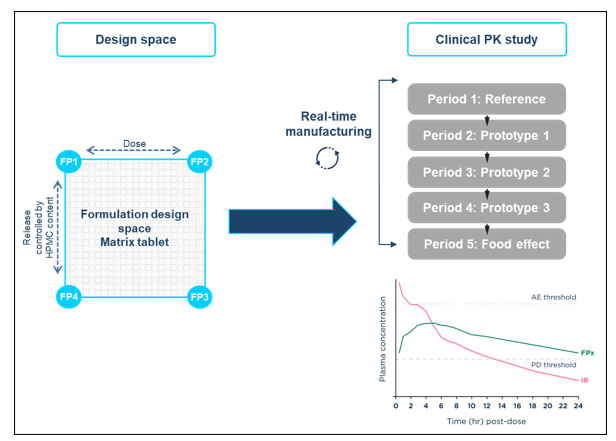
Using formulation design space concepts, a strategy built upon ICH Q8 Development Pharmaceutics, and Quality-by-Design principles, a HPMC-based matrix modified-release tablet formulation was developed for assessment in an adaptive relative bioavailability Phase I study to optimize the modified-release tablet based on human clinical data. 

A two-dimensional formulation design space was established covering dose strengths between 10-20 mg and sustained drug release durations between approximately 12 and 20 hours.

The relationship between key formulation variables and formulation performance was investigated. Representative formulations at the extremes and the mid-points of the design space were manufactured and characterized to demonstrate that the performance of the formulation can be controlled by varying the levels of drug loading and HPMC in the formulation.

The SLx-2101 modified-release tablet formulation within the formulation design space was manufactured in real-time and evaluated in a flexible clinical study, avoiding the restriction of only dosing pre-defined formulation compositions. The formulation selection was driven by clinical data from the previous dosing period and the optimal modified-release formulation was identified in 6.5 months.

Summary

Selection of a modified-release platform can be challenging, given the lack of predictive models for human outcomes. The use of formulation design spaces, integrated manufacturing, clinical testing, and flexible clinical protocols can enable the assessment of modified-release platforms to de-risk development, identify the best technology to achieve the desired TPP and thereby maximize the probability of success and reduce development time, getting treatments to patients faster.

References

1.            DiMasi J and Wilkinson M. The Financial Benefits of Faster Development Times: Integrated Formulation Development, Real-Time Manufacturing, and Clinical Testing. TIRS, June 2020.

2.            USFDA. Conference on Harmonization (ICH) and FDA Guidance for Industry, Q8 (R2) Pharmaceutical Development 2009. https://www.fda.gov/media/71535/download. Accessed May 30, 2019.

3.            McDermott J, Scholes P. Formulation design space: a proven approach to maximize flexibility and outcomes within early clinical development. Therapeutic Delivery. 2015;6(11):1269-1278. doi.org/10.4155/tde.15.76.

4.            Lin, W, et al. Development of a Formulation Design Space for SLx-2101 Modified Release Tablets to Enable a Flexible Phase I Pharmacokinetic Study (Controlled Release Society Annual Meeting 2010).

Reflecting on our Scientific Achievements in 2021

Scientific Achievements , Dr. Peter Scholes

Reflecting on our Scientific Achievements in 2021

Quotient Sciences

Despite the impact of the COVID-19 pandemic on industry events and our ability to interact in person with one another as a global scientific community through 2021, the last 12 months have still provided invaluable opportunities for Quotient Sciences to make a positive difference for our customers, their drug development programs and our shared ambition to accelerate the availability of new medicines for patients.

At Quotient, we take great pride in the science and innovation that we help bring to our customers and the pharmaceutical industry at large. We are firm believers that sharing knowledge and experience with the wider pharmaceutical and biotech communities will help accelerate the development of new medicines and technologies around the world. 

In 2021, Quotient Sciences’ scientific thought leaders were again hard at work, collaborating to publish peer-reviewed publications through a wide variety of media outlets. Accomplishments this year included the presentation of 16 posters, the publication of 8 manuscripts, and the delivery of 7 podium talks at industry events across the globe. My thanks go to all my colleagues involved in the preparation and delivery of this content and more importantly the fantastic support from our customers.

Throughout 2021, we have also made continued investments to increase our drug substance and drug product capabilities to better support customer needs. In February 2021, Quotient Sciences acquired and rebranded Arcinova, an Alnwick, UK-based CDMO, adding Drug Substance Synthesis and Manufacturing, Bioanalysis, and Radiosynthesis capabilities to Quotient’s existing drug product and clinical testing toolkit.  These new capabilities were showcased in publications at ISSX, the European Bioanalysis Forum, EASL, and in the Bioanalysis Journal.  Quotient later announced a multi-million pound project to expand drug substance synthesis in Alnwick to further improve our end-to-end offering of capabilities for customers across the entire drug development pathway, from candidate selection through commercial product release.

Each day, we are proud to work with our customers to design and deliver integrated programs towards a common goal of accelerating the availability of new medicines for patients – and as a result, improving global health.

Details and links to some of the key papers and posters from this past year are provided below.

Please contact us if you would like any further information on any of our publications or new capabilities.

Kind regards,

Peter Scholes, CSO at Quotient Sciences


Scientific Posters

  • "Pharmaceutical and clinical performance comparisons of modified release multiparticulates and matrix tablet formulations” from AAPS PharmSci 360
    Access here
  • "Development of modified release matrix tablet using solid lipid Compritol® 888" from AAPS PharmSci 360
    Access here 
  • "Influence of drug loading and fillers on drug release from HPMC matrix tablets" from AAPS PharmSci 360
    Access here
  • "Development and application of a PBPK model to assess the potential of biorelevant in vitro dissolution methods to predict the impact of formulation changes on oral bioavailability of GB001."  from AAPS PharmSci 360
    Access here
  • "Taste Assessment Study of Belumosudil to Inform an Integrated Paediatric Formulation Development Program" from EuPFI conference
    Access here 
  • "Development of a Novel Paediatric Belumosudil Oral Suspension" from EuPFI conference
    Access here
  • "Assessment of Safety, Tolerability and Pharmacokinetics of Single and Multiple Doses of R941552 (R552) in Healthy Subjects and assessment of alternative formulation performance" from ASCPT conference
    Access here
  • "Using formulation design spaces and clinical data to optimize development of modified release (MR) dosage forms" from CRS conference
    Access here
  • "An integrated radiolabelled study to determine the mass balance, metabolite profile and identification, and absolute bioavailability of nolasiban in healthy female subjects" from ISSX conference
    Access here
  • “Novel copper protein speciation method for calculating serum non-ceruloplasmin copper: a comparative analysis” from EBF conference
    Access here
  • “Analysis of ranitidine reference materials using a six n-nitrosamine LC-MS/MS assay” from EBF conference
    Access here


Scientific Papers

  • "Development of a Prototype, Once-Daily, Modified-Release Formulation for the Short Half-Life RIPK1 Inhibitor GSK2982772” in Pharmaceutical Research Journal
    Access here
  • "Pharmacokinetics and Metabolism of Ziritaxestat (GLPG1690) in Healthy Male Volunteers Following Intravenous and Oral Administration" in Clinical Pharmacology in Drug Development journal
    Access here
  • "Development and Approval of Rybelsus – Ushering in a New Era in Peptide Delivery" in Drug Delivery and Translational Research Journal
    Access here
  • "Inductively coupled plasma mass spectrometry method for plasma and intracellular antimony quantification applied to pharmacokinetics of meglumine antimoniate" in Bioanalysis journal
    Access here
  • "Dose Finding and Food Effect Studies of a Novel Abiraterone Acetate Formulation for Oral Suspension in Comparison to a Reference Formulation in Healthy Male Subjects." in MDPI
    Access here


Integrated Development Strategies - Part 1: Leveraging clinical data to accelerate from first-in-human (FIH) to proof of concept (POC)

Translational Pharmaceutics , First-in-Human , John McDermott

Integrated Development Strategies - Part 1: Leveraging clinical data to accelerate from first-in-human (FIH) to proof of concept (POC)

In pharmaceutical research and development today, record numbers of molecules are entering clinical development, yet molecule attrition is increasing, especially in Phase II where efficacy is first assessed.

Key opinion leaders within the industry recommend that clinical investigations to find out whether a molecule is efficacious take place as early as possible. Techniques such as incorporating biomarkers and conducting combined Phase Ia/Ib studies can help to address this. However, these changes in study design do not address the underlying productivity limitations in the way industry supports early clinical development.

Pharmaceutical research and development organizations (small to mid-size biotech companies) are structured into functional silos, broadly reflecting the structure of legacy large pharmaceutical companies, with drug substance and drug product teams separate to clinical development teams. This structure is also reflected in outsourcing organizations and has resulted in the formation of separate contract development and manufacturing organizations (CDMOs) and contract research organizations (CROs).

To conduct an early development program, teams need to develop formulations, either manufacture a drug product or establish pharmacy compounding methods and provide material to a separate clinical site for dosing. Where a manufactured drug product is applied, it must be available in sufficient dose strengths, be manufactured at sufficient scale, and have sufficient stability to complete the clinical trial before the product expires, ideally without resupplies. This adds considerable development time and cost to an early development program.

The implications are even more significant where a candidate molecule may have sub-optimal physicochemical or biopharmaceutic properties. The global pharmaceutical industry today has a pipeline of molecules that are inherently difficult to formulate, with approximately 70–80% of new chemical entities (NCE's) considered poorly soluble and requiring formulation technology to improve the chances of success.

Integrated development strategies for first-in-human clinical testing

While innovation can occur under this siloed structure, productivity challenges remain unless an integrated development approach is used. Quotient Sciences can address this with fully integrated drug substance, drug product, and clinical testing services, all within one organization, with our Translational Pharmaceutics® platform for integrated drug development.

With Translational Pharmaceutics®, drug product is manufactured within days of clinical dosing, minimizing the amount of drug product stability data required (on average 7–14 days) to achieve authorization to run the clinical study. Batch sizes are limited to the amount required to support the immediate clinical need, so the large overages required to support conventional supply chains are removed. This is all achieved under the oversight of a single, multi-disciplinary project manager.

Translational Pharmaceutics® allows the adoption of an adaptive chemistry, manufacturing, and controls (CMC) strategy and an adaptive clinical protocol to maximize the potential for success in Phase I trials. Clinical data from one study period or cohort determines the formulation composition manufactured and dosed in the next.

Within a typical FIH clinical program, where single and multiple ascending doses are administered, the required treatments are achieved using multiples of unit doses manufactured by an external CDMO. In contrast, Translational Pharmaceutics® allows the adaption of the drug product in real-time to deliver a tailored product to meet clinical requirements, minimizing the need to take large quantities of tablets or capsules. This drug product adaption typically comprises a modification in dose during Phase I ascending-dose trials, but it can also be used to switch to an alternative drug product formulation that may be more appropriate for patient administration (for example, changing a suspension to a capsule formulation) or could involve moving to an enabled formulation to respond to emerging drug solubility challenges.

Data from Translational Pharmaceutics® programs analyzed by the Tufts Center for the Study of Drug Development (CSDD) concluded that this integration alone has the potential to save over 12 months from the development timeline.

Applying Translational Pharmaceutics® in first-in-human trials

JNJ-38877618, a highly selective c-Met tyrosine kinase inhibitor with significant in-vivo anti-tumor activity, was nominated for advancement to FIH trials, which could be conducted in healthy volunteers due to its favorable pre-clinical profile. A key study goal was to commence dosing of a randomized, double-blind, placebo-controlled, FIH trial as quickly as possible, with a formulation that supported immediate progression to ambulatory clinical trials.

A solution formulation with excellent pre-clinical bioavailability was applied to allow for rapid study start-up. However, that solution formulation was not anticipated to be suitable for longer-term ambulatory trials, so two capsule formulations, based upon a spray-dried dispersion of the drug, were incorporated into the trial. The CMC package for the trial included batch analysis and a 7-day stability dataset from demonstration batches of each product, with an option to extend shelf life as further stability data emerged.

Dosing commenced using the solution formulation given the high confidence in achieving human bioavailability, and once initial human safety, tolerability, and pharmacokinetics had been established, a formulation selection was conducted by evaluating the two capsule formulations against the solution formulation in separate cohorts of subjects at the same dose level. This data allowed for the selection of the optimal unit dose formulation to complete single-ascending-dose and multiple-ascending-dose assessments, which continued to be manufactured in real-time under the Translational Pharmaceutics® platform.

The use of a Translational Pharmaceutics® approach enabled Janssen to advance their FIH program from the start of laboratory work to completion of the clinical study in less than 10 months. Efficient, real-time, adaptive GMP (Good Manufacturing Practice) manufacturing of the drug product allowed rapid study start-up by minimizing drug product stability timeframe requirements. A flexible protocol design and adaptive CMC strategies enabled the selection of the drug product to be applied in Phase II, and the assessment of dosing regimens and food effects within a single protocol, avoiding the need for a separate bioavailability study.

Integrated strategies to support proof-of-concept clinical studies

The strategies described so far have focused on accelerating evaluations in healthy volunteers to demonstrate safety, tolerability, and human drug exposures using Translational Pharmaceutics®. However, further benefits can be achieved by maintaining integration when transitioning to POC studies, using manufacturing experience established during the healthy volunteer phase to supply drug product to patient sites.

In one such example, a sponsor was developing a new chemical entity (NCE) for an orphan disease and applied Translational Pharmaceutics® to deliver the first-in-human trial. As a rare disease, however, patient recruitment rates were unpredictable and required the establishment of multiple potential clinical centres globally. Quotient Sciences continued to support drug product manufacture in real-time as patients were recruited, ensuring seamless drug product supply without the need to transfer the manufacturing process to another partner.

Conclusions

The pharmaceutical industry is constrained by a legacy structure that extends the time to transition a new molecule from candidate selection to first-in-human trials, and through early clinical studies to proof-of-concept clinical trials. 

Quotient Sciences can help shorten timelines to proof-of-concept trials by identifying the right formulation approach for the drug and using Translational Pharmaceutics® to:

  • Minimize the amount of drug product stability data required to get the study running
  • Focus manufacturing activity on drug product needed to dose
  • Remove the need for large-scale drug product manufacturing
  • Support transition to patient-appropriate formulations
  • Provide a seamless transition to supply of drug product for global proof-of-concept studies
Subscribe to