


Drug Development Innovation: The Evolving Development of PROTACs

Drug Development Consulting , Formulation Development , Clinical Pharmacology

Drug Development Innovation: The Evolving Development of PROTACs

Over the last few years, proteolysis-targeting chimeras (PROTACs) have been gaining interest as powerful candidates for tackling proteins once considered beyond the reach of conventional small molecule therapies.

PROTACs can eliminate specific proteins by harnessing the cell’s natural degradation system. Since being discovered in 2001, with first breakthroughs in research happening between 2008 and 2015, more than 300 PROTACs are now part of global development pipelines. Main applications for PROTACs are focused on oncology (solid tumors), infectious diseases, autoimmune and neurodegenerative conditions (1).

Just a few dozen PROTACs are presently in clinical testing, with three granted “Fast Track” or similar accelerated status by the FDA due to their potential to address areas of unmet need. These investigational treatments target a diverse array of proteins, including the androgen receptor (AR), estrogen receptor (ER), Bruton's tyrosine kinase (BTK), and interleukin-1 receptor-associated kinase 4 (IRAK4). As of May 2026, the FDA has approved the first PROTAC, vepdegestrant (Arvinas) (2).
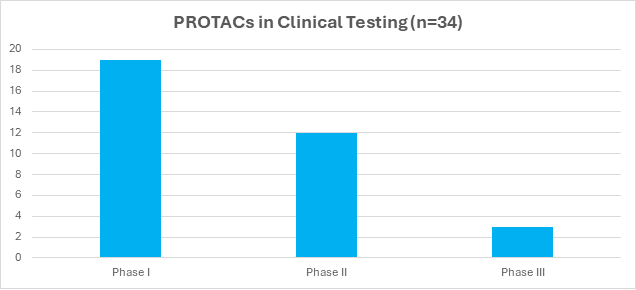
PROTACs in Clinical Testing chart

How do PROTACs work?

PROTACs link a target protein to an E3 ubiquitin ligase, triggering the protein’s breakdown by the proteasome. A change in the clinical pharmacology mechanism—from occupancy-driven to event-driven mode of action—makes them a powerful tool for targeting previously "undruggable" proteins in diseases like cancer and neurodegeneration. Unlike traditional inhibitors, PROTACs work catalytically and can degrade several sites containing the target receptor moiety in an iterative fashion before being cleared by the body.

Why are PROTACs challenging to develop?  

The development of PROTACs is challenged by their physicochemical complexity, including high molecular weight compared with traditional agonist or antagonist small molecules, poor aqueous and very pH dependent solubility, and limited membrane permeability; characteristics that place them well beyond Lipinski Rule of 5 chemical space (1). These properties complicate formulation and limit oral bioavailability, necessitating the application of advanced formulation strategies.  

What formulation technologies can be applied to PROTACs?  

Approaches such as amorphous solid dispersions, cyclodextrin inclusion complexes, lipid-based systems, and nanoparticle formulations have been employed to enhance solubility, stability, and systemic exposure (3–6,7). In parallel, early clinical development requires careful justification of dose selection, anticipated pharmacokinetic behavior, and consideration of safety factors in first-in-human studies due to this different mode of catalytic action. Successful translation of PROTACs into clinical candidates depends on a comprehensive understanding of their biopharmaceutical properties and the implementation of formulation strategies coupled with PBPK and PBBM modelling to address their unique challenges.  

How can Quotient Sciences help in the development of PROTACs?

Partnering with a CRDMO that excels in formulating and testing complex therapies requiring advanced biopharmaceutics expertise is essential for successfully advancing PROTACs to the clinic. For over 35 years, Quotient Sciences has specialized in the development of challenging molecules, with a proven track record of developing and evaluating drugs that demand innovative solubility enhancement strategies. Find out how we can support your program.

What does the future hold for PROTACs?

Although only one PROTAC-based therapy has reached the market in 2026 so far (2), products from BeiOne Medicines (BeiGene) and BMS advancing into Phase III trials last year is a positive sign for the future of PROTAC drug development. As clinical experience with PROTACs expands, these insights will be critical to optimizing their therapeutic potential and broadening the scope of druggable targets in modern medicines.  

References:  

  1. Li, X., Pu, W., Zheng, Q., Ai, M., Chen, S., & Peng, Y. (2023). Proteolysis-targeting chimeras (PROTACs) in cancer therapy. Cell Communication and Signaling, 21, Article 231. https://doi.org/10.1186/s12964-023-01231-2
  2. https://www.globenewswire.com/news-release/2025/08/08/3130368/0/en/Arvinas-Announces-FDA-Acceptance-of-the-New-Drug-Application-for-Vepdegestrant-for-the-Treatment-of-ESR1m-ER-HER2-Advanced-Breast-Cancer.html
  3. Zhang, H., Wu, H., Wang, L., Machín Galarza, L., Wu, C., Li, M., et al. (2024). Preparation and characterization of ternary complexes to improve the solubility and dissolution performance of a proteolysis-targeting chimera drug. Journal of Inclusion Phenomena and Macrocyclic Chemistry. https://doi.org/10.1007/s10847-023-01214-0
  4. Pöstges, F., Kayser, K., Appelhaus, J., Monschke, M., Gütschow, M., Steinebach, C., et al. (2024). Solubility enhanced formulation approaches to overcome oral delivery obstacles of PROTACs. Pharmaceutics, 16(2), 231. https://doi.org/10.3390/pharmaceutics16020231
  5. Syahputra, E. W., Lee, H., Cho, H., Park, H. J., Park, K.-S., & Hwang, D. (2025). PROTAC Delivery Strategies for Overcoming Physicochemical Properties and Physiological Barriers in Targeted Protein Degradation. Pharmaceutics, 17(4), 501. https://doi.org/10.3390/pharmaceutics17040501
  6. Zhong, J., Zhao, R., Wang, Y., Su, Y., & Lan, X. (2024). Nano-PROTACs: state of the art and perspectives. Nanoscale, 16(9), 4378–4391. https://doi.org/10.1039/D3NR06059D
  7. Hofmann, N., Hoffmann, A., Keck, S., Langguth, P., & Schick, P. (2024). ASDs of PROTACs: Spray-dried solid dispersions as enabling formulations. International Journal of Pharmaceutics, 650, 123725. https://doi.org/10.1016/j.ijpharm.2023.123725 

Poster Spotlight: Taste Assessment Study of Bivamelagon Pediatric Solution Formulations from EuPFI 2025

Pediatrics , Formulation Development

Poster Spotlight: Taste Assessment Study of Bivamelagon Pediatric Solution Formulations from EuPFI 2025

Poster Spotlight Taste Assessment Study of Bivamelagon Pediatric Solution Formulations from EuPFI 2025

Summary: At the 17th Annual Conference of the European Paediatric Formulation Initiative (EuPFI),  researchers from Quotient Sciences and Rhythm Pharmaceuticals presented a poster titled “Taste Assessment Study of Bivamelagon (MC72) Pediatric Solution Formulations.”  

Poster Spotlight: Taste Assessment Study of Bivamelagon Pediatric Solution Formulations from EuPFI 2025 

Read highlights from the poster below and download the poster to see additional findings.   

Bivamelagon (MC72; LB54640) is an investigational small molecule agonist of the melanocortin-4 receptor (MC4R), developed for once-daily oral administration to treat MC4R pathway disease-related obesity.

The poster highlighted a collaborative effort to improve the palatability of oral liquid formulation of Bivamelagon for pediatric patients. Quotient Sciences authors Amit Sawant, Nazim Kanji and Phil Evans, along with Rhythm Pharmaceuticals authors Joe Shulman and Anthony Frank contributed to the poster.

Clinical taste assessment study with healthy volunteers

The primary objective was to evaluate the taste profile of  Bivamelagon solutions and establish the viability of age-appropriate oral liquid formulations for pediatric use. The current Bivamelagon oral formulation consists of a hydrochloride salt with a bitter taste.  

The team aimed to identify simple flavoring and sweetening strategies to mask bitterness and improve acceptability for children. A taste assessment study was conducted with a panel of healthy adult volunteers at Quotient Sciences – Nottingham, UK.

Twelve adult volunteers participated in a randomized, controlled taste assessment where each person sampled oral solution formulations—one reference (Regimen A) and seven test solutions (Regimens B to H)—all containing 10 mg/mL Bivamelagon. The test solutions varied in different levels of sweetener used (sucralose) and different flavors (orange, strawberry, and raspberry).

Participants rated overall acceptability and taste attributes using a 9-point Likert scale. Statistical analyses were performed to compare each test regimen to the reference. 

A more palatable formulation for further clinical study 

The study found that the reference formulation (Regimen A) was poorly rated for taste and acceptability.

In contrast, all seven test regimens (B to H) showed statistically significant improvements in overall acceptability and palatability attributes. The addition of sucralose, either alone or combined with flavors, consistently improved taste masking.

The median overall acceptability scores for test regimens ranged from 4.5 to 5.5, compared to 3.0 for the reference. A statistical analysis confirmed significant improvements (p < 0.02 for all comparisons vs. reference.

These results demonstrated that simple sweetening and flavoring strategies can effectively mask bitterness and enhance the palatability of Bivamelagon oral solutions. The study concluded that formulations containing sucralose, alone or with fruit flavors, are suitable for further development and progression to pediatric patient studies. 

Download the poster

Browse more about our pediatric offering 

To get alerted about new blogs, news, and updates from our company, make sure you're on our mailing list. Subscribe for email updates.

Poster Spotlight: Taste Assessment Study of Tenapanor Pediatric Solution Formulations from EuPFI 2023

Pediatrics , Formulation Development

Poster Spotlight: Taste Assessment Study of Tenapanor Pediatric Solution Formulations from EuPFI 2023

Taste Assessment Study of Tenapanor Pediatric Solution Formulations from EuPFI 2023

Summary: At the European Pediatric Formulation Initiative (EuPFI) conference in 2023, Quotient Sciences partnered with Ardelyx, Inc. to present a collaborative study exploring the palatability of oral tenapanor formulations intended for pediatric use.

Titled “Taste Assessment Study of Tenapanor Pediatric Solution Formulations”, the poster was authored by a team that included Amit Sawant, Marcello DiMare, David Matusow, Susan Edelstein, Somasekhar Menakuru, and Vanessa Zann.

Read highlights from the poster below and download the poster to see additional findings.   

Objectives of the clinical study

Tenapanor is a minimally absorbed sodium hydrogen exchanger (NHE3) inhibitor, approved in tablet form (IBSRELA®) for treating irritable bowel syndrome with constipation (IBS-C) in adults.  

Ardelyx looked to develop an oral solution formulation to extend the therapeutic benefits of tenapanor to children aged 2–18, partnering with Quotient Sciences for pediatric formulation development and clinical taste assessment. The primary goal of the taste study was to evaluate taste acceptability of various formulations. A secondary objective was to assess specific taste attributes including sweetness, bitterness, and aftertaste.  

Study design and methodology

The study looked to successfully identify the most palatable formulation for pediatric patients, accomplished through enrolling 14 healthy adult volunteers to participate in a controlled, randomized, “sip and spit” taste assessment. The study was conducted from Quotient Sciences – Nottingham, UK facility.  

Each participant evaluated seven different tenapanor formulations, each containing 5 mg/mL of the active ingredient along with different sweeteners  (sorbitol and sucralose) and flavors (strawberry and raspberry).

Participants then were asked to rate each formulation on a 9-point Likert scale for seven taste attributes, including overall acceptability, sweetness, and flavor. Quotient Sciences collected and analyzed the data to determine which formulation offered the best sensory profile.

Conclusions

The study concluded that formulations containing sucralose, sorbitol, or raspberry flavor—individually or in combination—are suitable candidates for further development in pediatric clinical studies.

Specifically, Regimen G, a combination of sucralose and raspberry flavor, achieved the highest scores across all taste attributes, showing a 2.0-point improvement in overall acceptability compared to the unsweetened/unflavored reference formulation.  

Both sucralose and sorbitol improved taste acceptability when used alone, and the addition of raspberry flavor significantly enhanced the sensory experience. 

Download the poster

To get alerted about new blogs, news, and updates from our company, make sure you're on our mailing list. Subscribe for email updates.

Poster Spotlight: Use of ASAPprime® in a Pharmaceutical CDMO Space

Formulation Development

Poster Spotlight: Use of ASAPprime® in a Pharmaceutical CDMO Space

ASAPprime®

Summary: At our recent event in Garnet Valley, PA., our team presented a poster titled “Use of ASAPprime® in a Pharmaceutical CDMO Space”, showcasing how stability assessment with advanced predictive stability assessment tools helps accelerate drug development timelines.

Poster authors Kyle Frey, Helen Baker, and Brad Rowe highlighted the impact of ASAPprime® modeling in a contract development and manufacturing organization (CDMO) setting.

Read highlights from the poster below and download the poster to see additional findings.   

How does ASAPprime® work?

Traditional ICH stability studies can take months or even years to yield actionable data. ASAPprime® offers a smarter, faster alternative—delivering precise long-term stability predictions in as little as 28 days.  

The poster detailed how ASAPprime® has been successfully applied across all development phases—from early formulation screening to post-registration and lifecycle management activities.  

Key applications of ASAPprime® include:

  • Early identification of stability risks
  • Comparative shelf-life analysis
  • Packaging optimization (e.g., validating removal of desiccants without compromising stability)
  • Mechanistic understanding of degradation pathways
  • Support for regulatory submissions with FDA-accepted data

Why it matters: Real applications and benefits of ASAPprime®  

In a competitive pharmaceutical landscape, speed and precision are critical. ASAPprime® empowers development teams to make informed decisions faster, reduce unnecessary testing, and ensure product viability from benchtop to patient.  

As a CDMO using ASAPprime®, we have been able to provide reliable, data-driven insights to support investment decisions:

Predicting 1-year shelf life (subsequently verified by real-time stability data) for various oral liquid, immediate-release tablets, and modified-release tablet formulations

Demonstrating that a novel formulation was three-times more stable than a marketed product of the same active pharmaceutical ingredient

Optimizing packaging configurations for cost savings  

This approach is not one-size-fits-all: each study is tailored to the drug program, ensuring relevance and reliability throughout the development lifecycle.

Note: Our accelerated stability assessment services utilize the ASAPprime® stability assessment software licensed from FreeThink Technologies, Inc.

A Comprehensive Approach to Pediatric Drug Products: Q&A with Nazim Kanji

Pediatrics , Formulation Development , Drug Product

A Comprehensive Approach to Pediatric Drug Products: Q&A with Nazim Kanji

Approach to Pediatric Drug Products

Summary: Quotient Sciences focuses on advancing pediatric drug products, addressing the gap in approved pediatric treatments compared to adults. Some challenges that Quotient Sciences address in pediatric development include taste aversion, the need for age-appropriate formulations, and food compatibility studies. Our tailored solutions through combine formulation development, manufacturing, and clinical pharmacology to meet clinical and regulatory goals.  

Despite the rising demand for pediatric dosage forms, the number of approved pediatric drug treatments on the market remains significantly less than those for adults.  

Understanding the ongoing need for advances in pediatric drug products, Quotient Sciences combine pediatric formulation development expertise with global drug product manufacturing and clinical pharmacology services to help your program succeed by providing tailored solutions to meet clinical, regulatory, and commercial goals.  

Learn more about our experience in pediatric development: our expert Nazim Kanji, Executive Director of Pediatric Services, addresses some common questions that we’ve received about pediatric drug development. 

Can you describe a challenging pediatric product that you worked on? What did Quotient Sciences do that helped accelerate the timeline for that project? 

Pediatric projects can present our development team with several challenges and risks. These can include aversive taste properties of the drug molecule that require taste masking to ensure palatability of the drug product, development of a single age-appropriate formulation to cover a wide target age group, and the need for suitable stability of the drug in liquid formulations such as solutions and suspensions.

Quotient Sciences integrated CRDMO approach to pediatric programs is designed to avoid delays and ensure data-driven decisions at all stages.  

To minimize risks in pediatric drug development, we can design integrated pediatric development programs to initially undertake an upfront taste characterization study of the drug substance alone and in combination with suitable flavors and sweeteners. This confirms the taste masking and formulation development strategies to be pursued.  

Then, we follow formulation development of multiple formats in parallel to identify lead prototypes to proceed with clinical assessment of the proposed pediatric formulations in adult panels. This allows for dosage forms to be optimized and clinically-validated based on taste and/or pharmacokinetic attributes prior to progressing into pediatric trials. 

An example of an integrated pediatric program is the development of an age-appropriate formulation of Belumosudil1 which is used for the treatment of chronic graft-versus-host disease.  

We initially set out to assess baseline taste of Belumosudil and screen various flavor/sweetener combinations in 12 healthy adult volunteers. The test articles comprised of drug in bottle samples which were reconstituted with aqueous vehicles that included no sweetener and no flavor. This was the reference, sweetener alone and different flavors with sweetener in combination.  

All reconstituted samples were tasted by all subjects in a single day. Data was captured via taste questionnaires and decisions were then taken based on median & mean scores to determine the lead taste masking systems.  

Human data confirmed that sweetener alone or in combination with a flavor could enhance the palatability of Belumosudil and that a suspension formulation would be suitable for development and progression into pediatric trials.  

Following the taste assessment study, we developed a novel, bespoke pediatric suspension formulation, conducted a relative bioavailability study, and confirmed the palatability of the suspension formulation as part of that study. 

Who owns the IP for new formulations – Quotient Sciences or the client? 

The client does. We have not claimed any IP for past projects.

Given the existence of the STEP database, can you elaborate on what information is in your internal excipients database?  

The STEP database is a great resource for information on pharmaceutical excipients that may have used in pediatric formulations. We have also compiled information into an internal excipients database to guide our development teams.

At Quotient Sciences, as part of our pediatric development programs and in order to come to a view on the suitability of excipients for the target age groups, we assess a number of information sources on excipients which include the STEP database and acceptable daily intake levels, as well as prior use in recently approved pediatric products.  

Since many of our pediatric formulations include suitable flavors and sweeteners for taste-masking, we have added information about these agents to our database as a guide for our development teams. 

Can you describe how you perform food compatibility studies as it is impossible to test all foods and beverages? 

Many pediatric dosage forms, such as sprinkles, granules, and minitablets, can be co-administered with food to aid in dose delivery and palatability.  

There are 27 commonly used vehicles listed in draft guidance provided by the FDA. However, we typically undertake in-use food compatibility studies with 3 or 4 soft foods and/or beverages that are selected in consultation with the sponsor.  

Foods to evaluate may be selected by undertaking a visual screen of the drug product in various food vehicles to assess drug product integrity.

In addition to vehicle selection, additional key considerations include the volume of the vehicle, which is generally a spoonful or 5–15 mL, the mixture preparation, handling, and the holding period. At given timepoints during the holding period, we assess samples for assay, related substances, and dissolution.  

What is the minimum age of volunteers that are used in healthy volunteer studies? 

The minimum age of volunteers for healthy volunteer studies (including both pharmacokinetic and taste assessment) performed in our clinics in the USA and UK is 18 years old.  

We do not conduct clinical trials with children at Quotient Sciences. 

Have you experienced any specific taste challenges for pediatric products that you developed that have proceeded into phase 2 studies? 

We have developed numerous pediatric formulations selected based on taste assessment studies that have proceeded into pediatric efficacy studies.  

The taste assessment studies we perform typically assess multiple test articles in a single day. These may include alternative flavors, sweeteners, and different concentrations in combination.  

All volunteers in the clinical cohort taste all test articles and complete a taste assessment questionnaire after tasting a product. At the end of that study, we analyze all taste data to identify the most palatable systems to proceed with into Phase 2 studies.

To date, we have not received any negative taste feedback from any pediatric efficacy studies.  

Does Quotient Sciences have packaging capabilities for minitabs?

Yes, Quotient Sciences can fill minitabs into capsules at our drug product manufacturing facility in Philadelphia, PA.

How are minitabs dosed to newborns? 

In our experience, minitabs intended for dosing to newborns are dispersed in a small volume of water or other appropriate liquid, then dosed intraorally using an oral syringe.

Over the last few decades addressing pediatric formulation and development, we know that patient needs and regulatory requirements are the driving elements in the development of age-appropriate formulations, so we always keep these top of mind in a pediatric program. 

 Learn more about our pediatric drug development capabilities. 

References:

1. Schueller, O., Regev, G., Singh, N., Willson, A., Beville, M., Kanji, N., Lohmer, L., & Patel, J. (2024). Two-part phase 1 study to evaluate the taste profile of novel belumosudil oral suspensions and assess the relative bioavailability and food effect of the selected belumosudil oral suspension compared with oral tablet reference in healthy male participants. Clinical Pharmacology in Drug Development, 0(0), 1–8. https://doi.org/10.1002/cpdd.1378

In our experience, minitabs intended for dosing to newborns are dispersed in a small volume of water or other appropriate liquid, then dosed intraorally using an oral syringe.

Over the last few decades addressing pediatric formulation and development, we know that patient needs and regulatory requirements are the driving elements in the development of age-appropriate formulations, so we always keep these top of mind in a pediatric program.  
 

To get alerted about new blogs, news, and updates from our company, make sure you're on our mailing list. Subscribe for email updates.

Using a formulation design space with Translational Pharmaceutics® for success in oral peptide development

Translational Pharmaceutics , Formulation Development , Peptides , Dr. Andrew Lewis

Using a formulation design space with Translational Pharmaceutics® for success in oral peptide development

Summary: Dr. Andrew Lewis, Chief Scientific Officer at Quotient Sciences, discusses the integration of formulation design space with Translational Pharmaceutics® to enhance oral peptide development. This approach addresses challenges like low bioavailability by optimizing formulations based on clinical data. The platform combines drug product development, manufacturing, and clinical testing, enabling just-in-time manufacturing and efficient CMC packages. This innovative strategy minimizes investment and waste, ensuring successful oral peptide programs.

Recent advancements in drug discovery, peptide engineering and drug delivery have converged to address many of the challenges associated with oral peptide delivery. 

Technologies such as phage display can be used to create vast libraries of peptides that can be screened for properties of interest such as permeability and protease resistance, and numerous technologies – from permeation enhancers through to ingestible devices have been shown to be effective in promoting systemic absorption. 

Drugs entering clinical trials typically start with a Phase 1, first-in-human (FIH) program that includes a single ascending dose (SAD) study - starting with a sub-therapeutic dose and gradually increasing to predicted therapeutic levels before evaluating multiple ascending doses (MAD). 

As oral peptides usually have to be formulated with a drug delivery technology, multiple prototypes have to be developed with the knowledge that most of them will not be taken forward into later clinical development. Furthermore, given the many unknowns in oral peptide biopharmaceutics and poor correlation between preclinical models and humans, it is difficult to predict what the optimum formulation for performance in humans will be.

With this considered, a drug product strategy for oral peptide programs needs to be designed that enables the program objectives to be met whilst minimizing investment required and wasted API and drug product.  

How does a formulation design space work?

Using the Quotient Sciences Translational Pharmaceutics® platform, we offer an innovative solution that helps mitigate these development risks—especially when applied to molecules with known challenges such as low bioavailability.

Integrating drug product development and manufacturing services with clinical testing, we enable a just-in-time manufacturing strategy for drug products that are then dosed in the clinic as they are needed. The efficient CMC packages created as part of this platform are supported by a supply chain that Quotient Sciences controls from start to finish.  

With Translational Pharmaceutics®, formulations are optimized based on emerging clinical data, and using a formulation design space allows even greater flexibility. A formulation design space is a trusted concept that we have applied as part of RapidFACT® programs, an application of the Translational Pharmaceutics® platform, for almost two decades.  

A blue background with text and blue lines

Description automatically generated with medium confidence, Picture


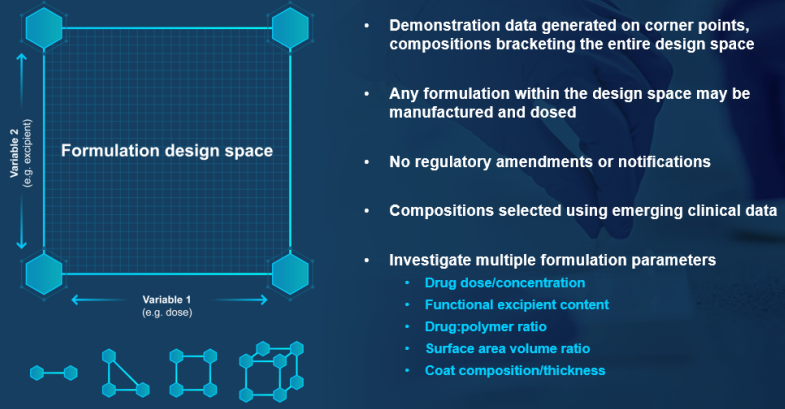
To create a formulation design space, formulation variables are identified that are anticipated to be critical-to-performance (e.g. dose and the levels of a functional excipient). Demonstration batches are manufactured at the extremes of the design space, and batch analysis and stability data are obtained for submission to the regulatory agency to gain approval to dose any formulation within that design space. 

In the example shown, just four demonstration batches enable the clinical evaluation of many more formulation prototypes–without any regulatory amendments or notifications, as long as the compositions remain within the pre-defined design space.

Continue reading how we have applied the Translational Pharmaceutics® platform in the development of oral peptides, with case studies from pharma/biotech customers, in our latest whitepaper

To get alerted about new blogs, news, and updates from our company, make sure you're on our mailing list. Subscribe for email updates.

The Strategic Role of Drug Development Consultants at Quotient Sciences

Drug Development Consulting , Translational Pharmaceutics , Formulation Development , Drug Product , Careers

The Strategic Role of Drug Development Consultants at Quotient Sciences

Summary: We speak to four of Quotient Sciences' newest Drug Development Consultants (DDCs) about their experiences and how they are helping to drive innovation for customer programs in their roles at Quotient Sciences. Sandeep Kumar, Director of Drug Development Consulting; Andreas Reichl and Kevin Schaab, Senior Drug Development Consultants; and Robert Cornog, Senior Director of Product Development share their perspecives on the role of a DDC.

What is a Drug Development Consultant? 

Drug Development Consultants (DDCs) play a key role at Quotient Sciences, helping our clients navigate the complexities of drug development–from early drug development and first-in-human clinical testing, to scaling up to later clinical trials and commercial drug product manufacturing

Their main goal? Helping clients make informed decisions to reduce development risks and keep programs on track. 

DDCs at Quotient Sciences work closely with each client to understand their molecule, development goals, and current challenges. They offer tailored guidance across areas like formulation development, regulatory planning, and drug manufacturing strategy and bring together experience across scientific disciplines, regulatory, and operations to guide program strategy and execution. 

Meet our newest Drug Development Consultants 

Collaborating with the broader Quotient Sciences team—including departments such as business development, project management, and manufacturing—DDCs ensure that every aspect of the development plan is aligned so clients can move forward with clarity and confidence. 

For more perspective on the role of a DDC at Quotient Sciences, we interviewed Sandeep Kumar, Director of Drug Development Consulting; Andreas Reichl and Kevin Schaab, Senior Drug Development Consultants; and Robert Cornog, Senior Director of Product Development. They share their experience and how Quotient Sciences supports clients with a unique mix of services and expertise.

What experience did you have before you worked at Quotient Sciences, and what appealed to you the most about the company’s offering? 

Robert Cornog: I worked with Quotient Sciences from 2008-2021 and recently re-joined the company because of our integrated approach to drug development and commercialization. My previous experience with Quotient Sciences and other companies spanned early drug development, technical transfer, and late-stage CMC strategies through facility readiness and commercial launch. Seeing the value that working in cross-functional teams brings to innovation and accelerating program timelines, Quotient Sciences’ approach seemed like the next logical step.

Kevin Schaab: My previous experience included new pharmaceutical product development, ranging from IND to NDA stages. I particularly enjoy the challenges posed by transitioning products into the clinic and refining their performance along the development lifecycle. I joined Quotient Sciences because of the unique capabilities of the organization in taking a science-driven approach to solving emergent challenges in drug development. 

Andreas Reichl: My previous experience was focused on early clinical development—including preclinical and translational sciences, first in human, proof of concept, and beyond (considering the labeling studies needed later in development). Clinical pharmacology principles have fascinated me from the very early days of my career. Understanding the underlying mechanistic and scientific aspects that feed into clinical studies and how that data ultimately defines a compound’s profile (summarized in the drug label) is very interesting. 

For me, Quotient Sciences’ Translational Pharmaceutics® platform, and what it can do to enhance and optimize compound performance in humans, adds another dimension of possibility to development programs. I believe this kind of approach will become increasingly important in the future of drug development.

Sandeep Kumar: I have held diverse roles across academia, large and midsize CDMOs, and the excipient industry, gaining extensive experience in formulation development, clinical trial manufacturing, and excipient and coating technologies. I am passionate about supporting early-stage drug development customers in bringing differentiated products to market.

Like others, I was also attracted to join Quotient Sciences based on the integrated approach we follow—combining formulation development, clinical manufacturing, and clinical testing together with Translational Pharmaceutics®.  This style of working not only supports outcome-based decision-making, but allows timely adjustments to be made, such as exploring promising technologies or reformulating to create better drug candidates. The focus on more collaborative and connected development activities inspires me because it helps bring better, differentiated therapies to patients faster.

Is there a specific challenge you frequently see in development? What would be your advice to best avoid this? 

Kevin: I like to say that many characteristics of a drug are 'baked-in' from the very early stages of its conception and development. The greater the understanding of these characteristics early on, the greater the likelihood that you can begin to comprehend some of the potential challenges you’ll be facing related to developing the drug in the long run.  

Robert: Aside from overcoming typical challenges with poor bioavailability and solubility, a lot of programs have hurdles with limited understanding of formulation, limited knowledge transfer during technical transfers, unanticipated scale-up difficulties, and poor CMC compliance with current regulatory expectations. A centralized and agreed upon risk management program, one that can be frequently referenced by all stakeholders, is critical to help overcome these issues.

Andreas: My recommended mitigation strategy would be for more rigorous focus on preclinical science to ensure compounds are “clinic ready.” Otherwise, speed to the clinic may come at the cost of poor quality data. 

Limited or improper preclinical data are more likely to create challenges during early clinical development. GLP toxicology studies with inadequate or insufficient dose levels, too short recovery periods, and missing or ambiguous genetic toxicology data are a few challenges that make interpretation and translation of these data difficult. This could lead to premature stopping criteria in human dose escalation and resulting termination of trials or even compounds that could have been avoided. 

Oncology compounds tend to face such challenges, given the less comprehensive preclinical data requirements for this indication. 

Sandeep: One challenge I frequently see in development is the gap between formulation optimization and clinical outcomes, often caused by insufficient integration between development and manufacturing stages. My advice to avoid this is to adopt an integrated approach where these activities happen together. This not only accelerates decision-making but allows rapid iteration and optimization to advance drug candidates.

How do you apply your industry knowledge to help clients navigate the complexities of drug development at each stage?

Kevin: I tend to approach challenges with an open mind, curiosity, and an eye towards seeking fit-for-purpose solutions appropriate for the phase of development being undertaken. 

Andreas: In the early clinical space, it is important to identify a compound’s potential showstoppers as soon as possible. This allows a compound to be terminated early, if necessary. For instance, consider incorporation of critical items as additional objectives or endpoints into first in human trials, such as a concomitant use DDI cohort within a FIH umbrella protocol. 

In later clinical phases, the time and cost-efficient conduct of clinical pharmacology packages of labeling work is an area where many clients benefit from consulting an experienced CRO. Using DDI cocktails and other design enhancements, instead of conducting multiple separate trials, is a classic example.  

Robert: By later stages, the shift really focuses with the end in mind. Focused development and process understating ensures the CMC strategies are flexible enough to accommodate changes and still meet or exceed the expectations of regulators.

Sandeep: I use my experience to guide clients through each stage of development—formulation design and optimization, clinical manufacturing, and regulatory interactions included. Drawing on my background in excipient technologies and clinical manufacturing, I help clients anticipate challenges, select the right formulation strategies, and manage transitions between development phases. I also stay up to date on the latest industry news, trends, and regulatory requirements so I can offer practical advice to help minimize risks and keep programs on-course.

What trends or innovations excite you in this space?

Robert: Technology is really changing the way we can approach delivery of therapies to patients. Digitalization of information from the manufacturing floor and quality control laboratories, and patient monitoring using wearable devices, are allowing real time data analysis and decision-making. Using that data in simulations and to create digital twins, which can be applied to advancing patient specific personalized medicine, will be real game-changers.

Kevin: I am particularly excited about the number and type of different treatment modalities now being leveraged to tackle unmet needs in medicine—antibodies, RNA, DNA, small-molecules, peptides, proteins, etc. As I mentioned, the intrinsic characteristics of different types of molecules present different and unique challenges from the get-go, so we will be compelled to seek unique, science-driven solutions in advancing these medicines to patients. 

Andreas: Both formulation development and clinical pharmacology are deeply rooted in science, and it is exciting how we can marry these disciplines to further enhance and streamline both formulation and clinical development. Beyond that, I believe that a science-driven approach, such as Translational Pharmaceutics®, will become even more critical in the future as more BCS class II and III compounds needing formulation optimization are emerging. 

Sandeep: What excites me most in this space is the integration of AI and machine learning to speed up drug discovery and optimize clinical trials. I enjoy seeing innovations in drug delivery and formulation technologies that improve patient outcomes, and I think technology will help advance that in years to come. 

Meet our DDCs at an upcoming seminar, tradeshow, or conference this year

Whether supporting a first-in-human study or preparing for late-phase development, the DDC is a dedicated partner focused on helping each molecule efficiently reach its next milestone. Browse our event listing to see what events our DDC team will be attending next.

Spotlight on Philadelphia - Q&A with Marlene Leuenberger, Vice President and General Manager, Philadelphia

Site Spotlight , Philadelphia , Drug Product , Commercial Manufacturing , Formulation Development

Spotlight on Philadelphia - Q&A with Marlene Leuenberger, Vice President and General Manager, Philadelphia

Summary: Marlene Leuenberger, Vice President and General Manager at Quotient Sciences, Philadelphia, shares insights on the company's capabilities at two of Quotient Sciences' US locations, both located just outside of Philadelphia, Pa. She highlights the recent success of Quotient Sciences Translational Pharmaceutics® programs conducted in the U.S. between the Philadelphia and Miami, FL locations, integrating drug product formulation, manufacturing, and clinical testing. Marlene emphasizes the importance of collaboration between the Garnet Valley and Chelsea Parkway sites, and recent investments in handling highly potent APIs (HPAPIs).

Quotient Sciences' capabilities for drug product manufacturing in Philadelphia: Read more from our leader, Marlene Leuenberger 

Marlene joined Quotient Sciences in 2024 as Vice President and General Manager of Quotient Sciences' Philadelphia CDMO facilities in Boothwyn (Chelsea Parkway) and Garnet Valley, PA. Under her leadership, the Philadelphia teams are committed to delivering high-quality services for drug product formulation and manufacturing. 

The Garnet Valley and Chelsea Parkway sites specialize in small-molecule oral solid dose formulation development and drug product manufacturing. These facilities also have an important role in facilitating Translational Pharmaceutics® programs with our Miami, FL clinical pharmacology facility

Translational Pharmaceutics® is Quotient Sciences’ flagship offering for drug development. 

Before joining Quotient Sciences, Marlene served as Vice President of Operations and Site Head at Jubilant Cadista Pharmaceuticals and as General Manager at Catalent. Her career has also included leadership positions at Procter & Gamble, Wyeth Pharmaceuticals, and Novartis Consumer Health.  

Continue reading to learn more about Marlene and the capabilities from our two Philadelphia CDMO facilities

Coming up on almost a year with the company, what have been your impressions of Quotient Sciences so far?

This is a company with such high potential. The science is strong, and the people are great to work with. I am very happy to be part of the team. 

Looking back to when you were first starting your career, was your goal to be where you are now? What was one of the challenges along the way?

Looking back, I think that when I started my career, I pictured myself in an executive position in very large company. I started my career with Procter and Gamble, so that is what I knew.  

Over the years, I learned that I really enjoy working in smaller companies where there is a bias toward action, decisions are made quickly, and everyone has a real impact on the business and for our customers.

I also really like being close to the action at the sites, so that makes me really happy in my current role; I am exactly where I am supposed to be. 

What excites you the most about the work being done at Quotient Sciences – Philadelphia right now? Is there a specific program or initiative coming to mind? 

There are two things that excite me about the work we are doing in Philadelphia right now.  

The first is that our Translational Pharmaceutics® programs are really taking off, and it is exciting to see how this approach helps our customers achieve results more quickly and efficiently.  

When it comes to Translational Pharmaceutics® programs, here in Philly, we develop and manufacture the drug product—including immediate-release and modified-release oral solid dose products. When ready, we send them to Miami to dose right on-site.

What’s especially valuable about Translational Pharmaceutics® is how quickly our teams can act on clinical data. If the team in Miami sees something during the study that calls for an adjustment to the formulation or dose, we can respond right away. There’s no jumping between vendors—it’s all one program, one team.  

The second is that we don’t have to stop with that early work: We have commercial capabilities in place, that we can see those early programs “grow up” within our sites and with our teams. It is always exciting to see a drug achieve this ultimate success. 

Quotient Sciences recently completed a project to better support highly potent APIs (HPAPIs). How do these investments enhance what we can offer clients, and are there any other projects ahead? 

Just recently, at Chelsea Parkway we completed a project converting two non-potent rooms into a state-of-the-art space that safely handles highly potent API (HPAPI) and drug products containing HPAPI up to PBLEC 4.  

The PBLEC system gives the necessary guidance to achieve the desired level of containment or control for handling specific compounds and is how we classify HPAPI products at all our facilities. We have long supported PBLEC 4 manufacturing at our Chelsea Parkway site, but recent changes allowed our teams to increase efficiency and safety while handling these materials.

Later in the year, we are looking at adding new isolator equipment that will increase our ability to handle HPAPI materials up to PBLEC 5 at Chelsea Parkway. At Garnet Valley, plans are also underway to determine next steps for our second building, which will add greater capacity.

In the meantime, we are preparing for an upcoming capability expo in May. Guest speakers will join us, and we’ll have presentations on latest research along with facility tours and networking. Prospective and current customers and industry consultants are all welcome to attend. 

The Garnet Valley and Chelsea Parkway facilities each have different focuses. How do the teams collaborate between the sites, and what can clients expect?  

Our Garnet Valley and Chelsea Parkway sites are not far from one another, which makes it easy for the teams to work together even though they’re two separate sites. This helps us stay agile, maintain continuity across projects, and deliver on our commitment to being a reliable partner.  

Across Quotient Sciences, we’ve established standard ways of working with how we approach project management for every program. So whether a program is based in Garnet Valley, Boothwyn, or in collaboration with our other sites, like our clinic in Miami, customers can expect a high-quality experience. This setup helps us stay efficient, share knowledge, and support each stage of development without unnecessary delays. 

Who is the ideal customer for a program at Quotient Sciences – Philadelphia?  

If there was an ideal customer, I’d say that it is one that is simply looking for a collaborative and integrated CDMO partner. The fact is we work with all clients, ranging from small and emerging biotech to Fortune 50 pharma.  

Our Philadelphia sites have a lot to offer as far as being able to take a molecule through all stages of development—up to and including commercial manufacturing. This is especially true for clients developing pediatric therapies and orphan drugs for rare diseases, but as a CDMO partner we support all small molecule therapeutics. 

Finally, what is one thing you wish customers knew, or better understood, about the Quotient Sciences Philadelphia sites or any of the capabilities we offer here?  

I have already mentioned my excitement for our Translational Pharmaceutics, and our ability to take a drug all the way to commercial production. So the only thing I would add is to emphasize the dedication of our people. We have a very committed team here, and our way of working is in true partnership with our customers. Each project is as important to us as it is to our customers.

I am also proud of our continued record of regulatory success. In December, we completed a successful inspection by the Chinese National Medical Products Association (NMPA), which was formerly known as the Chinese FDA. This regulatory inspection adds to our global credibility; in addition, Garnet Valley and Chelsea Parkway have also been successfully inspected by the U.S. FDA, and Chelsea Parkway by ANVISA (Brazil), the Ministry of Industry and Trade of Russia, PMDA (Japan), and European Medicines Agency (EMA).  

Chelsea Parkway also is compliant with ISO 14644-1:2015 (for the classification of air cleanliness in cleanrooms and controlled environments that is based on the concentration of airborne particles) and with ISO 14698:2003 (for biocontamination control of cleanrooms and controlled environments with a focus on monitoring and managing microbial contamination.) 

Exploring GLP-1 Agonists: How they work and what the future holds for this promising treatment

Translational Pharmaceutics , Clinical Pharmacology , Peptides , Modified Release , Formulation Development , Dr. Andrew Lewis , Dr. Stuart Mair

Exploring GLP-1 Agonists: How they work and what the future holds for this promising treatment

Summary: We explore the growth of GLP-1 agonists, what they are, how they work and their benefits, and how Quotient Sciences are helping companies tackle challenges in the development of these therapies, including oral formulations. GLP-1 agonists, originally developed for Type 2 diabetes management, have shown promise in treating obesity and other metabolic disorders. While traditionally administered via subcutaneous injection, efforts are underway to develop oral formulations to improve patient compliance. 

The surge in demand for GLP-1 agonist therapies will boost the biotech sector, driving innovation and growth in the years to come. 

In the United States alone, it is projected that the number of GLP-1 users will hit 30 million by 2030, or approximately 9% of the U.S. population, according to data collected by J.P. Morgan Research. 1 This rise in demand reflects the growing global challenge of managing chronic metabolic conditions such as diabetes and obesity.

The Centers for Disease Control and Prevention (CDC) estimates that the prevalence of obesity in the U.S. has grown from 30.5% in 1999–2000 to 41.9% in 2017–20202. On a global scale, obesity has more than tripled since 1975.3  

The need for more effective treatments that improve patient outcomes and adherence is growing. Ten GLP-1 agonist drugs, including semaglutide (RYBELSUS®, Ozempic® and Wegovy®) and tirzepatide (Mounjaro® and Zepbound®) have already received FDA approval for managing Type 2 diabetes and weight loss. In an increasingly competitive space, companies are looking for alternative and more patient-friendly methods to administer these therapies other than by subcutaneous (SC) injection.  

In this article, we explore the growth of GLP-1 agonists, what they are, how they work and their benefits, and how Quotient Sciences are helping companies tackle challenges in the development of these therapies, including oral formulations. For more insight, be sure to sign up for email news and updates from Quotient Sciences.

What are GLP-1 agonists and how do they work? 

GLP-1 (glucagon-like peptide-1) and GIP (gastric inhibitory peptide) are key incretin hormones involved in regulating glucose metabolism. Both are produced in the gastrointestinal tract in response to food intake, specifically glucose and fats. 

When a person consumes food, GLP-1 is released from the intestines into the bloodstream, where it performs several key functions. It signals the pancreas to produce insulin, which helps lower blood sugar levels, and simultaneously tells the liver to reduce glucagon secretion, a hormone that typically raises blood sugar levels. The incretin analogues mimic the action of the naturally occurring hormones, but have been designed to be more potent and longer circulating.

Another function of GLP-1 is its ability to slow gastric emptying. By delaying the passage of food from the stomach to the small intestine, GLP-1 ensures that glucose is released into the bloodstream more gradually, preventing sharp spikes in blood sugar levels. It is also known that GLP-1 has a direct effect on reducing appetite via receptors in the brain. 

What conditions do GLP-1 agonists treat?

In recent years, much attention has been placed on the use of GLP-1 agonists as a treatment for obesity. Research from Harvard Medical School indicates that newer generations of GLP-1 agonists can achieve an average weight loss of 15–25%, significantly surpassing the efficacy of earlier treatments.

As research in this area continues, the industry is seeing that GLP-1s can offer significant benefits for patients, beyond blood sugar control and weight loss. 

For example, large-scale cardiovascular outcome trials (CVOTs) have demonstrated that GLP-1 receptor agonists (GLP-1RAs) can significantly reduce the incidence of major adverse cardiovascular events, including heart attack and stroke. GLP-1 drugs have also shown recent potential in protecting kidney function, as evidenced by their ability to reduce albuminuria and slow the decline of the estimated glomerular filtration rate (eGFR), a critical indicator of kidney health.

Despite benefits, like all drugs, GLP-1 agonists are not without side effects, such as nausea and vomiting, which tend to subside over time.3

Are oral solid dose formulations the future of GLP-1 therapies?  

Typically, most approved peptide-based medicines are administered via injection, which may be a drawback for some patients. Maximizing systemic absorption and achieving therapeutic drug levels of a peptide following oral administration is a challenge for drug developers due to degradation in the digestive tract and low, and often variable, absorption. Addressing these problems is crucial as research progresses from preclinical to clinical stages.  

Following decades of research in both academia and industry, innovations in peptide chemistry and drug delivery are enabling more peptides to be optimized for oral administration, making it easier for patients to start and continue their treatment. In addition a number of small molecular weight compounds targeting the GLP-1 receptor are in development and the availability of oral alternatives is likely to significantly change the therapeutic landscape.

Quotient Sciences' capabilities in GLP-1 development 

As the scope of GLP-1 agonists continues to expand, their therapeutic potential is evident, opening new avenues for pharma and biotech companies and their outsourcing partners to explore. 

In clinical trials, the effects of combining GLP-1 agonists with other compounds to act synergistically is being investigated, presenting an exciting opportunity for innovation, enhanced efficacy, and broadened therapeutic applications. At Quotient Sciences, we can help make this process smoother with our integrated clinical pharmacology programs. From early drug development to Phase I trials, we provide the insights and support you need to make critical decisions faster and more effectively. 

Quotient Sciences' drug product formulation development, oral peptides and oral drug delivery expertise including extensive oral peptide experience can help your company harness the full potential of your molecule. 

References:

  1. https://jpmorgan.com/insights/global-research/current-events/obesity-drugs
  2. https://ncbi.nlm.nih.gov/books/NBK551568
  3. https://mayoclinic.org/diseases-conditions/type-2-diabetes/expert-answers/byetta/faq-20057955#:~:text=Doctors%20do%20know%20that%20GLP,longer%2C%20so%20you%20eat%20less
  4. https://health.harvard.edu/staying-healthy/glp-1-diabetes-and-weight-loss-drug-side-effects-ozempic-face-and-more 

Ozempic®, Wegovy®, and RYBELSUS® are registered trademarks of Novo Nordisk A/S.

Mounjaro® and Zepbound® are registered trademarks of Eli Lilly and Company. 

How to leverage ASAPprime® as part of your next drug program for rapid stability data

, Dr. Helen Baker , Formulation Development

How to leverage ASAPprime® as part of your next drug program for rapid stability data

Summary: Quotient Sciences now offers FreeThink Technologies, Inc.’s ASAPprime® software as an add-on service to drug programs, enabling rapid prediction of long-term product shelf-life. Dr. Helen Baker, Director of Formulation Design at Quotient Sciences, explains how the FreeThink Technologies, Inc.’s ASAPprime® software accelerates stability testing.

Traditional drug development stability studies are known to be demanding in terms of both time and resources. Accelerating testing using the Arrhenius equation and complex modeling to predict chemical degradation by analyzing samples stored under “stressed” conditions can greatly reduce the time required to generate the same data.

Quotient Sciences now offers FreeThink Technologies, Inc.’s ASAPprime® software as an add-on service to drug programs to rapidly predict long-term product shelf-life. 

FreeThink Technologies, Inc.’s ASAPprime® software can accelerate data-driven decision-making at all stages of the drug development process by fast-tracking excipient compatibility and prototype selection in early development, packaging stability and shelf life, and excipient or API change assessment in commercial products. 

A dedicated stability lab to support programs and products utilizing this software has been set up at Quotient Sciences laboratories with full compatibility for both in-house testing and cross-site collaboration. 

We’re pleased to offer this service as part of our ongoing commitment to cutting-edge science and accelerating molecules to market. Contact us today for more information about how we can help you leverage ASAPprime® software in your drug program.

Note: Our accelerated stability assessment services utilize the ASAPprime® stability assessment software licensed from FreeThink Technologies, Inc.

Subscribe to Formulation Development